Pomegra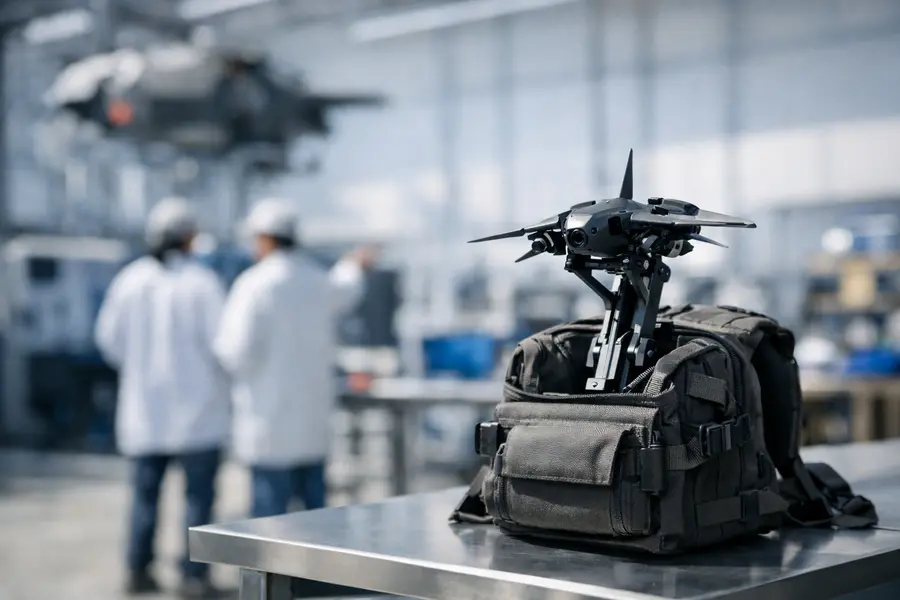
Defense startup Mara closes a $7M pre-seed led by Khosla Ventures to mass-produce Spike, a backpack-sized autonomous interceptor designed to neutralize cheap FPV attack drones.
- Khosla Ventures led the $7M pre-seed; a16z Speedrun, Night Capital, Palmdrive, Protagonist, Freedom Fund, and Indicator Fund joined as co-investors.
- Spike's Seeker weighs 250 grams, travels at 200 km/h, and is tube-launched with onboard targeting AI - priced to match attack drones one-for-one.
- Ukrainian forces tracked multiple FPV drones from 40 kilometers behind the front line using Spike's Spotter sensor unit.
Lead
San Francisco defense startup Mara announced a $7 million pre-seed round on August 26, 2026, with Khosla Ventures leading and a16z Speedrun, Night Capital, Palmdrive, Protagonist, Freedom Fund, Indicator Fund, and a cohort of angels participating. The capital funds mass production of Spike, Mara's autonomous counter-FPV-drone system, and a deployment push to get ground-mounted units into defense customers' hands before year-end. No valuation was disclosed.
What Does Spike Actually Do?
Spike is a two-component system built to give a single soldier a portable, 360-degree air-defense capability without vehicles or fixed infrastructure. Spotter is the sensor unit, combining electro-optical cameras, acoustic detection, and optional radar for all-weather, day-and-night tracking. Seeker is the interceptor: a 250-gram, tube-launched vehicle reaching 200 km/h, guided to target by onboard computer vision and requiring no live human operator in the loop. Both components fit inside a standard military rucksack.
The Economics of Counter-Drone Defense
The commercial argument runs on cost parity. Attack FPV drones in Ukraine typically cost $300 to $500. Conventional interceptors can run 10 to 100 times that, making attrition defense economically unsustainable for the defending side at scale. Mara claims a 20x cost advantage over comparable intercept solutions and prices Seeker roughly one-for-one against the drones it destroys. If that cost structure holds in production, it substantially changes the math for any force trying to defend fixed positions or vehicle convoys against drone swarms.
Battlefield Credibility
Ukrainian forces operated Spotter near the front line, where the system tracked multiple FPV drones simultaneously from 40 kilometers back. Mara has also secured its first paid order from a European NATO partner for an undisclosed exercise and deployed Spike at a commercial port in South Korea under a pilot program. The company holds a spot in NATO's DIANA accelerator, a competitive program for early-stage dual-use technology companies, which provides both institutional credibility and access to allied procurement networks.
Why Are Investors Betting This Early?
A $7 million pre-seed is large before a product has reached meaningful production volume, and the investor composition signals unusual conviction. Khosla Ventures rarely leads defense hardware rounds at this stage. a16z Speedrun - the Andreessen Horowitz vehicle targeting fast-cycle early hardware and defense deals - suggests the round attracted competitive interest before it closed. For Mara, the capital buys one manufacturing ramp before a Series A will almost certainly be required. Whether $7 million is enough to reach production scale before better-capitalized rivals close the technical gap is the question the next raise will answer.
What Comes Next for Man-Portable Air Defense?
Mara's near-term roadmap runs from ground-mounted Spike deployments with initial defense customers by end of 2026, to vehicle-mounted configurations, and finally the man-portable rucksack variant targeted for 2027 - the form factor that most expands the addressable market. Full-scale production is also planned for 2027. The FPV threat is not confined to Ukraine. Cheap attack drones have exposed identical gaps in conventional air-defense architecture across conflict zones in the Middle East, driving demand for solutions that are small, cheap, and operable without specialized training or significant logistical support.
Outlook
Mara enters a counter-UAS field that has attracted dozens of funded startups since 2022, but few competitors at the pre-seed stage carry documented combat testing and a NATO accelerator selection simultaneously. The Ukrainian Spotter data and the South Korea port pilot give Mara a credibility foundation that most pure-hardware startups lack at this funding level. Ground deployments before year-end are the first real test of the company's stated timeline - and of whether the cost advantage Mara advertises survives contact with actual procurement cycles.