Pomegra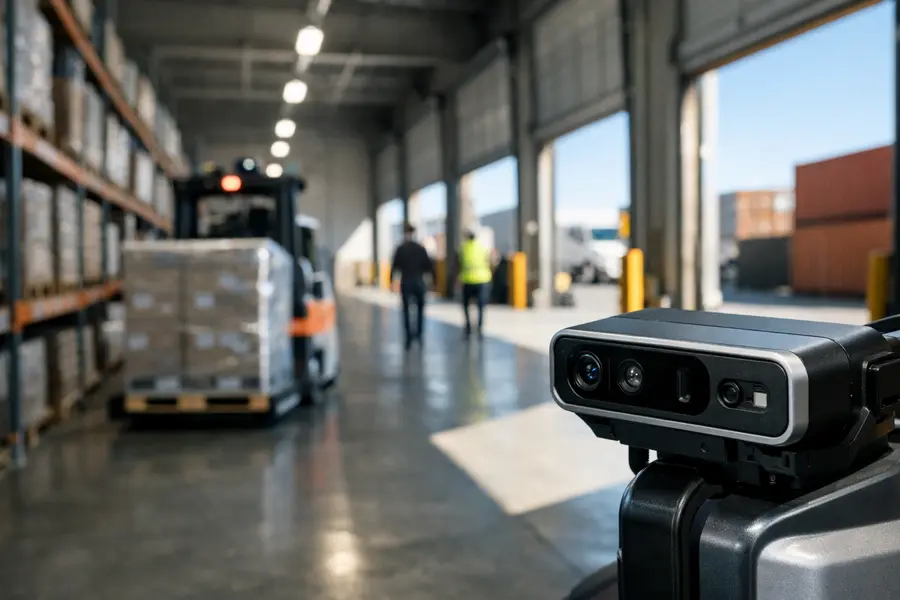
Sunnyvale startup Lyte, founded by Apple's Face ID engineers, closes a $165M Series C led by Maverick Silicon, valuing the robot-perception company at $1.6 billion post-money.
Key Takeaways
- Maverick Silicon led the round; Fidelity, Atreides Management, Key1 Capital, and Ora Global also participated.
- The $1.6B post-money valuation marks a 3x increase from Lyte's prior round, reached less than a year after stealth exit.
- Total capital raised hits $272M; LyteVision ships to customers in logistics, inspection, and manufacturing.
Lead
Robot perception startup Lyte closed a $165 million Series C on September 2, 2026, valuing the Sunnyvale, California company at $1.6 billion post-money - three times its last reported valuation. The round was led by Maverick Silicon, whose managing partner Andrew Homan joined Lyte's board. Fidelity Management and Research, which led the Series B, returned alongside new entrants Atreides Management, Key1 Capital, and Ora Global (formerly Exor Ventures). The financing brings Lyte's total raised to $272 million since its 2021 founding.
What Does Lyte Actually Build?
Lyte designs the full hardware-software stack for robot perception - custom silicon, 4D sensors, RGB cameras, motion-awareness systems, and the spatial software that ties them together. The company calls this platform LyteVision, built, in Lyte's words, "from the transistor up." Most robotics startups license sensing components from third-party suppliers. Lyte's vertical integration gives it control over latency, power draw, and the kind of edge-case reliability that warehouse floors and factory lines demand. LyteVision won CES 2026's Best of Innovation award in robotics and is now in active production.
Who Founded It, and Why Does the Pedigree Matter?
Founders Alexander Shpunt, Arman Hajati, and Yuval Gerson all worked on Apple's advanced sensing and perception technologies, including the hardware underpinning Face ID. Shpunt's history goes further back: he co-founded PrimeSense, an Israeli startup whose structured-light 3D sensing powered the original Microsoft Kinect. Apple acquired PrimeSense in 2013, folding that technology into TrueDepth cameras that now sit in over a billion devices. Lyte's chairman, Israeli semiconductor entrepreneur Avigdor Willenz, adds another layer of silicon credibility to the cap table.
That lineage answers a persistent concern in physical AI investment: whether a founding team actually understands chip design or is building software on borrowed hardware. At Lyte, the answer is embedded in the team's prior work.
What Does the Valuation Jump Signal?
Lyte emerged from stealth in January 2026 with $107 million already secured. Nine months later, a $165 million Series C has pushed its post-money figure to $1.6 billion. That tripling, in under a year, is aggressive even against the current pace of physical AI fundraising. It indicates Lyte's existing investors held pricing leverage, and that Maverick Silicon moved quickly once the company demonstrated shipping product rather than prototype.
The robotics perception category has drawn sustained capital through 2025 and into 2026 as humanoid and industrial robot deployments move from pilots to production scale. Lyte's current customer base spans inspection, logistics, and manufacturing - sectors where a perception failure carries direct operational and safety costs. That specificity gives Lyte a harder commercial argument than vision-only competitors.
What Comes Next for Lyte?
With $272 million in total funding and active production underway, Lyte has room to scale manufacturing and pursue new customer segments before a fourth-round conversation begins. The execution risk that typically haunts hardware startups - will it ship? - is partially answered. The harder question now is whether custom-silicon differentiation holds as larger chipmakers accelerate their own robotics sensing programs.
Vertical integration is a durable moat and a capital-intensive burden simultaneously. Custom silicon is expensive to tape out and slow to iterate. The $165 million buys time, but the physical AI category will not slow its pace to accommodate any single company's fab schedule. Lyte's next meaningful test is whether it can expand into humanoid robotics customers, where perception demands run substantially higher than in fixed-path logistics systems.
Outlook
Lyte's Series C confirms the market view that robot perception requires dedicated hardware, not repurposed smartphone sensors. The 3x valuation step-up reflects early production traction and strong LP appetite for physical AI companies with credible silicon expertise. The central challenge ahead is scaling production while maintaining perception reliability across diverse robot form factors and unpredictable real-world environments. Whether Lyte's founders can extend their consumer-device experience into the reliability standards of industrial autonomy will define the next chapter.