Pomegra
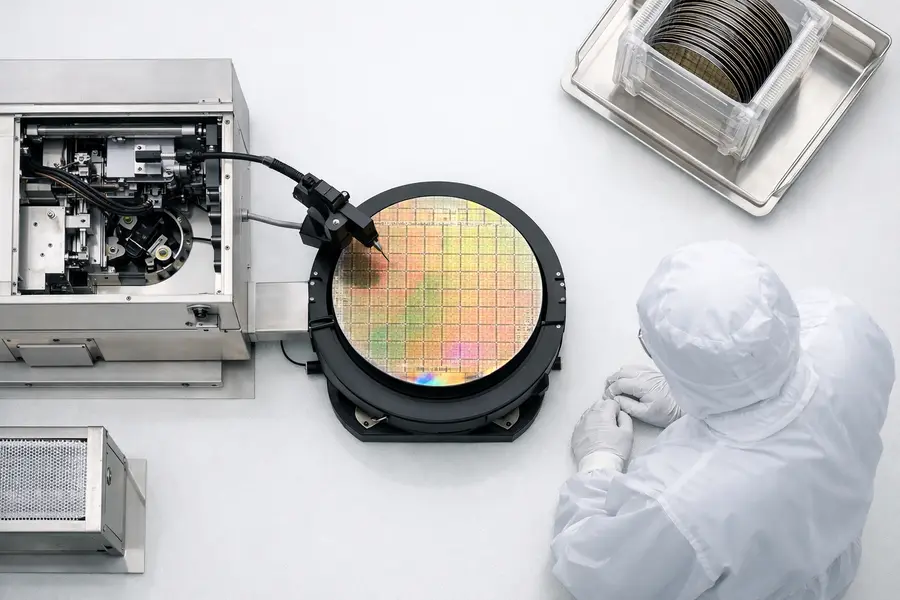
Hyperbolic closed a $30M Series A-1 led by Walden Catalyst, the VC firm of Intel CEO Lip-Bu Tan, to let GPU capacity be bought, sold and resold across about 30 AI clouds.
Key Takeaways
- Hyperbolic raised $30M in a Series A-1 on October 27, 2026, bringing total funding to $50M. Valuation is undisclosed.
- Walden Catalyst led. Dell Technologies Capital, General Catalyst, Vista Equity Partners and Cambium Capital joined.
- The company targets $150M in annual recurring revenue by end of 2026 and says it is breaking even.
Lead
Hyperbolic, a San Francisco-area AI infrastructure startup, announced a $30M Series A-1 extension on October 27, 2026. Walden Catalyst led the round. The firm was co-founded by Intel CEO Lip-Bu Tan and former Samsung president Young Sohn. The money will fund software for managing AI chips across specialized "neocloud" providers and a feature that lets customers resell compute they have paid for but no longer need.
The company has now raised $50M. That total includes a $7M seed round and a $12M Series A led by Variant and Polychain Capital in 2024. Hyperbolic did not disclose the valuation of the new round.
Who Else Backed the Round?
Beyond Walden Catalyst, Dell Technologies Capital, General Catalyst, Vista Equity Partners and Cambium Capital participated. Salience Capital also took part, along with angel investors tied to Citadel Securities, NYSE, WhiteFiber and Vector Core Compute.
The last two names matter. WhiteFiber and Vector Core Compute are neocloud operators, so some of the supply Hyperbolic sells has investors inside the cap table. Dell's presence points the same way, since it sells the servers that fill these data centers.
What Does Hyperbolic Actually Sell?
Hyperbolic sells a single interface for renting GPUs from many providers, plus software to run workloads across them. Customers no longer have to contract with each cloud separately. Its core product, Forge, is a control plane for provisioning and managing AI workloads across those providers.
CEO Jasper Zhang, 31, holds a mathematics PhD from UC Berkeley and previously worked as a quantitative researcher at Citadel Securities. He described the market as "really fragmented," which he said makes the customer experience difficult.
The platform connects roughly 30 specialized cloud providers and more than 250,000 developers. About $200M in annual compute capacity runs through it. Customers include Modal, Higgsfield, Daytona, HeyGen and Pika, along with Stanford and UC Berkeley.
What Is the Global Compute Grid?
The Global Compute Grid is Hyperbolic's plan for a secondary market in GPU capacity, where suppliers and buyers can trade eligible compute, with spot pricing. Today, most GPU capacity is sold in fixed-term contracts. Unused hours are a stranded cost for the buyer.
Tan framed the logic in terms of utilization. "The value of that investment depends on how effectively the capacity is put to work and made available to the teams that need it," he said. That is a bet that idle silicon is common enough to support a resale business.
Does the Revenue Math Hold Up?
The numbers need careful reading. Hyperbolic targets $150M in annual recurring revenue by year-end, yet only about $200M in annual compute capacity flows through the platform. A $150M figure against $200M of volume implies Hyperbolic books most of the compute spend as revenue. That is a resale model, not a software model, and resale margins tend to be thin.
The company says it is already breaking even, with headcount expected to reach 50 by the end of 2026. A lean team and a small burn help explain why a $30M extension is adequate. They also leave open how much of the $150M survives as gross profit.
The round also invites a comparison with the 2024 Series A. That round was led by crypto-focused funds, and Hyperbolic's early pitch leaned on decentralized compute. This one is led by a semiconductor-industry investor and joined by enterprise software and server vendors. The investor base has moved from crypto to the hardware and enterprise supply chain.
What Comes Next for Neocloud Aggregators?
The aggregator model faces pressure from two directions. Large providers could build their own marketplaces, and neoclouds could decide that selling through an intermediary erodes their pricing. Spot markets also depend on liquidity, which requires many buyers and sellers active at once. With about 30 providers connected, Hyperbolic is early on that front.
If GPU supply stays tight, a marketplace gives smaller buyers access they cannot negotiate directly. If supply loosens, spot pricing will fall and the resale margin will shrink with it. Tan's own company, Intel, sells accelerators into this market, which adds a strategic reading to the investment, though neither party has described it that way.
Outlook
Hyperbolic enters its next phase with $50M raised, a breakeven claim and a year-end revenue target that will be easy to check. The test is whether the Global Compute Grid draws enough two-sided volume to function as a market and not simply a reseller. Valuation, gross margin and the share of revenue from resale remain undisclosed.