Pomegra
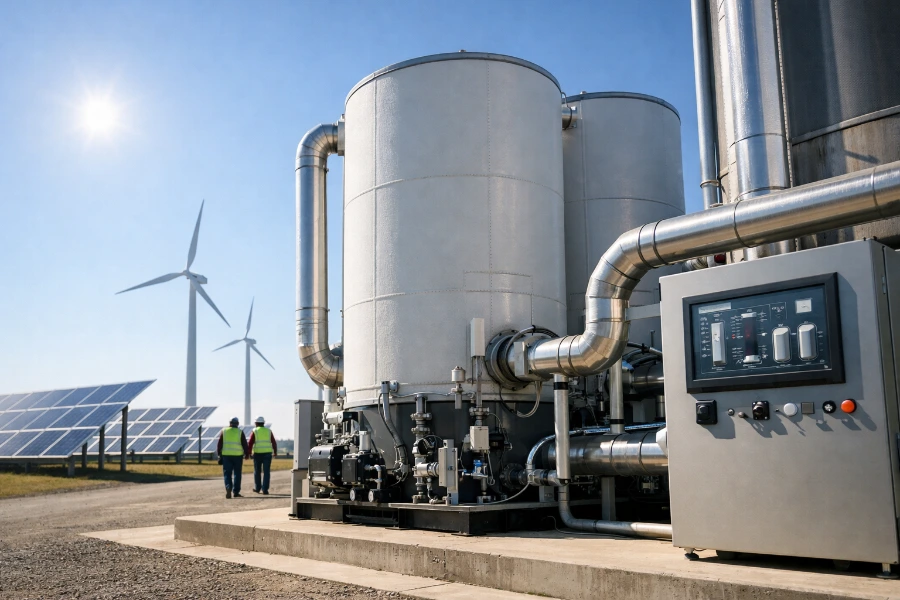
Amsterdam startup Good Heat raised €2M led by SET Ventures to replace industrial gas steam boilers with heat batteries it owns, across Europe and Australia.
Key Takeaways
- Good Heat raised €2M, led by SET Ventures with Shell Ventures and existing backer Investible; valuation undisclosed.
- The startup owns and operates heat batteries and sells steam under 10-20 year contracts.
- Pipeline exceeds 175 MWt across the Netherlands, Belgium, Germany, Poland and Australia.
Lead
Good Heat, an Amsterdam-based developer of electric thermal storage, announced a €2M round on 24 November 2026. SET Ventures, a European energy-focused fund, led it. Shell Ventures joined, as did existing investor Investible. The company did not disclose a valuation.
Good Heat will use the money to add staff and push its project pipeline toward financial close. It plans to hire at least five people in Amsterdam and keep growing its Sydney team. It also plans to build software.
What Does Good Heat Actually Sell?
Good Heat sells steam, not hardware. It develops, finances, builds, owns and operates heat batteries at industrial sites. The batteries charge on renewable electricity when power prices are low. They release the stored heat to replace gas-fired steam boilers.
Customers sign a Heat Purchase Agreement (HPA) that runs 10 to 20 years. They commit to minimum annual heat volumes, at a fixed price or one discounted against gas benchmarks. They put up no upfront capital and carry no power-market risk. Good Heat hedges its electricity costs through long-term power purchase agreements. It also says it is technology-neutral and picks battery suppliers through competitive procurement.
Target sectors are chemicals, food and general manufacturing. These are steam-heavy industries where the boiler is often the largest single source of site emissions.
Who Is Behind It and How Big Is the Pipeline?
Bauke van Gent (CEO) and Tom Geiser founded Good Heat in 2025. Van Gent previously led commercial work at Neoen Australia, and Geiser ran Rondo's Australian operations. Rondo is a better-known maker of industrial heat batteries, so the founders know the supplier side of the market.
The pipeline is the main evidence of traction. Good Heat reports more than 100 MWt in Europe across the Netherlands, Belgium, Germany and Poland. It holds exclusivity agreements on six European projects. Australia adds more than 75 MWt, which brings the total past 175 MWt.
Van Gent frames the opportunity this way: industrial heat accounts for a fifth of the world's energy use, and almost 90% of it still comes from fossil fuels.
Why Does a €2M Round Matter When Projects Cost Far More?
The round matters as a signal, not as capital. Good Heat's flagship, Project Arcadia in Australia, needs roughly €70M, and financial close is targeted for April 2027. The new money covers about 3% of that figure.
Owning assets is capital-intensive, so the real funding will have to come from project finance and infrastructure lenders. Those lenders will want creditworthy offtakers and proven battery performance. Equity at this size pays for the team that builds the contracts and financing structures lenders examine.
The round also follows a pre-seed of about €1.83M (A$2M) announced in October 2025. Understorey Ventures, Investible, 2100VC and Foobar VC backed that earlier round, mostly from Australian investors. A second round in roughly 13 months, with an energy specialist and a major oil company's venture arm entering, shows investors moving from betting on the founders to backing the pipeline. It remains small money for a business that must eventually hold hundreds of millions in assets.
How Does This Fit the Industrial Heat Market?
Electrifying process heat is moving from pilot to procurement, and Good Heat is competing on financing rather than on a new battery. Gas price volatility in Europe and carbon costs under the EU Emissions Trading System are pushing manufacturers to consider alternatives. Many of them cannot or will not fund the capital cost of a heat battery on their own balance sheets.
The heat-as-a-service model removes that barrier but moves the risk to the provider. Good Heat has to buy power cheaply and run the batteries efficiently. It also has to keep customers paying for 10 to 20 years, and the economics depend on the spread between electricity and gas prices. Rivals that sell batteries outright avoid those risks, while those that offer similar service contracts face the same questions.
What Comes Next?
The next test is conversion. Six exclusivity agreements need to become signed HPAs, and then financed, built projects. A close on Arcadia in April 2027 would be the first proof that lenders accept the model. A slip would show how sensitive the plan is to project-finance timing.
Outlook
Good Heat has a 175 MWt pipeline, a financing-led model and backing from an energy specialist fund and Shell's venture arm. It has not yet closed project finance, and €2M covers only a small share of its first large project. The 2027 financial close on Arcadia and the first European HPAs will show whether the pipeline turns into operating assets.