Pomegra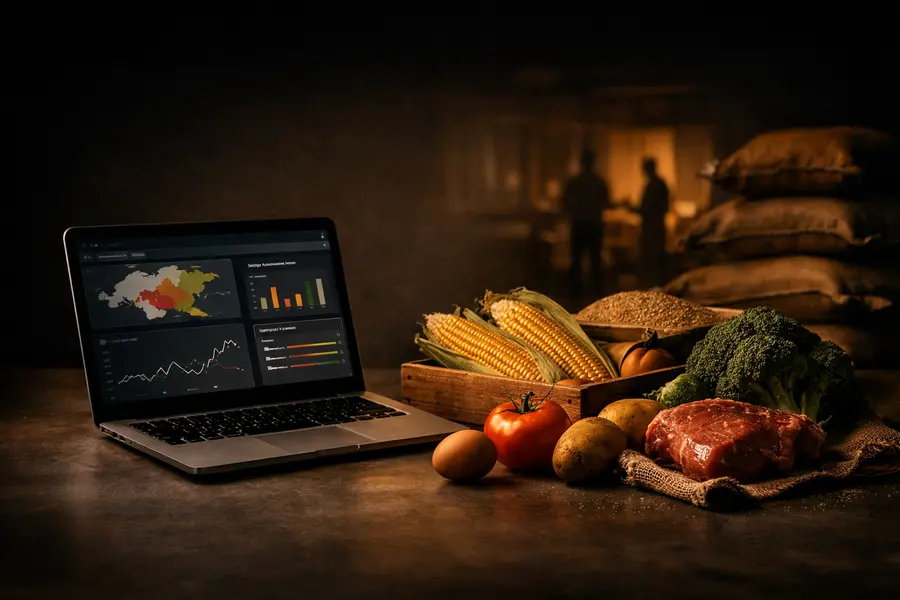
Munich-based Finches has closed a €2M pre-seed led by HTGF to warn food producers about crop and sourcing disruptions before they reach the production line.
Key Takeaways
- Finches raised €2M in pre-seed funding led by High-Tech Gründerfonds, with Vanagon Ventures as co-lead.
- Bayern Kapital joined as a new investor; UnternehmerTUM Funding for Innovators and angels followed on.
- The platform is live with two named customer types: an organic baby food maker and a North American Fortune 500 food group.
Lead
Finches, a Bavaria-based agritech startup, announced on October 6, 2026 a €2M pre-seed round to build software that spots agricultural supply risks earlier. High-Tech Gründerfonds (HTGF) led the round, with Vanagon Ventures as co-lead. The company did not disclose a valuation. The money will go to product development and sales.
Who Is Behind Finches and What Does It Sell?
Finches sells a risk-monitoring platform to manufacturers that buy agricultural raw materials, including food and beverage, baby food, pharmaceuticals, herbal medicine and cosmetics. It merges a buyer's internal procurement data (supplier profiles, cultivated acreage, contracts) with outside signals such as weather patterns, satellite imagery, local news, scientific findings and agronomist field reports. The output is an early warning that names the affected regions and supply chains.
The company is led by CEO Catharina van Delden, who previously built enterprise software at Innosabi, a Munich startup. CTO Stefanie Seisenberger Glenn brings a data background that includes time at Google. Van Delden has described the idea as rooted in a severe drought on her family's farm in Uruguay, and the founders say it was shaped by more than 100 conversations with buyers and agricultural managers.
The product targets a gap between procurement software, which tracks orders and suppliers, and commodity-price terminals, which track markets. Finches instead tries to read conditions in the field and convert them into operational indicators a sourcing team can act on.
Who Backed the Round?
HTGF, the German public-private seed fund, led the round, and Vanagon Ventures co-led. Bayern Kapital, the venture arm of the Free State of Bavaria, entered as a new investor. UnternehmerTUM Funding for Innovators, an existing backer that supported Finches in its earliest stage, followed on, alongside a syndicate of strategic industry and tech angels.
The investor mix leans regional and institutional. Two of the four named funds are state-linked or publicly anchored, which is common for German pre-seed rounds and tends to signal patient capital rather than a priced competitive process. Without a disclosed valuation or ownership split, the round says little about how aggressively the company was priced.
Why Does Supply Risk Matter for Food Producers Now?
Food producers face a supply problem because climate change, extreme weather and geopolitical crises can hit crop availability and quality months before the effect shows up downstream. Van Delden said that risk signals usually emerge weeks ahead of time, yet procurement teams rarely see them early enough to act.
That timing gap is the commercial case. A buyer who learns of a poor harvest in one region early can shift volumes to other suppliers, renegotiate contracts or build stock. A buyer who learns late pays spot prices or reformulates a product.
Finches is not alone in chasing this. Supply chain risk tools from larger vendors cover logistics, sanctions and supplier finances, while agricultural analytics firms cover yields and satellite data. Finches is betting that raw-material buyers want both views in one tool, fed by their own contract and acreage data. Whether that data integration is a durable advantage or an implementation burden is the main open question for a company at this stage.
What Traction Does the Company Have?
Finches launched its Finches Intelligence product in September 2026 and reports two customers by description: a leading organic baby food manufacturer and a North American Fortune 500 food conglomerate. Neither is named. Revenue, contract size and headcount are undisclosed.
A baby food producer is a demanding early customer, since contamination and ingredient quality are regulated tightly and sourcing failures carry reputational cost. A Fortune 500 buyer adds scale, though a single enterprise relationship at pre-seed can mean a pilot rather than a full rollout. The business model is subscription revenue combined with co-creation partnerships, in which customers shape the product.
What Comes Next for Finches?
The €2M gives Finches room to expand its product and build a sales team, with the near-term test being conversion of early customers into recurring contracts. Pre-seed rounds of this size typically fund 12 to 18 months of work, which would put a seed round into 2027 or 2028 if milestones hold.
The likeliest next steps are wider crop and region coverage and more customers in cosmetics and pharmaceuticals, where plant-based inputs are also exposed to weather. Competitors in supply chain risk may add agricultural modules, which would compress the window for a standalone product. Munich's proximity to the Technical University of Munich and industrial partners gives Finches access to both talent and potential buyers.
Outlook
Finches has €2M, an institutional investor group and two enterprise customers, but no disclosed valuation or revenue. Its pitch rests on converting field-level signals into warnings early enough to change purchasing decisions. The next 12 to 18 months will show whether early customers renew and whether the product holds up against larger risk vendors.