Pomegra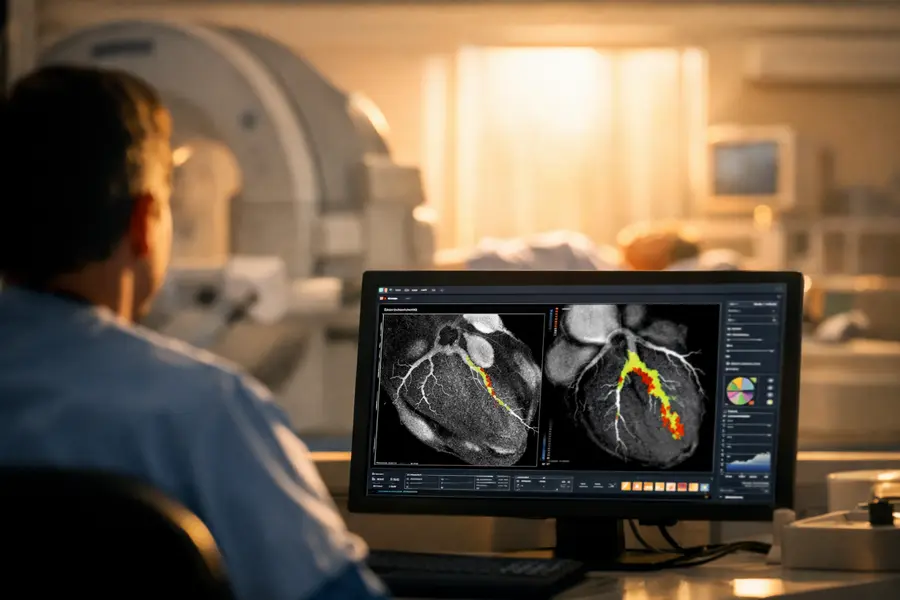
Boston's Elucid raised $55M in an oversubscribed Series D to commercialize its FDA-cleared Plaque-IQ cardiac imaging platform and prepare a second product for launch.
- Elucid closed a $55M oversubscribed Series D on Sept. 2, 2026, bringing total capital raised to approximately $185M.
- Plaque-IQ, FDA-cleared in October 2024, is now reimbursable under AMA CPT code 75577 at a national average of $1,012 per scan.
- A fourth publicly traded medtech company joined existing investors IAG Capital Partners and Elevage Medical Technologies in the round.
Lead
Boston-based Elucid closed a $55 million oversubscribed Series D on September 2, 2026, targeting commercial expansion of its Plaque-IQ platform and preparation for a second product launch. The round brings total funding to approximately $185 million. Valuation was not disclosed.
What Does Plaque-IQ Actually Do?
Plaque-IQ is AI software that analyzes CT scan data to quantify and classify coronary and carotid artery plaque - specifically identifying the highest-risk plaque types - without invasive procedures. The FDA cleared it in October 2024 as the first non-invasive method validated against histopathology benchmarks for that purpose. Histopathology validation means the software's outputs were compared directly against tissue samples, a more demanding standard than typical imaging clearances.
The clinical significance centers on identifying vulnerable plaque before it causes a cardiac event. Traditional cardiac testing identifies blockages but cannot easily characterize what type of material is narrowing the artery. Plaque-IQ addresses that diagnostic gap.
The Reimbursement Turn
Plaque-IQ became meaningfully more commercial in January 2026, when the American Medical Association's Category I CPT code 75577 took effect, setting a national average reimbursement of $1,012 per scan at imaging centers and physician offices. Category I status is full permanent coverage recognition - distinct from temporary Category III codes - and it removes the primary adoption barrier for imaging labs that cannot bill for unrecognized procedures.
That sequencing matters. Elucid raised this capital after securing both FDA clearance and reimbursement coverage, not before. It puts the company in a commercially actionable position. Actual volume adoption still depends on whether referring physicians change ordering habits and whether imaging centers invest in training and workflow integration.
Why Did Investors Oversubscribe?
Oversubscription at Series D typically reflects strong existing-investor conviction, a competitive fundraising process, or both. All three named categories of investor participated here: IAG Capital Partners, Elevage Medical Technologies (a Patient Square Capital platform), and an unnamed publicly traded medical device company that becomes Elucid's fourth publicly traded strategic backer.
Four strategic investors on a private company's cap table signals real commercial pipeline interest, acquisition optionality, or both. Elucid did not name the new backer or identify a single lead for the round.
The broader context also helped. Cardiovascular AI imaging has drawn consistent capital interest as the population of patients with incidentally discovered coronary calcium on routine CT scans grows. Identifying which of those patients needs further workup is a genuine clinical problem, and software that fits into existing CT workflows has a faster adoption path than new imaging modalities entirely.
What Comes Next for Elucid's Pipeline?
The more consequential near-term event may be Elucid's second product: BioIntegrated FFR-CT, a tool for measuring fractional flow reserve directly from CT images, currently under FDA 510(k) review. FFR-CT measures whether a coronary narrowing actually restricts blood flow - a standard part of cardiology workups at large institutions. Elucid's integrated version would add plaque characterization to flow measurement in a single workflow, meaningfully expanding the diagnostic picture.
Proceeds from the Series D will fund that commercial launch preparation alongside additional clinical studies and AI research. Elucid did not provide a timeline for an FDA decision on BioIntegrated FFR-CT.
Outlook
Elucid enters late 2026 with reimbursement in place, an FDA-cleared flagship product, and $55 million to build out commercial infrastructure. The next inflection point is FDA clearance of BioIntegrated FFR-CT, which would expand its addressable market into the established FFR-CT workflow segment. Valuation remains undisclosed, making it impossible from public data alone to assess whether the Series D represents a step up or a flat round relative to the company's earlier financings - a question that matters when total capital raised reaches $185 million.