Pomegra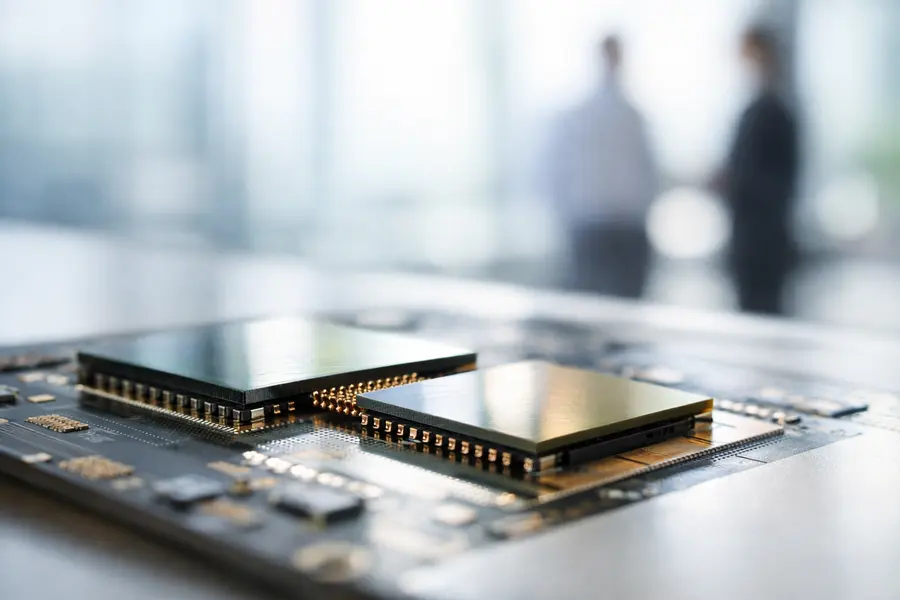
Eliyan reached unicorn status July 29 after closing a $145M Series C led by Seligman Ventures, with Cisco Investments and Lumentum joining as new strategic investors.
Key Takeaways
- Seligman Ventures led the oversubscribed round; Cisco Investments and Lumentum joined as new strategic backers.
- Eliyan's total raised reaches roughly $295M across four rounds since its 2021 founding.
- Proceeds fund expansion from electrical die-to-die chiplet PHY into electro-optical rack-to-rack interconnects.
Lead
Eliyan Corp., a Silicon Valley startup building the wiring between AI chips, closed a $145 million Series C on July 29, 2026, at a $1 billion valuation. Seligman Ventures led the oversubscribed round, and Umesh Padval, the firm's managing partner, joined Eliyan's board as part of the financing. Two new strategic investors - Cisco Investments and optical component maker Lumentum - participated alongside undisclosed existing backers. The round brings Eliyan's total raised to approximately $295 million.
What Does Eliyan Actually Build?
Eliyan's core products are die-to-die and chip-to-chip PHY solutions - branded NuLink PHY and NuGear - that move data between chiplets faster and at lower power than competing implementations. The company targets UCIe, the industry standard for chiplet interconnects, and its Universal Memory Interface extends that logic to memory bandwidth expansion. Its customers are chipmakers building disaggregated AI accelerators, where multi-tile architectures need high-bandwidth, low-latency glue between compute and memory dies. Eliyan claims four times the performance at half the power of alternatives - a ratio that matters considerably when power is the binding constraint in data center builds. Whether that claim holds at production scale is the question customers are currently answering.
Why Are Cisco and Lumentum Writing Checks?
Strategic investors rarely write checks without an adjacent interest. Cisco's participation signals that Eliyan's roadmap - now explicitly extending from die-to-die electrical links to rack-to-rack optical connectivity - intersects with Cisco's AI data center networking ambitions. Lumentum, a maker of optical components for telecom and data centers, is more directly implicated: if Eliyan succeeds in packaging electro-optical interconnects as chiplets, Lumentum stands to be a component supplier, a customer, or both. The round's oversubscribed status suggests the $1 billion valuation was set before investor appetite was fully gauged, which is the polite way of saying the company had room to raise considerably more.
The Funding Trail
Eliyan's capitalization history reveals a pattern of scope expansion with each successive round. A $40 million Series A in November 2022 funded the base die-to-die PHY work. A $60 million Series B in March 2024 accelerated product development. A $50 million strategic round in January 2026 brought in AMD, Arm, Coherent, and Meta - all parties with direct chiplet or data center connectivity interests. The Series C now doubles down again, this time adding optical incumbents. The implied valuation step-up from prior rounds is not public, but the unicorn threshold hit alongside a still-pre-revenue-scale business suggests investors are pricing the optical interconnect opportunity, not just the existing chiplet PHY portfolio.
Revenue and Commercial Timeline
Eliyan reported "low millions" of dollars in revenue in 2025. Management forecasts hundreds of millions in sales by end of 2027, with initial chiplet shipments expected before year-end 2026. That trajectory - from low millions to hundreds of millions in two years - requires either a deep existing design-win pipeline or an aggressive market share assumption. The company has not named production customers publicly. Founded in 2021 by Ramin Farjadrad, formerly CTO at Marvell Semiconductor, alongside Syrus Ziai and Patrick Soheili, Eliyan has moved from concept to commercial product in roughly four years.
What Comes Next for AI Chip Interconnects?
The electro-optical interconnect space is crowded and well-capitalized. Ayar Labs, Lightmatter, and several others are building optical interconnects for AI clusters with comparable investor backing. Eliyan's differentiation is starting from an established die-to-die PHY business with silicon already in customer design pipelines, then extending upward toward optical rack-to-rack links. Whether that bottom-up approach outpaces startups building optical-first is the central competitive question the next 18 months will answer. Intel Capital was among prior existing investors, giving the round a broad strategic backdrop across the semiconductor industry.
Outlook
Eliyan enters the second half of 2026 with a unicorn valuation, two strategically aligned new investors, and a product roadmap stretching from inside a chip package to across a data center rack. The company's near-term credibility test is concrete: initial chiplet shipments this year, followed by revenue growth that justifies the $1 billion mark. The optical expansion is the longer bet. The investors who joined this round have direct financial incentives to see it succeed.