Pomegra
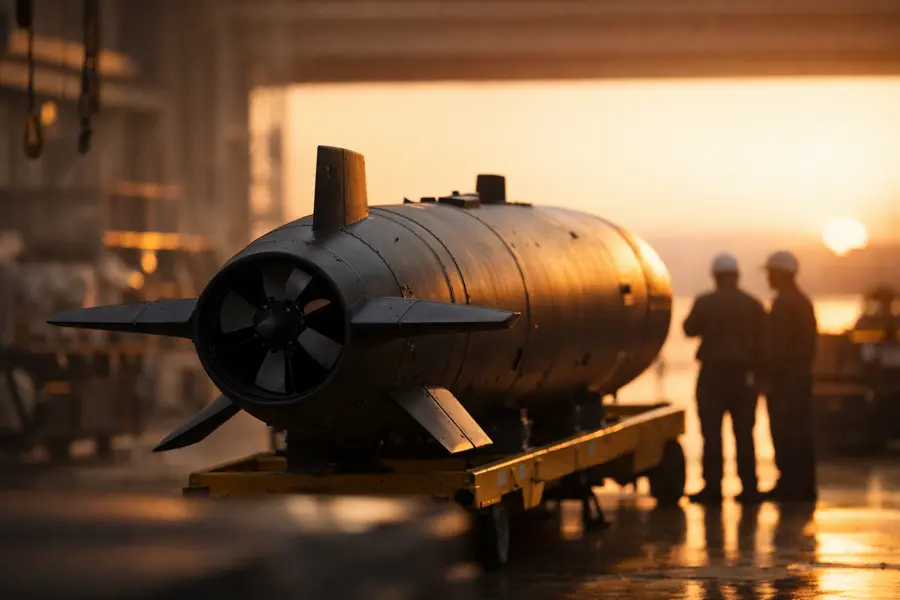
Corridian, a New England startup, exited stealth with a $38M seed led by Point72 Ventures to build cargo-hauling autonomous submarines for the US Navy.
Key Takeaways
- Corridian closed a $38M seed round led by Point72 Ventures and announced it on November 3, 2026.
- The startup, founded in September 2025, plans to unveil its first ultra-large uncrewed submarine in 2027.
- Valuation was not disclosed, and the company plans to double its workforce within a year.
Lead
Corridian, a defense startup based in New England, emerged from stealth on November 3, 2026 with a $38 million seed round to build ultra-large autonomous underwater vehicles for the US military. Point72 Ventures led the round. Balerion Space Ventures, Harpoon Ventures, DCVC and Marlinspike also participated, alongside a syndicate of defense and deep-tech investors. The company did not disclose a valuation.
The money will pay for the vehicle's development, expansion of a research and development facility, and hiring of undersea engineers. Corridian was founded in September 2025, so it announced the round roughly 14 months after incorporation. The company says it will unveil its flagship vehicle in 2027.
What Is Corridian Building?
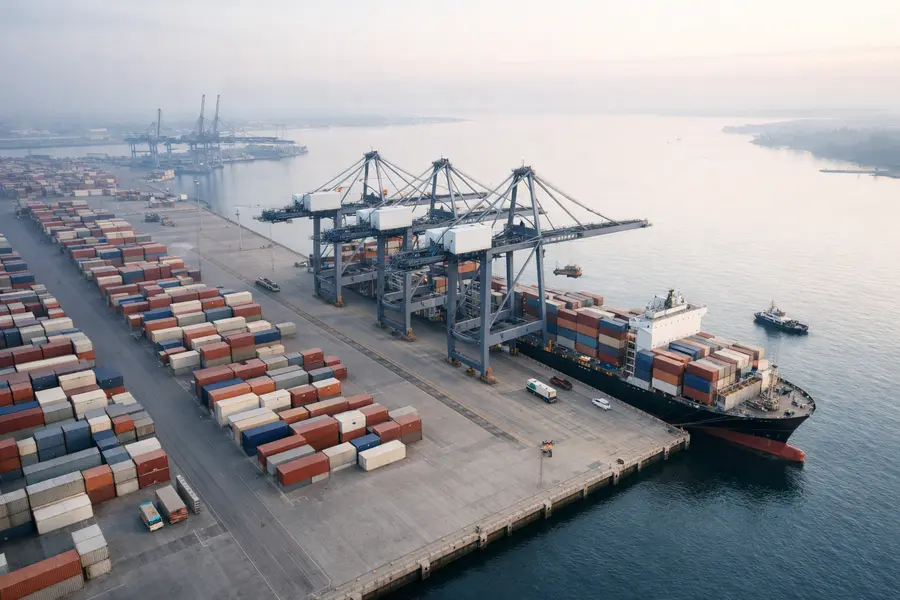
Corridian is building uncrewed submarines large enough to carry ISO-standard shipping containers across thousands of nautical miles. The company calls the concept "stealth logistics": moving heavy payloads beneath the surface without a crew and without the visibility of a surface ship or aircraft. Intended uses include payload and effects delivery, intelligence, surveillance and reconnaissance, and resupply in contested waters.
The design is modular. Payloads swap in and out of the vehicle instead of requiring a new platform for each mission. A software interface is meant to connect the vehicle's onboard autonomy to third-party mission-autonomy stacks, so commanders could run Corridian vehicles alongside other fleet assets.
Corridian's website lists the U.S. Navy and the Royal Australian Navy among its mission partners. The company has not published contract values, vehicle dimensions, or launch methods.
Who Is Behind the Company?
The four co-founders previously ran one of the largest undersea autonomy portfolios in the US at General Dynamics. Mike Guay is CEO, Greg Barrow is president, Kyle Arace is chief technology officer, and Mark Bodnar is chief operating officer.
The advisory board leans heavily on Navy leadership. It includes retired Adm. Lisa Franchetti, the 33rd Chief of Naval Operations, along with Jason Potter, a former acting Assistant Secretary of the Navy, retired Vice Adm. Jeff Trussler and retired Rear Adm. Milton "Jamie" Sands III. Stephen Rodriguez of DCVC also sits on the board.
Why Is Undersea Cargo Attracting Defense Capital?
Defense investors see contested logistics as a weak point because surface ships and aircraft are easy to track and target. Guay framed the problem in the company's announcement, calling America's dependence on the surface and air domains to move mass at scale "an acute vulnerability." Rodriguez put it more bluntly, saying that when the shooting starts, anything observable is gone.
Existing autonomous underwater vehicles generally lack the capacity for large, dense payloads. Crewed submarines have the volume but are scarce and tied to a limited shipbuilding base. Corridian says its vehicles would be built outside the submarine industrial base, using an aerospace-style manufacturing model. That claim matters, because Navy submarine production has faced well-documented delays and the service has little spare shipyard capacity.
Large uncrewed undersea vehicles are not a new idea. Boeing's Orca program and Anduril's Dive-XL have both targeted the extra-large class. Corridian's differentiator is the emphasis on container-scale cargo and range rather than sensor or weapons payloads alone.
What Does a $38M Seed Actually Buy?
A $38 million seed is large by conventional venture standards, but modest for hardware that must survive deep ocean conditions. The sum likely covers a design team, a test facility and a prototype, not a production line. Building an ultra-large vehicle by 2027 would be an aggressive schedule for a company that will be roughly two years old at its unveiling.
The round also reflects who Corridian's founders are. Investors are backing a team with a track record in undersea autonomy and Navy relationships, since no product exists yet. The valuation the founders accepted remains undisclosed, which leaves the pricing of that bet unknown.
The main risks are familiar to defense hardware startups. Navy acquisition cycles are slow, prototypes can slip, and a unveiling does not guarantee a program of record. Funding from Point72 Ventures, DCVC and Harpoon suggests a follow-on round would be the next milestone, likely tied to a demonstrated vehicle or a government contract.
What Comes Next for Corridian?
The next milestone is the 2027 vehicle unveiling, followed by in-water testing. Corridian says it plans to double its headcount within a year, which signals that the engineering build-out is the immediate priority. A formal Navy contract, a Royal Australian Navy agreement, or a second funding round would be the clearest signs the concept is moving from pitch to program.
Outlook
Corridian enters a market where the Pentagon is seeking cheaper, uncrewed alternatives to crewed submarines and surface ships. The company has experienced founders, a Navy-heavy advisory board and $38 million to reach a prototype. It has no disclosed contracts, no published specifications, and no vehicle in the water. The 2027 unveiling will be the first real test of whether stealth logistics is a procurement category or a pitch.