 Pomegra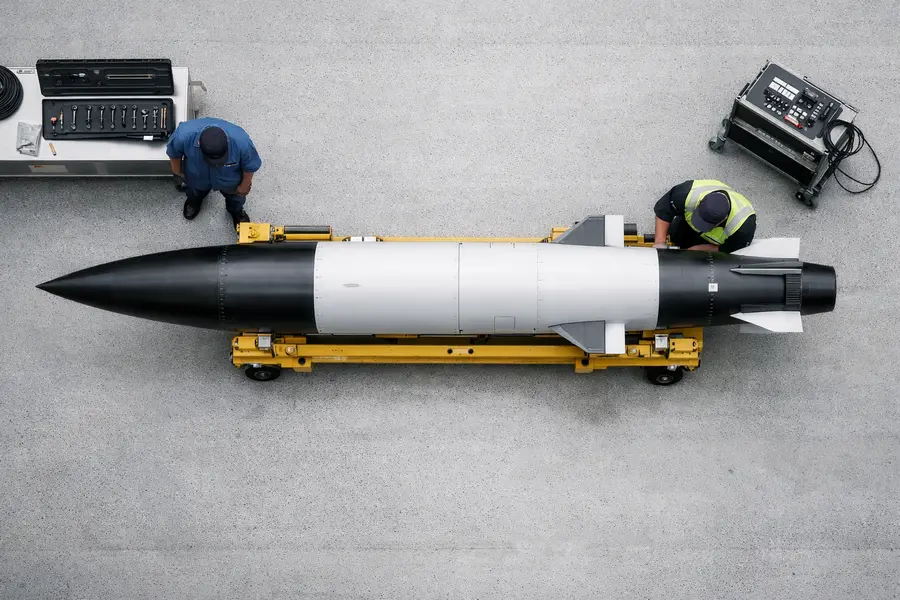
Defense startup Castelion closed a $1 billion Series C at a $13 billion valuation to accelerate mass production of its Blackbeard low-cost hypersonic strike missile, backed by $500M+ in U.S. military contracts.
Key Takeaways:
- The round - $800M equity plus a $250M revolving credit facility - was co-led by JPMorganChase, Andreessen Horowitz, and Carlyle at a $13B valuation.
- Blackbeard is priced at roughly $384,000 per unit, a fraction of the multi-million-dollar cost of comparable U.S. hypersonic programs.
- The Pentagon signed a framework agreement in May 2026 for a minimum of 500 Blackbeard missiles per year after testing; fielding is targeted for 2027.
Lead
Castelion, the Torrance, California defense startup founded in 2022 by three former SpaceX engineers, raised $1 billion in Series C financing on August 19, 2026, at a $13 billion valuation. The round comprises $800 million in equity and a $250 million committed revolving credit facility. JPMorganChase's Strategic Investment Group - operating under the bank's Security and Resiliency Initiative - co-led the equity tranche alongside Andreessen Horowitz and Carlyle-managed funds. Existing investors Lightspeed Venture Partners, Lavrock Ventures, Altimeter, General Catalyst, and Interlagos participated, with T. Rowe Price joining as a new investor.
The company's $350 million Series B closed in December 2025. The 14-month step-up to $13 billion is a near-fourfold jump, driven by the Pentagon's deepening commitment to low-cost strike capacity and investors' conviction that defense-tech manufacturing is finally a venture-scale business.
What Is Castelion Building?
Castelion's first product is Blackbeard, a mass-producible hypersonic strike missile targeting a unit cost of approximately $384,000. That sits well below the multi-million-dollar price tags attached to existing U.S. programs. The founding thesis - carried over directly from commercial aerospace - is that vertical integration and modular manufacturing can collapse hypersonic economics the way serial production collapsed launch costs. CEO Bryon Hargis, COO Sean Pitt, and CFO Andrew Kreitz all worked at SpaceX before starting the company, then known as Pallas Industries.
Capital from the Series C will fund Project Ranger, Castelion's dedicated production and final-assembly facility, while supporting multi-service platform integration testing with the U.S. Army and Navy in 2026.
Why Is the Pentagon Backing a Four-Year-Old Company at This Scale?
The U.S. military has accumulated more than $500 million in contracts with Castelion since the company's founding - a figure that signals operational intent, not exploratory research. In May 2026, the Pentagon signed a framework agreement contemplating a two-year Blackbeard production contract with a minimum rate of 500 missiles per year following successful testing and validation.
Five hundred units annually at $384,000 per missile works out to roughly $192 million in list-price annual procurement. That arithmetic begins to make hypersonic strikes a routine budget line rather than a limited strategic reserve. China's DF-17 hypersonic glide vehicle has been produced in volume for several years; American planners have consistently flagged the unit-cost and production-volume gap as a structural vulnerability in any high-intensity conflict.
What Does the $13 Billion Valuation Actually Imply?
Castelion has not yet delivered a production missile. Fielding is targeted for 2027, which means the valuation rests on contracts, testing milestones, and strategic positioning rather than revenue at scale. The Series B to Series C step-up is the clearest signal of where sentiment sits: investors are pricing in successful platform integration and a Pentagon commitment to procurement volume.
The involvement of JPMorganChase's credit arm alongside equity investors is notable. Traditional venture rounds do not include revolving credit facilities; lenders are now prepared to underwrite defense-tech manufacturing risk in a structure more common to industrial borrowers than startups. T. Rowe Price's entry adds a public-markets dimension. Institutional asset managers at the Series C stage typically position for a near-term liquidity event, whether an IPO or acquisition by a prime contractor.
Outlook
Castelion enters the second half of 2026 with more capital than many single Pentagon acquisition programs and a clear near-term schedule. The key test is whether Blackbeard can hold its cost-per-unit target through the transition from prototype to full-rate production - the step where most advanced weapons programs have historically expanded in price. Multi-service platform testing, scheduled for this year, and the Pentagon's subsequent production contract decision will determine whether the $13 billion valuation proves conservative or premature.