Pomegra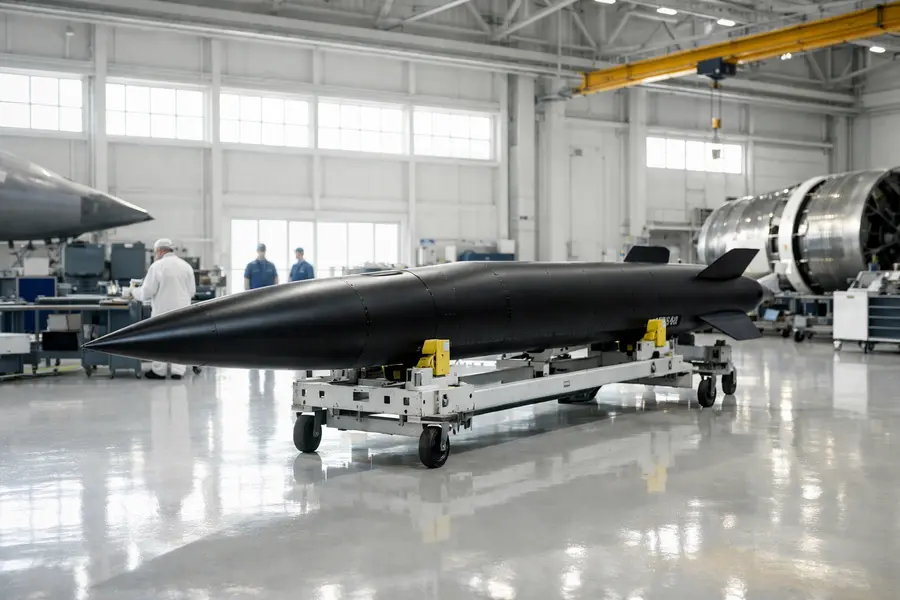
Defense startup Castelion raised $1 billion at a $13 billion valuation on August 20, co-led by Andreessen Horowitz, Carlyle, and JPMorgan, to mass-produce its Blackbeard hypersonic missile.
- Castelion closed a $1B Series C - $800M equity plus a $250M revolving credit facility - at a $13B valuation.
- The U.S. Department of War signed a production framework covering a minimum of 500 Blackbeard missiles annually pending testing and validation.
- Since founding in 2022, Castelion has secured more than $500M in U.S. military contracts in under 18 months.
Lead
Castelion, a missile startup founded by former SpaceX executives, raised $1 billion in Series C financing on August 20, 2026, at a $13 billion valuation. The round was co-led by Andreessen Horowitz, Carlyle Group, and JPMorgan Chase, with participation from Lightspeed, Lavrock, Altimeter, General Catalyst, Interlagos, and a T. Rowe Price-advised account. Proceeds will fund scaled production of the Blackbeard hypersonic strike missile at the company's 1,000-acre Project Ranger campus in New Mexico.
What Does Castelion Actually Build?
Castelion's flagship product is Blackbeard, a low-cost, mass-producible hypersonic strike missile capable of speeds exceeding Mach 5. The critical number is the unit price: approximately $384,000 per missile. That figure sits well below conventional hypersonic weapon development costs from traditional defense primes, where per-unit costs have historically run into the millions.
The design philosophy is volume over exclusivity. Rather than developing a small number of expensive, one-of-a-kind systems, Castelion is betting the U.S. military needs missiles it can afford to fire at scale. The company targets first fielding of Blackbeard in 2027.
Why Does This Round Imply About the Last One?
This Series C values Castelion at $13 billion. In July 2025, the company closed a $350 million Series B - meaning the valuation has increased by a substantial multiple inside 13 months. That trajectory reflects the surge in U.S. defense procurement budgets following renewed strategic competition, but it also prices in a 2027 fielding timeline that has not yet been proven. A production framework agreement for 500 missiles annually is meaningful contract backing, but procurement contracts routinely shift in scope, timeline, and funding.
The $250 million revolving credit facility embedded in the structure is unusual for a venture round and signals that investors expect significant capital outlays for manufacturing before revenue scales. It functions more like project finance than typical equity.
Strategic Context
Castelion is part of a broader pattern of defense technology startups drawing venture and private equity capital into sectors that were previously the exclusive domain of prime contractors like Raytheon, Lockheed Martin, and Northrop Grumman. The company's SpaceX alumni roots are relevant: SpaceX spent years proving that a private-market approach to hardware production could undercut government contractors on cost and delivery timelines. Castelion is applying the same thesis to weapons systems.
The U.S. military's stated need for low-cost, high-volume munitions has become more urgent since the war in Ukraine demonstrated how quickly inventories deplete in sustained peer conflict. Procurement officials have been explicit that the defense industrial base lacks sufficient production capacity for a prolonged high-intensity conflict. Castelion's pitch targets that gap directly.
What Comes Next for Castelion?
The company plans to use the capital for three parallel tracks: scaling Blackbeard production at Project Ranger, accelerating development of a longer-range strike system, and entering defensive systems. The production campus in New Mexico is central to the story - 1,000 acres gives it room to expand manufacturing without the facility constraints that have hampered other defense startups trying to move from prototype to volume.
The Department of War's production framework agreement for a minimum of 500 Blackbeard units annually is the clearest indicator of where the revenue line might land. At $384,000 per unit, 500 missiles represents roughly $192 million in annual contract value at current pricing - a fraction of the $13 billion valuation, though procurement contracts in this category typically grow materially through option years and rate increases.
The roster of co-investors tells its own story. Carlyle brings deep government services and defense expertise; JPMorgan's participation suggests underwriting capacity beyond the current round. Both signal an expectation that Castelion's next liquidity event will be large enough to justify bulge-bracket involvement now.
Outlook
Castelion has secured credible co-investors, meaningful government contracts, and a plausible production thesis. The $13 billion valuation front-loads a lot of execution that still needs to happen: Blackbeard must complete testing and validation before the annual procurement minimum kicks in, and scaling a high-precision hypersonic weapon in a New Mexico factory is a different challenge than raising capital for one. If the 2027 fielding timeline holds, the company will have moved faster than any comparable hypersonic program in U.S. history. If it slips, this round will look very expensive very quickly.