Pomegra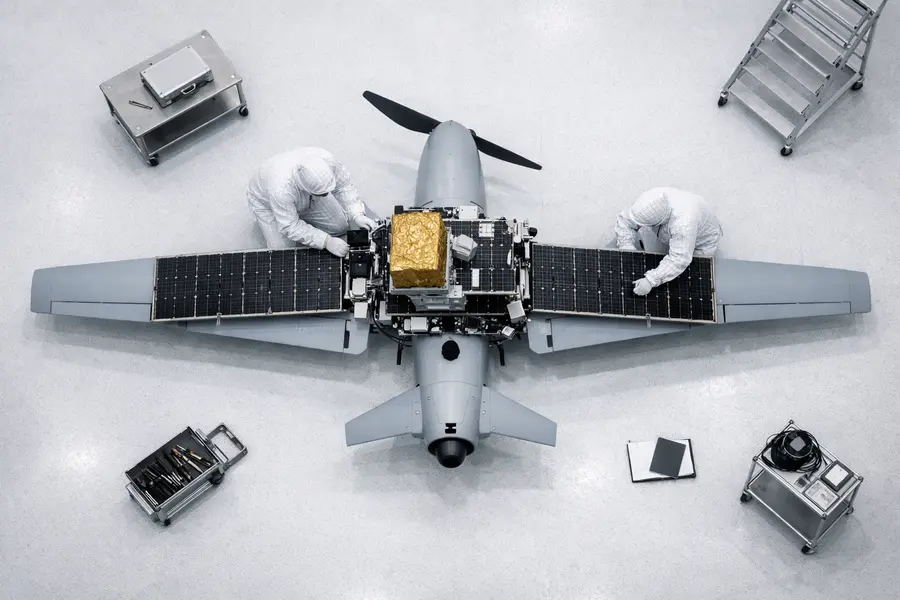
Ukrainian defence tech firm Buntar Aerospace closed a $16M round led by Freedom Fund to scale Buntar-3 drones and Copilot AI, lifting total funding to $30M.
Key Takeaways
- Buntar Aerospace raised $16M, led by Freedom Fund and an unnamed international growth equity investor.
- Total funding reaches $30M, seven months after a $10.4M round led by Axon.
- Valuation and round stage were not disclosed.
Lead
Buntar Aerospace, a Kyiv-based maker of reconnaissance drones and mission software, announced a $16M funding round on October 5, 2026. Freedom Fund and an international growth equity investor, whose name was not released, led the round. Gardar, Iron Wolf Capital and Autonomy Capital also took part. The company says the money will fund production capacity, hiring and a push into foreign markets.
What Does Buntar Aerospace Build?
Buntar Aerospace builds the Buntar-3, an electric vertical-takeoff reconnaissance drone, and Buntar Copilot, mission-management software for drone operations. The Buntar-3 flies for up to four hours and navigates without GPS or satellite signals, a requirement in a theatre saturated with electronic warfare. Copilot plans missions around battery life, weather, altitude and connection quality, and predicts when a drone must return.
The company was founded in August 2023 by Ivan Kaunov, Kateryna Bezsudna and Bohdan Sas, and introduced the Buntar-3 publicly in 2025. In March 2026, the 414th Separate Unmanned Strike Aircraft Brigade used the system to observe and correct fire during SCALP and ATACMS strikes on a Shahed drone base at Donetsk Airport. Both products are in use with frontline units, and the company says they generate steady profits. Revenue, unit output and headcount remain undisclosed.
Who Backed the Round, and What Does It Imply?
The round pairs a Ukrainian-focused venture fund with an unnamed growth equity investor, a sign that the company has moved past the angel-and-strategic stage. The label "growth equity" normally describes a profitable business scaling output, which fits the company's claim of positive earnings. Without a disclosed valuation or round stage, though, outsiders cannot tell whether investors paid up for the traction.
The earlier funding history is more telling. Buntar raised $10.4M in March 2026 in a round led by US security technology company Axon Enterprise, with Norwegian consortium Munkene AS participating. Adding that to the new $16M gives $26.4M, which implies roughly $3.6M raised before March. The company has therefore taken in more than 60 percent of its total capital in the past seven months. Such a short gap between rounds usually points to demand outrunning supply, or to investors competing for scarce Ukrainian defence assets.
Why Is Capital Flowing to Defence Autonomy Now?
Capital is flowing to defence autonomy because Ukrainian units have spent almost four years refining drone tactics under live jamming, and investors want technology validated in combat. A drone that works without GPS has a clear buyer in Ukraine's Armed Forces. The same capability has civilian uses, including infrastructure inspection and border monitoring, which is the dual-use argument Buntar now makes to investors.
Co-founder Bohdan Sas framed the company's direction this way: "Our systems can fly, see and make decisions on their own, so that people can focus on what matters most. This is what Ukraine needs today, and what Europe must be ready for tomorrow."
What Will Buntar Do With the Money?
Buntar plans to expand manufacturing to meet Armed Forces of Ukraine demand, continue developing Copilot, and hire engineers, managers and operations staff. It also intends to acquire teams and technologies and fold them into its platform, which suggests small acquisitions are on the table. Product lines will extend beyond intelligence, surveillance and reconnaissance into counter-drone defence and precision-strike assistance, with dual-use variants for export. The stated goal is a "multi-domain defence autonomy company" with a growing civilian business.
Risks and Competition
Buntar competes in a crowded Ukrainian field, with dozens of drone makers vying for state procurement and Western partner funding. Export is harder than domestic supply, since European buyers impose certification, data-security and cost requirements that frontline-built products rarely meet at first. Software such as Copilot may prove the more durable asset, because it can run across hardware platforms, but the company has not disclosed any customers outside Ukraine.
Outlook
Buntar has doubled its capital base in under a year and has a battlefield record that few drone startups can show. The open questions are valuation, the identity of its growth investor and whether the Buntar-3 and Copilot can win export contracts. Those answers will likely come with the next disclosure of revenue, production volumes or a first foreign customer.