 Pomegra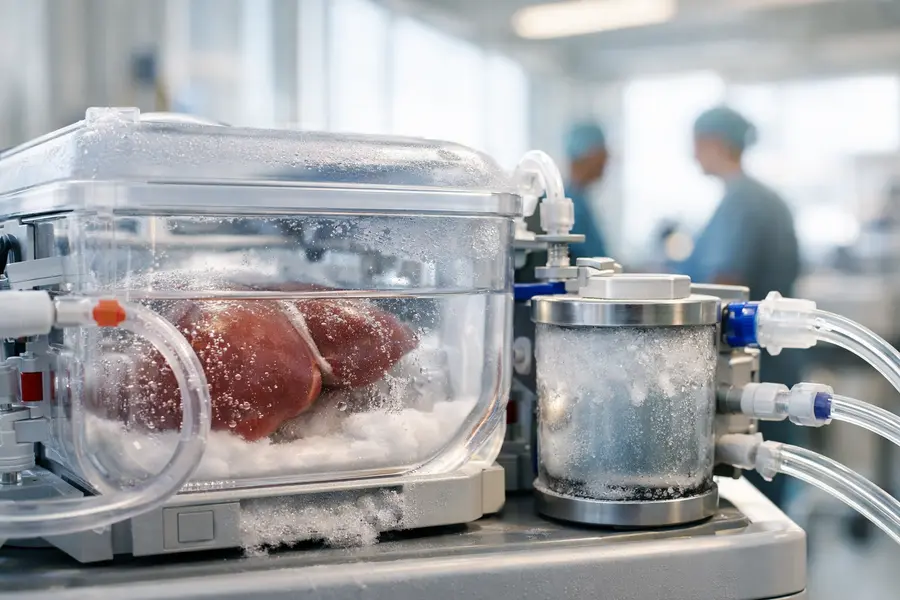
Bridge to Life closes $110M in Series C equity and debt led by Soleus Capital to scale VitaSmart, the first FDA-cleared hypothermic oxygenated perfusion system for donor livers.
Key Takeaways
- VitaSmart received FDA De Novo clearance in January 2026, the first and only U.S.-authorized HOPE system for liver transplantation.
- Soleus Capital led the equity tranche; its Credit Opportunities Fund provided the debt portion alongside Lauxera Capital Partners.
- Proceeds will fund a national rollout to U.S. transplant centers, organ viability assessment R&D, and refinancing of an existing Perceptive Credit Funds facility.
Bridge to Life Closes $110M to Commercialize Liver Perfusion Device
Bridge to Life Ltd. announced on August 12, 2026 the close of a $110 million combined Series C equity round and debt financing, led by Soleus Capital - a new investor to the company. The raise is the largest in Bridge to Life's history and follows FDA De Novo clearance of VitaSmart, the company's hypothermic oxygenated perfusion (HOPE) system, by seven months. Valuation was not disclosed.
The equity portion was co-led by Lauxera Capital Partners with additional participation from Bridge to Life directors, officers, and employees. The debt tranche came from Soleus Capital Credit Opportunities Fund, which also used part of the proceeds to retire the company's prior credit facility with Perceptive Credit Funds - a move that reduces outstanding leverage and lowers the interest rate on the company's balance sheet.
What Does the VitaSmart System Actually Do?
VitaSmart preserves donor livers by pumping cold, oxygenated solution through the organ between procurement and transplantation - a technique called end-ischemic hypothermic oxygenated perfusion. The device addresses a well-documented problem in transplantation: standard static cold storage, where livers are simply packed in ice, does not prevent ongoing ischemic injury and is particularly damaging with organs from donors after circulatory death (DCD). VitaSmart received its FDA De Novo clearance on January 20, 2026, making it the first and only device authorized in the United States for this specific application, covering both donation after brain death (DBD) and DCD donor criteria.
The technology itself is not new in concept. European centers have used HOPE systems in research and clinical practice for years. What Bridge to Life achieved is the regulatory authorization that opens the procedure to the full U.S. transplant market, where roughly 10,000 liver transplants are performed annually.
Why Did the Clinical Data Change the Equation?
The Bridge to HOPE trial closed early. The multicenter, randomized controlled study - enrolling 219 recipients across 15 U.S. transplant centers between January 2021 and May 2023 - hit its primary efficacy endpoint at a pre-defined interim analysis, triggering early termination on statistical superiority grounds. Patients randomized to HOPE after static cold storage showed significantly improved early graft function and statistically shorter hospital stays compared to cold storage alone. The results were published in JAMA Surgery, giving the technology clinical credibility that a press release cannot buy.
Early stopping for efficacy is not a red flag here; it reflects a trial design that required the investigators to stop once the predefined bar was cleared. The 1:1 randomization and 15-center spread limit site-specific bias. The hospital-stay finding, while secondary, matters commercially: shorter stays reduce cost per transplant and give hospital systems a practical reason to adopt the device beyond outcomes alone.
What Does Soleus Capital Bring Beyond the Check?
Soleus Capital specializes in healthcare and life sciences investing, with a track record in late-stage medtech and biopharma commercialization bets. Its involvement on both the equity and debt sides of this deal - through two distinct vehicles - is notable. Dual participation suggests conviction in the credit quality of the asset as well as the equity upside, and it simplifies the cap table by reducing the number of parties Bridge to Life must coordinate through its commercial ramp. The refinancing of the Perceptive facility also signals that Soleus is positioning itself as the company's primary financial partner through the launch phase.
Lauxera Capital Partners, which focuses exclusively on surgical and procedural medtech, brings sector-specific expertise that aligns with the distribution challenge ahead: building out a field team capable of covering more than 100 active liver transplant programs in the United States.
What Comes Next for Bridge to Life?
The primary use of proceeds is workforce expansion. Commercializing a hospital-based perfusion device requires clinical specialists embedded in transplant centers - people who can support cases, train surgeons and coordinators, and manage disposable supply chains in a field where timing is measured in hours. Bridge to Life also flagged investment in a proprietary organ viability assessment technology and expansion of its organ preservation portfolio, suggesting VitaSmart is intended as the first product in a broader platform rather than a standalone device.
International growth is also on the agenda. The HOPE technique has more established clinical history outside the U.S., meaning reimbursement pathways in some European markets may be less contested than in the United States, where coverage decisions by CMS and private payors will shape adoption rates materially.
Outlook
Bridge to Life enters the commercialization phase with a regulatory-cleared product, a pivotal trial published in a top surgical journal, and a balance sheet that has just been materially strengthened. The near-term test is build-out speed - whether the company can place VitaSmart in enough centers fast enough to establish procedural volume before reimbursement uncertainty resolves. A refinanced debt facility and a committed lead investor reduce financing risk. Execution risk remains.