 Pomegra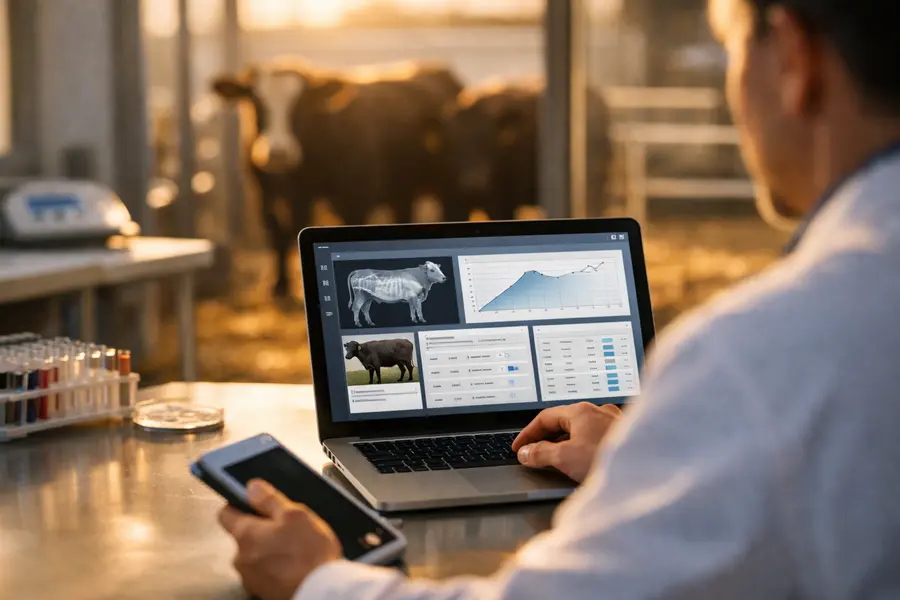
UK-founded livestock platform Breedr has closed a €23M Series B led by Partech's impact fund, expanding a per-animal digital record system now tracking two million cattle across ten global supply chains.
Key Takeaways:
- Partech led the round through its impact fund; Latitude and Outsiders Fund co-invested, lifting total funding to €39.9M.
- More than 2 million cattle carry digital records on the platform; close to $500M of livestock was transacted through Breedr in 2026.
- New capital targets team growth, wider farmer onboarding, and genomic data capture to deepen each animal's profile.
The Round
Breedr, the precision livestock platform founded in London in 2018 by Ian Wheal and now headquartered in Texas, raised €23M ($27M) in a Series B in August 2026. Partech's impact fund led the deal. Latitude, the growth-stage vehicle of seed investor LocalGlobe, and Outsiders Fund co-invested. Total cumulative funding reaches €39.9M ($46.6M). No post-money valuation was disclosed.
Partech's Arnaud Minvielle and Latitude's Remus Brett will join the board.
What Does Breedr Actually Build?
The platform assigns each animal a persistent digital record - weight readings, health events, family history - that travels with it from birth through processing. Three products sit inside the stack: a livestock management app used on-farm, an AI-backed data-verified cattle marketplace, and an embedded finance product that lets producers borrow against cattle values.
The record's worth compounds as data accretes. A calf enrolled at birth arrives at a feedlot with months of verified weight gain and health history already attached. By the time it reaches a processor, a buyer or retailer can read the full audit trail without relying on paper tags or producer recall. That chain of custody - genetics, health interventions, and yield data rolled into a single record - is what Breedr describes as a digital passport for each animal.
Why Did Partech Lead a Beef Data Round?
Partech deployed this capital from its impact fund, which targets measurable environmental or social outcomes. The logic is direct: traceability data enables antibiotic stewardship documentation, carbon accounting at the individual animal level, and waste reduction across the supply chain. These are becoming hard regulatory and retailer requirements in multiple jurisdictions, not optional product features.
The investment is also a structural bet. Breedr already has two million cattle on the platform and roughly $500M of livestock transacted through its marketplace in 2026. A competitor starting from zero faces a meaningful enrollment gap - data-side network effects are slow to build and difficult to replicate. For Partech, the moat argument sits in the data lake as much as the software.
How Far Has the Platform Actually Reached?
Breedr operates across the US, UK, Australia, New Zealand, and Europe - five markets with meaningfully different traceability regimes. The UK mandates statutory ear-tag identification under the National Livestock Identification System. The US has had a patchier mandatory ID history. Selling into both means either bending the product to local rules or abstracting above them; Breedr's architecture leans toward the latter, layering compliance requirements onto a shared data model.
The platform serves customers ranging from family ranches to operations managing more than 100,000 cattle annually. That scale spread matters: enterprise feedlot contracts anchor revenue, but smaller operations are what fill the data set with variety.
Where the New Money Goes
The stated priorities are headcount, farmer acquisition, and genomic data. The third item carries the most strategic weight. Adding DNA markers to a per-animal record changes what the data can do for downstream buyers - processors can select for yield traits, retailers can substantiate provenance claims, and producers with superior genetics can finally extract a price signal from markets that currently price most cattle as undifferentiated commodity.
Genomic sampling at commercial scale is expensive and operationally complex. The €23M runway will test whether Breedr can execute that expansion in-house or needs to partner its way to DNA coverage at volume.
Outlook
Breedr enters its growth phase with credible scale metrics and board-level backing from two established funds. The next proof points are farmer retention and genomic coverage. If animals stay on the platform year after year and the genetic data layer reaches commercial density, the network effects justify the round's ambition. If enrollment stalls or genomic rollout drags, the platform remains a farm management app competing on features rather than on a data advantage that is genuinely hard to displace.
The previous £12M raise built the product. This round is meant to build the network.