Pomegra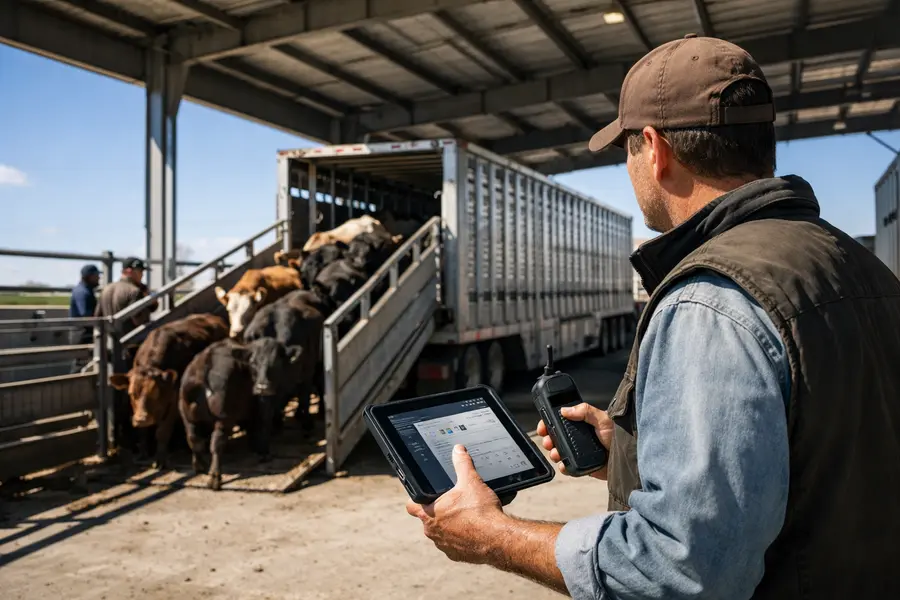
Livestock management platform Breedr has closed a $27 million Series B led by Partech's impact fund, bringing total funding to $46.6 million as it pursues full digitization of the global beef supply chain.
- Partech's impact arm led the round, with Latitude and Outsiders Fund participating; two investors join Breedr's board.
- More than 2 million cattle now carry digital records on the platform, with ~$500M in livestock transacted this year.
- The raise comes as the US cattle herd opens 2026 at its smallest since 1951, compressing supply and intensifying traceability pressure.
Lead
UK-founded, Texas-based Breedr announced in August 2026 a $27 million Series B round led by Partech's impact fund, with participation from Latitude - the growth fund of early backer LocalGlobe - and Outsiders Fund. The injection lifts total capital raised to $46.6 million and extends the company's runway to push deeper into the US and Australian markets after six years of building what it calls a cradle-to-carcass data layer for beef cattle.
What Does Breedr Actually Do?
The platform assigns every enrolled animal a persistent digital record at birth, logging weight gains, health treatments, movements, and ownership changes as the animal passes through the supply chain. That record travels with the animal to slaughter and, in theory, to the supermarket shelf. The model sits between farm management software - which ranchers have used for decades - and supply chain traceability tools that processors and retailers increasingly demand under tightening food safety regimes.
More than 2 million cattle are enrolled as of the announcement. Close to $500 million in livestock is on track to trade through Breedr's embedded marketplace in 2026, a figure that doubles as both a product metric and a revenue driver, since the company takes a transaction fee on trades cleared through the platform.
Why Is Partech's Impact Fund Writing This Check?
Partech structured its involvement through its impact vehicle, signaling that the thesis here is not purely financial. Beef production sits at the intersection of food security, carbon emissions, and antibiotic stewardship - three areas where institutional investors with ESG mandates are concentrating capital. A per-animal digital record is the precondition for any credible scope-3 emissions accounting across a protein supply chain, which makes Breedr's dataset a potential compliance asset as much as a product.
Arnaud Minvielle of Partech and Remus Brett of Latitude join the board as part of the deal, giving the company two new directors with backgrounds in scaling B2B platforms internationally.
What Does the US Cattle Shortage Mean for Breedr?
The timing is notable. The US cattle herd enters 2026 at its lowest count since 1951, and the USDA projects this year's calf crop will be the smallest on record. A shrinking herd means higher per-head prices and, by extension, higher pressure on traceability - buyers paying record prices want certainty about what they are buying. That dynamic creates a natural tailwind for a platform that monetizes data attached to each animal.
It also creates a ceiling: fewer cattle means a smaller total addressable herd to enroll in the near term. Breedr's expansion into Australia, where herd rebuilding cycles differ from the US, partially hedges that risk.
What Will the Capital Fund?
The company plans to scale its global engineering team, accelerate rancher onboarding across its three active markets, and extend platform features to include genomic data tracking. Genomics is the next inflection point: DNA profiles attached to animal records would allow buyers to purchase on predicted performance rather than historical weight data, a shift that would deepen platform lock-in significantly.
Breedr was founded in 2018 by Ian Wheal and relocated its operational headquarters to Texas in 2022, a move that reflected where the bulk of its commercial opportunity was concentrating. The US beef sector - the world's largest by production value - had lagged UK and Australian markets in digital adoption, and Breedr was positioning for that catch-up.
Prior Capital and Valuation
The Series B does not disclose a post-money valuation. The previous Series A, led by Investbridge Capital in early 2025, raised $16 million; before that, a 2022 round brought in £12 million. The trajectory of round sizes - from seed to Series A to a $27 million B - is consistent with a company that has moved from product validation to scaling a marketplace with meaningful transaction volume.
Outlook
Breedr enters the second half of 2026 with fresh capital, two new board members, and a macro environment that rewards traceability. The core challenge is network density: a livestock data platform becomes more valuable as more animals and more buyers operate within it, and the company must convert transaction volume into a defensible data moat before larger ag-tech incumbents or commodity exchanges build competing layers. The genomics roadmap is the clearest signal of where Breedr wants that moat to sit - deeper than logistics, closer to biology.