Pomegra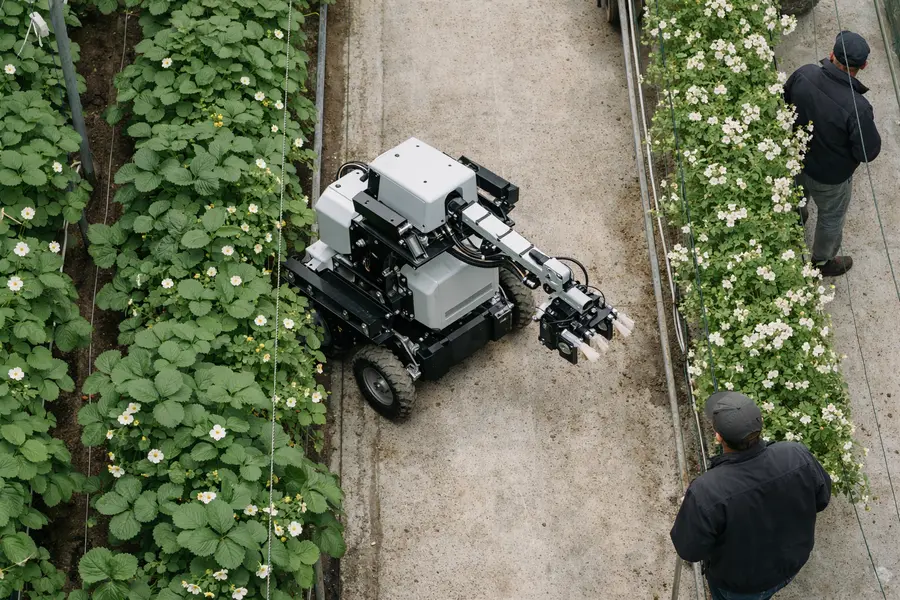
Israeli agtech BloomX closed a $13M Series A led by Elah Fund to scale its YAHAV2400 robotic pollination platform for blueberry and avocado growers worldwide.
Key Takeaways
- BloomX closed a $13M Series A led by Elah Fund; the valuation was not disclosed.
- Rothschild, OurCrowd and Sadot joined, and three Granot-affiliated kibbutzim invested separately.
- The company, founded in 2019, now operates in Israel, Peru, Mexico and South Africa.
Lead
BloomX, an Israeli developer of robotic crop pollination, announced in early October 2026 that it closed a $13 million Series A round led by Elah Fund. The company says it will use the money to deepen work with existing customers, speed up adoption of its YAHAV2400 orchard platform, and enter new crops and countries. Valuation and revenue were not disclosed.
What Did BloomX Raise and Who Backed It?
BloomX raised $13 million in a Series A, with Elah Fund as lead. Rothschild, OurCrowd and Sadot, the agtech fund set up by Israel's Granot Organization, also participated, alongside existing shareholders and new strategic partners from agriculture.
Several kibbutzim affiliated with Granot invested separately: Magal, Horashim and Eyal. They plan to be among the first growers to deploy YAHAV2400 in their own orchards. Founder and CEO Thai Sade said the people who understand the realities of commercial agriculture are choosing both to invest in BloomX and to bring its technology into the field.
The round follows roughly $8 million raised earlier, which puts total funding near $21 million. The size of the step up is modest by agtech standards, and the undisclosed valuation leaves open how much the early investors' stakes were marked up.
How Does BloomX Pollinate Crops?
BloomX builds mechanical systems that copy what bees do. The company describes its approach as bio-mimicking robotic pollination, combining proprietary robotic and mechanical hardware with agronomic protocols and data-driven tools. The flagship YAHAV2400 is an orchard-scale platform that BloomX introduced in several territories over the past year.
Initial focus is on blueberries and avocados, two high-value crops where flowering windows are short and poor pollination shows up directly in fruit set. The incumbent solution is rented honeybee hives, which depend on weather, hive health and bee availability. BloomX is pitching a machine that does the same job on a schedule the grower controls.
Why Are Growers Backing Robotic Pollination?
Growers are backing it because pollination is a recurring, uncontrollable cost and risk in crops where a missed flowering window cannot be recovered that season. The kibbutz investments matter more than the headline figure on that point. Farmers putting their own capital in, and committing to deploy the system, is a stronger signal than a financial investor's cheque.
The caveat is evidence. BloomX has not published yield gains, cost per hectare or customer retention figures alongside the round. Without those, the claim that pollination can become a managed service that scales across commercial farming remains a thesis rather than a demonstrated business model.
Strategic Context
BloomX was founded in 2019 and had about 19 employees at last count. It operates commercially in Israel, Peru, Mexico and South Africa, which spreads its exposure across both hemispheres and across harvest calendars. That spread helps a service model, since equipment can be used in more than one season.
It also carries operational weight. Running robots across four countries means field support, agronomy staff and machine maintenance in each, and a Series A of this size will be tested by how quickly those costs fall per hectare. Selection for the inaugural ScaleUp House cohort, a program for companies entering a growth phase, adds some commercial support but not capital.
What Comes Next for BloomX?
BloomX's next steps are new crops, new geographies and wider YAHAV2400 deployment. Adding crops is the larger test, because each one has different flower structure and timing, and each needs its own protocols before a machine can match bees.
Expect the proof points to arrive through season-over-season grower results rather than through further fundraising. If the kibbutz deployments report yield and cost numbers that beat hive rental, a larger round becomes easier to justify. If not, the company's reliance on a small set of high-value crops will limit how fast it can grow.
Outlook
BloomX has $13 million, a lead investor in Elah Fund, and agricultural backers who intend to use the product themselves. What it lacks in public view is valuation, revenue and independent yield data. The next few harvests in Israel, Latin America and South Africa will show whether robotic pollination can compete with bees on price as well as on control.