 Pomegra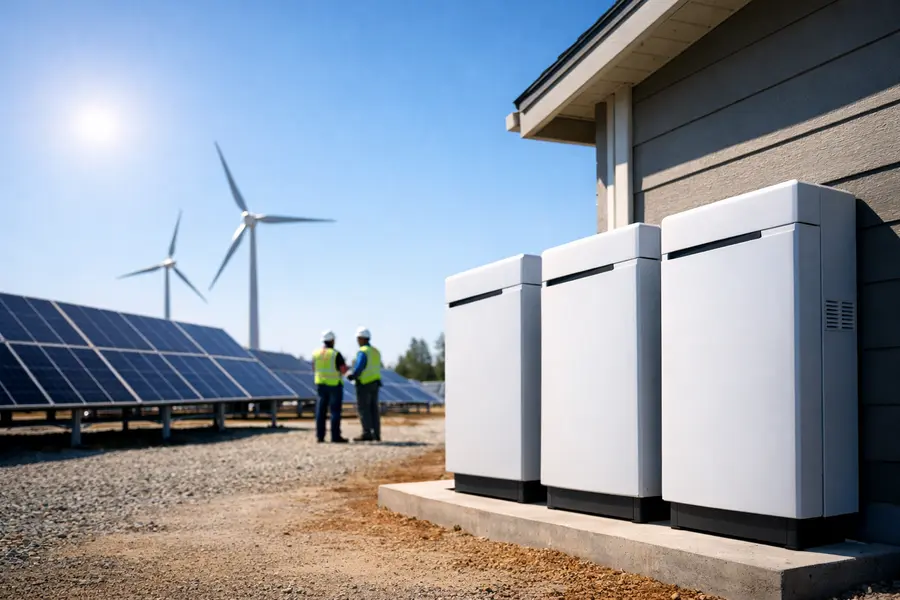
Base Power's August 2026 raise triples its Series C valuation in under a year, backed by Ribbit, Valor Equity, and JPMorganChase as it installs 100 home batteries per day.
- Base Power closed a $1 billion Series D on August 3, 2026, valuing the Austin startup at $13 billion post-money.
- The company installs roughly 100 home batteries per day, adding approximately 8 MWh of distributed grid capacity daily.
- The round marks Base's second billion-dollar close in less than a year, following a $4 billion Series C in October 2025.
Lead
Base Power closed a $1 billion Series D on August 3, 2026, at a $13 billion post-money valuation - a more than threefold jump from the $4 billion it commanded just ten months earlier at its Series C. The round was co-led by Ribbit Capital, Valor Equity Partners, Addition, and JPMorganChase's Strategic Investment Group, with Altimeter, D1 Capital Partners, Sands Capital, Coatue, Layer Global, and Energy Impact Partners joining in. Existing backers Thrive Capital, a16z, Lightspeed, Trust Ventures, and CapitalG also re-invested.
What Does Base Power Actually Do?
Base Power installs large home battery systems - and then keeps ownership of them. Homeowners pay $695 upfront plus a $19 monthly membership fee to gain battery backup and cheaper electricity rates. In exchange, Base retains the right to dispatch the battery to the grid during demand and price spikes, operating what it calls a distributed virtual power plant. The company also acts as the retail electricity provider for its members, capturing margin on both the utility bill side and the wholesale energy market. The model, sometimes called a "gentailer," combines generation and retail electricity in a single customer relationship.
The newly launched Base Core - manufactured at Base Factory 1 in Austin - is among the largest home battery systems on the market at 39.2 kWh in a single unit, with a dual-unit configuration reaching 78.4 kWh. It installs in under an hour. The domestic manufacturing point matters: federal tax credits reduce the effective cost to customers by roughly $3,000.
Why Is the Valuation Growing This Fast?
The $13 billion figure demands some scrutiny. Three years ago, Base Power did not exist. At its Series C in October 2025, it was valued at $4 billion. The jump to $13 billion in under a year implies that investors are pricing in a national rollout, a proprietary hardware moat, and sustained grid-services revenue - none of which are fully visible in the financials. The company has not disclosed revenue or detailed profitability data.
What Base has disclosed is operational scale. Its battery fleet now exceeds 500 MWh. It is currently installing about 100 batteries per day and aims to double that rate by year-end. It has expanded beyond Texas into Illinois, and has signed utility partnerships with El Paso Electric, Austin Energy, and CoServ covering more than 200 MW of contracted capacity. That combination of hardware velocity and utility contracts makes a credible case for the multiple, even if the income statement remains opaque.
At roughly $10,000 gross per installation before the $3,000 tax credit, and at 100 installs per day, Base is deploying capital fast. The sustainability of that pace - and the unit economics across customer acquisition, battery ownership, and grid dispatch - is where the real risk lives.
Who's Behind It?
Base Power was founded in 2023 by Justin Lopas and Zach Dell, the latter the youngest son of Michael Dell. Zach Dell is approaching 30 and has built a company now valued at $13 billion. The founding story adds color, but the investor list reads as a conviction signal: Ribbit Capital, known for fintech bets on complex regulated markets, brings pattern recognition around businesses where financial structuring is as important as the product itself. Valor Equity Partners, which backed Tesla's early manufacturing scale-up, has a similar track record with capital-intensive hardware companies trying to build at volume.
Grid Context
The timing matters. U.S. electricity demand is growing at a rate not seen in decades, driven by data centers, electric vehicles, and industrial electrification. Utilities are struggling to add transmission and generation capacity fast enough. Distributed battery networks that can respond in seconds to grid signals represent one of the faster paths to additional flexible capacity - faster than new power plants, faster than most transmission projects. Base Power's bet is that homeowners, offered backup power and lower bills, will effectively subsidize the buildout of grid infrastructure that the utilities cannot finance quickly enough on their own.
Outlook
With $2.5 billion raised in total and a manufacturing facility already running in Austin, Base Power has moved well past proof-of-concept. The open questions are national scalability - replicating the Texas regulatory model in other states is not automatic - and whether the economics hold as the company grows beyond its home market. Investors have voted loudly at $13 billion. The grid will deliver the actual verdict.