Pomegra
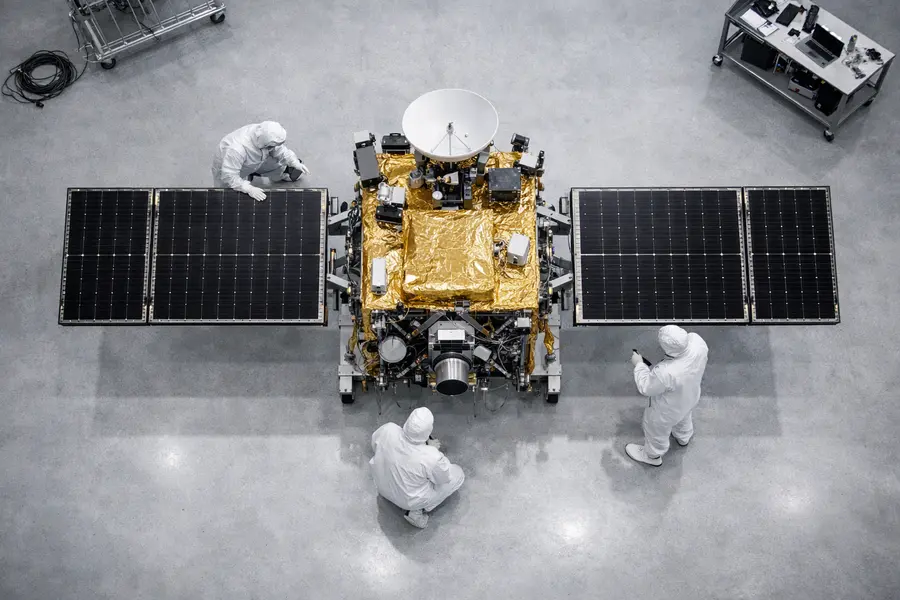
ASI, the Boston startup behind AI forecasting for air traffic, power grids and military operations, raised a $325 million Series C at a $3 billion valuation led by Spark Capital.
Key Takeaways
- ASI raised $325M in a Series C led by Spark Capital at a $3B valuation, announced October 20, 2026.
- Citadel Securities affiliates, Meritech, Craft, Energy Impact Partners and Andreessen Horowitz also joined.
- Proceeds fund energy, logistics and military expansion plus more Boston engineering hires.
Lead
ASI, formerly Air Space Intelligence, announced a $325 million Series C on October 20, 2026. The round values the company at $3 billion. Spark Capital led, with affiliates of Citadel Securities, Meritech Capital, Craft Ventures, Energy Impact Partners and Andreessen Horowitz participating.
The Boston company builds software that simulates and forecasts disruptions hours to weeks ahead across air traffic, electric grids, logistics networks and military operations. It will use the money to expand deployments in energy, logistics and tactical-edge settings and to add research and engineering staff in Boston.
What Does ASI Actually Sell?
ASI sells predictive operational software to institutions that run physical systems and cannot afford surprises. Its models forecast where congestion, weather or equipment failure will disrupt a network, then recommend how to reroute or reschedule assets.
Founder and CEO Phillip Buckendorf started the company in 2018 with Lucas Kukielka and Kris Dorosz. Its airline roster includes Delta Air Lines, Alaska Airlines and United Airlines. National Grid is a named utility customer, and the air-taxi operator Joby also uses the software.
Who Is Paying for It?
Governments supply the most visible revenue evidence. The Federal Aviation Administration awarded ASI a contract worth up to $875 million over 12 years in June 2026, and implementation began in September. In October, the US Army followed with a five-year contract valued at $99 million.
The US Air Force also used the software to support more than 4,000 operators during Operation Epic Fury. ASI has not disclosed revenue or headcount, so the contract ceilings are the only public yardstick for the business.
How Does the Valuation Compare With ASI's Earlier Rounds?
The $3 billion price is roughly ten times the figure from the company's previous priced round. That Series B, a $34 million investment led by Andreessen Horowitz, valued ASI at about $300 million. Total disclosed funding before this round was about $37 million across a seed and the Series B.
A tenfold step in valuation over a short interval rests heavily on federal paper. Contract ceilings such as the FAA's $875 million are maximums, not guaranteed revenue, and they pay out only as task orders are issued. Investors are pricing in conversion of those ceilings into recurring revenue and a move into commercial energy and logistics, where ASI has fewer disclosed customers.
Why Are Citadel Securities Affiliates Backing a Grid and Airspace Forecaster?
Citadel Securities' interest reflects a view that ASI's forecasting resembles the probabilistic modeling used in markets, applied to physical networks. Anthony DeCamillo of Citadel Securities said institutions behind critical systems trust ASI to show them what is coming next. Spark's Clay Fisher described it as an AI company running the physical world and orchestrating its most valuable assets.
Buckendorf framed the company against the broader industry, saying the tech sector spent hundreds of billions teaching AI to generate text while ASI focuses on systems that manage and control physical assets. That framing is the company's own, and the investor group is betting it holds up against well-funded defense-software and grid-analytics rivals.
What Comes Next for ASI?
The near-term test is execution on the FAA and Army programs, where delivery milestones will show whether the software performs at national scale. A second test is commercial: energy and logistics buyers have longer procurement cycles than airlines, and ASI has named few customers there.
Grid operators face rising demand and weather volatility, which creates a market for forecasting tools. Military buyers, meanwhile, are shifting spending toward software-defined command and control. If ASI converts even a fraction of its contract ceilings into revenue, the Series C price will look measured. If task orders arrive slowly, the valuation will rest on promise rather than receipts.
Outlook
ASI enters its next phase with $325 million, a $3 billion valuation and anchor government contracts worth up to $974 million combined. The company still has to prove that its air-traffic success carries over to power grids and logistics, and that disclosed ceilings turn into recurring revenue.