Pomegra
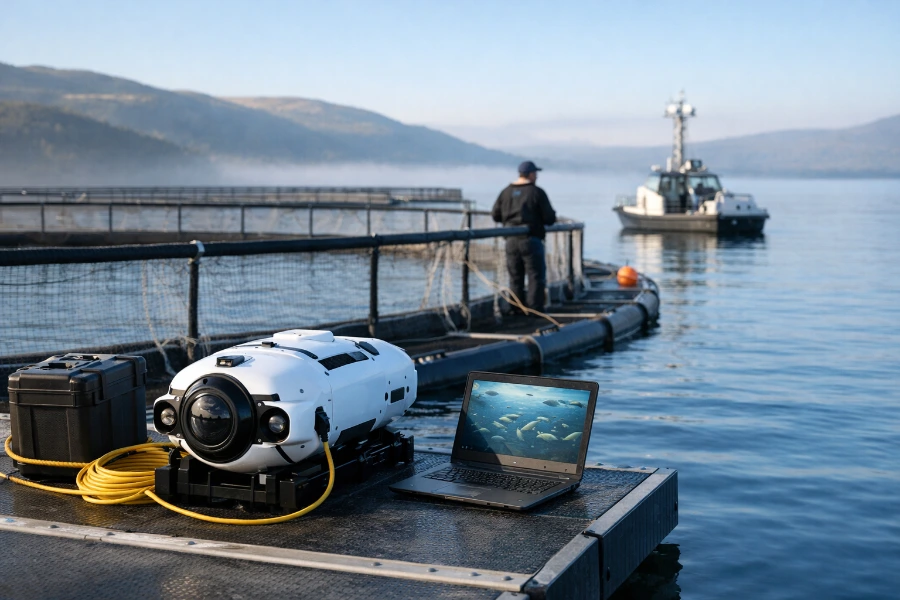
Scottish aquatech firm Aqura Systems has raised £2.1M led by Archangels, with Scottish Enterprise co-investing, to take its MIAbot monitoring robot toward commercial launch.
Key Takeaways
- Aqura Systems raised £2.1M in a round led by Archangels, with Scottish Enterprise participating.
- Its MIAbot robot currently tracks phytoplankton and algal blooms. Jellyfish, sea lice and amoeba detection is in development.
- Ex-Norway Royal Salmon chief executive Charles Høstlund joins as chair to push into Norway.
Lead
Aqura Systems, a Scottish aquatech company, announced a £2.1M funding round on 25 November 2026. Archangels led the round and Scottish Enterprise took part. The company will spend the money on expanding its AI training datasets, further testing and refining the product for commercial deployment and international expansion. Round stage and valuation were not disclosed.
What Does Aqura's MIAbot Actually Do?
MIAbot is a fully automated robotic platform that monitors biological threats inside fish farms at different depths and in multiple locations. It combines a proprietary imaging system with an AI engine that identifies microorganisms to species level. It also reports concentrations, depth and water quality data.
The current commercial focus is phytoplankton, the microscopic organisms behind harmful algal blooms. The pipeline adds micro jellyfish, sea lice and amoeba. Each of those is a recurring cause of stock losses on salmon farms.
The system replaces a manual routine. Farm staff draw water samples and examine them under a microscope. That method is slow, covers few locations and depends on the person at the eyepiece. MIAbot is designed to give farmers a live view of what is in the water column.
Who Is Behind the Company?
Chris Hyde (chief executive), Steve Ball and Gareth Hammond founded Aqura. They bring a combined 80 years of aquaculture experience. Hyde said early reception and testing of MIAbot with industry has been very positive, and that technology has a large opportunity to improve fish health.
Pilot projects are running with major Scottish salmon farming companies. Aqura has not named them or published results from those trials.
Why Did Aqura Appoint a Norwegian Chair?
Aqura chose Charles Høstlund because its next commercial test is Norway, which produces about half of the world's farmed salmon. Høstlund spent eight years as chief executive of Norway Royal Salmon, has more than 25 years in salmon farming and is now chief operating officer of Nordic Aquafarms. His remit covers final product testing and international commercialisation.
Høstlund described harmful algal blooms as one of the most costly and least predictable risks salmon farmers face. That framing fits the product's first use case. Bloom events can kill fish within hours, and early warning is worth more to a farm than after-the-fact analysis.
What Does the Round Say About Aqura's Stage?
At £2.1M, the round funds validation, not scale. The stated uses are datasets, testing and refinement, which points to a product that is still pre-commercial. Pilots exist, but no paying customer, contract value or revenue figure has been disclosed.
The investor mix matches that profile. Archangels is a Scottish angel investment group, and Scottish Enterprise is the national economic development agency. Neither is a deep-pocketed international fund, and no follow-on from Nordic investors has been announced. A Norwegian chair may help change that, but the company will need field evidence to attract it.
The market is large on paper. Tech.eu cites a global aquaculture industry valued at £371 billion. That figure covers the whole sector, not the monitoring segment, and says little about how much farms will pay for sensors and robotics.
What Comes Next for Aqura?
The next milestones are the conversion of Scottish pilots into paid deployments and a first Norwegian trial. Success depends on accuracy. Species-level identification in open water, across changing conditions, is difficult, and a missed bloom or a false alarm would cost a farm money either way. The planned expansion of the training dataset addresses this directly.
Competition is also a factor. Farms already use sensors, buoys and satellite-based bloom alerts, and many will want to see MIAbot outperform those at a comparable cost. The jellyfish, sea lice and amoeba modules would widen the product's value if they reach market, but none is available today.
Outlook
Aqura enters 2027 with £2.1M, a Norwegian-experienced chair and live pilots with Scottish salmon producers. Valuation, round stage and customer names remain undisclosed. The next evidence will be pilot results and a Norwegian deployment, which will show whether automated monitoring can displace the microscope at commercial scale.