Pomegra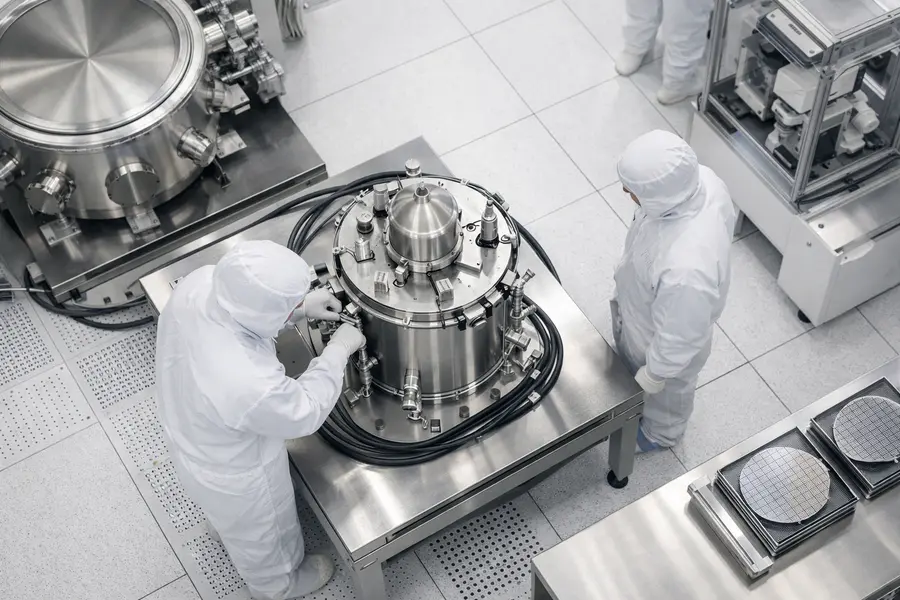
MIT spinoff Apollo Atomics secured $31 million in seed funding to factory-build pressurized water reactors 40x smaller than conventional designs, targeting AI data centers and industrial customers.
- Apollo Atomics raised $26M in equity and $5M in debt in an oversubscribed seed round led by FCVC, with Y Combinator among co-investors.
- The Cambridge, Massachusetts company's proprietary compact steam supply system delivers roughly 10x higher power density than standard reactor designs.
- Apollo has signed letters of intent totaling more than 20 gigawatts of demand before its first commercial reactor ships.
The Round
Apollo Atomics announced $31 million in seed financing on August 20, 2026, in a round led by FCVC. Co-investors include Y Combinator - where Apollo was part of the Spring 2026 batch - alongside Telesoft Partners, Alumni Ventures, Robinhood Ventures, Nucleation Capital, Pelion VC, and Duke Capital Partners. Y Combinator co-founder Paul Graham participated as an individual investor, joined by Ray Rothrock, Philip Johnston, and Matteo Franceschetti. Valuation was not disclosed.
The structure splits $26 million in equity from $5 million in debt, a combination that suggests the company expects capital-intensive hardware milestones before its next equity raise. The round was oversubscribed.
What Is Apollo Atomics Building?
Apollo is commercializing a new generation of pressurized water reactors (PWRs) designed to be built in a factory, loaded onto a truck, and deployed in under two years. The company's core technology is a proprietary compact steam supply system, developed from more than 15 years of research and testing at MIT, that achieves roughly an order of magnitude higher power density than conventional reactor internals. That density gain is what allows the overall reactor footprint to shrink by a factor of 40 without reducing electrical output.
The platform comes in three sizes: 10 megawatts-electric, 50 MWe, and 300 MWe. The 10 MW unit is small enough to address the edge-of-grid deployments increasingly demanded by AI data center operators who cannot wait a decade for grid upgrades. The 300 MW option is sized to compete with utility-scale natural gas peakers.
Unlike most advanced nuclear startups pursuing novel fuel types or exotic coolants, Apollo leans on commercially available uranium fuel, existing supply chains, and established Nuclear Regulatory Commission licensing pathways. That is a deliberate bet: faster regulatory approval at the cost of a narrower technology moat.
Why Is This Moment Drawing Capital?
The AI infrastructure buildout has exposed a structural gap in firm power. Data center operators need electricity that is always on, geographically flexible, and carbon-free - a combination that neither solar-plus-storage nor grid interconnect queues reliably deliver on five-year timescales. Small modular reactors (SMRs) have been the theoretical answer for years; the question has been whether any company could make the economics work at factory scale rather than one-off construction.
Apollo's 20-plus gigawatts of signed letters of intent is a striking commercial signal for a company still working through testing and regulatory approval. Letters of intent are not contracts and carry no revenue, but the pipeline size suggests the demand problem is not the bottleneck.
The FCVC-led round also reflects a broader shift in climate tech venture. After several years in which battery storage and solar software attracted the bulk of deep-tech capital, nuclear is pulling outsized attention in 2026. YC's direct participation as investor - not merely as an accelerator credential - is a marker of that shift.
How Does the Factory Approach Change the Risk Profile?
Factory manufacturing is the central claim and the central risk. Conventional nuclear projects are notorious for cost overruns tied to bespoke, on-site construction. Apollo's thesis is that moving reactor components into a controlled manufacturing environment applies the same quality and cost dynamics that transformed aerospace and automotive production. If the thesis holds, per-unit costs fall with volume. If the factory introduces unexpected quality control problems - or if regulators require on-site modifications that undermine the standardization - the economics collapse.
Apollo's choice to stay within the PWR design envelope reduces one layer of technical uncertainty. PWRs are the dominant reactor type globally; the physics and materials behavior are well-characterized. The company is not asking regulators to approve an unfamiliar coolant or a new fuel cycle. That conservatism gives the licensing timeline more predictability than competitors pursuing molten salt or gas-cooled designs.
What Comes Next for the Company?
With $31 million in the bank, Apollo's near-term priorities are hardware validation and regulatory filing. The company has not disclosed a target date for its first operating unit or a projected per-megawatt cost at scale. Both numbers will matter far more than the seed round when the company returns to raise a Series A, which at typical nuclear hardware burn rates will need to be substantially larger.
The 20 GW letter-of-intent figure will also face scrutiny. Converting that pipeline to paid contracts requires Apollo to demonstrate a licensed, operational design - and to do so in a market where hyperscaler procurement teams are simultaneously evaluating competing SMR developers, long-duration storage, and direct air-cooled gas turbines as backup options.
Outlook
Apollo Atomics enters the funded phase of its life with genuine technical differentiation, a credible academic pedigree, and more commercial momentum than most nuclear startups show at seed stage. The gap between a factory-built reactor concept and a commissioned, revenue-generating unit remains wide, measured in years of regulatory process and hundreds of millions in follow-on capital. The $31 million buys the company the time to prove its hardware works at small scale. Everything after that depends on what those tests show.