Pomegra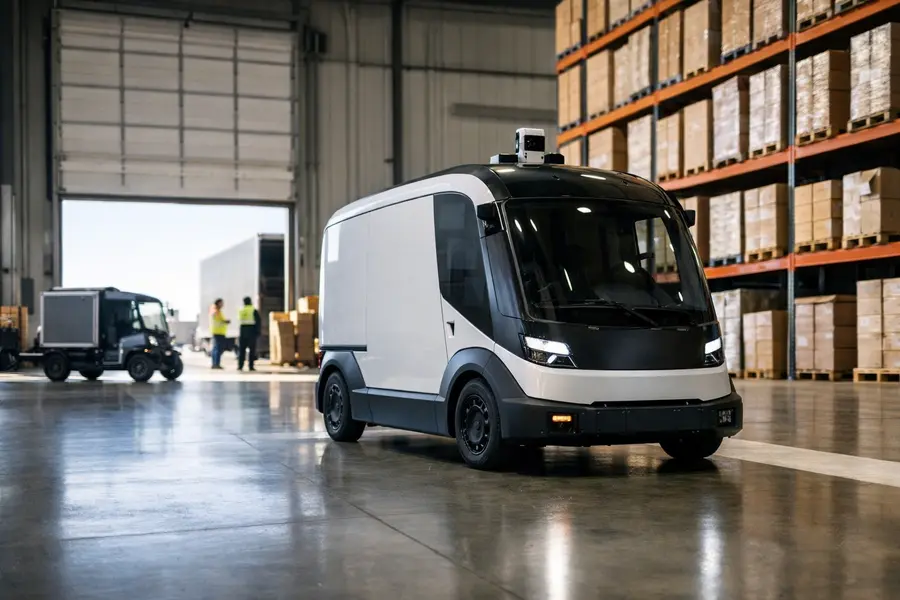
Rivian spinout Also crosses the unicorn threshold with a Prysm Capital-led round, betting its $3,500 e-bike is the entry point to a much larger autonomous delivery business.
Key Takeaways
- Also raised $150M in Series D funding led by Prysm Capital, lifting its valuation above $1 billion.
- Total funding since founding reaches $455M in under two years, with Amazon and DoorDash as commercial customers.
- New capital targets autonomous driving development across "multiple autonomous form factors," beyond current e-bikes and cargo quads.
Lead
Rivian spinout Also closed a $150 million Series D on August 19, 2026, led by Prysm Capital and joined by existing backers Eclipse, Greenoaks, and MVP Ventures. The round pushes Also's valuation above $1 billion and brings total capital raised to $455 million since the company emerged from Rivian's skunkworks less than two years ago. The money goes toward autonomous driving technology and what the company describes as "the simultaneous progression of multiple autonomous form factors" - a phrase that signals Also is building far beyond the $3,500 e-bike it sells today.
What Also Actually Makes
Also's current product lineup consists of two vehicles: the TM-B, a consumer pedal-assist electric bike priced at $3,500, and the TM-Q, a commercial electric cargo quad designed for last-mile delivery. The company began as an internal project at Rivian, driven by RJ Scaringe - who co-founded Also and now chairs both companies simultaneously. Rivian holds a minority stake.
The spinout launched in early 2025 with $105 million. A $200 million Series C followed later that year, led by Greenoaks with Prysm participating alongside a strategic investment from DoorDash. The pace of capital deployment is aggressive: three large rounds in roughly 18 months, each larger than the last.
Why Does an E-Bike Company Need $455 Million?
It doesn't, if it's just building e-bikes. Also's bet is that the TM-B and TM-Q are not the product - they are the distribution mechanism for an autonomous driving stack that can eventually replace human couriers at scale.
DoorDash has signed a multi-year commercial agreement with Also to jointly develop and deploy autonomous delivery vehicles. Amazon is already a customer. Both partnerships suggest Also's technology is being validated in real logistics environments rather than staged demos. The strategic logic: seed fleets with low-cost, human-operated EVs, then retrofit or replace those fleets with autonomous variants once the technology matures and regulatory approval is secured.
The approach is similar to what companies like Starship Technologies and Serve Robotics have attempted with sidewalk robots, but Also is targeting a broader form factor range - including road-going vehicles - which expands the addressable market and the complexity.
What Does a $1 Billion Valuation Imply?
The Series C round earlier in 2026 came before the unicorn threshold was crossed. Prysm Capital now leads a fourth round at a materially higher price, which means two consecutive up-rounds in the same calendar year. That trajectory either reflects genuine commercial traction with Amazon and DoorDash, or investors are pricing in the autonomous delivery opportunity before it exists in revenue.
Also has not disclosed revenue figures publicly. At $455 million in total funding, the pressure to produce commercial-scale autonomous deployments - not just pilot programs - will intensify with each subsequent quarter.
How Does This Compare to the Broader Autonomous Delivery Market?
The autonomous last-mile delivery space has contracted significantly since 2022. Several well-funded players burned through capital without achieving unit economics that justified continued investment. The survivors are those with anchor enterprise contracts rather than consumer-facing business models.
Also's positioning - dual-use vehicles that can operate with or without human drivers, serving enterprise customers via long-term agreements - is structurally different from the consumer robotaxi approach that failed for several predecessors. The DoorDash and Amazon relationships provide a demand floor that pure-play autonomy startups rarely had. Whether Also's autonomous stack is technically competitive with dedicated robotics firms remains unproven at scale.
Outlook
Also enters the back half of 2026 well-funded and with credible enterprise customers, but at a valuation that demands autonomous deployment timelines to compress. Prysm Capital's decision to lead consecutive rounds suggests conviction on the commercial roadmap. The more meaningful test comes when the DoorDash agreement moves from development to measurable deployment numbers. If autonomous form factors ship and hit operational benchmarks in 2027, the Series E conversation will look very different from this one. If the timeline slips, $455 million will look like a very expensive e-bike company.