Pomegra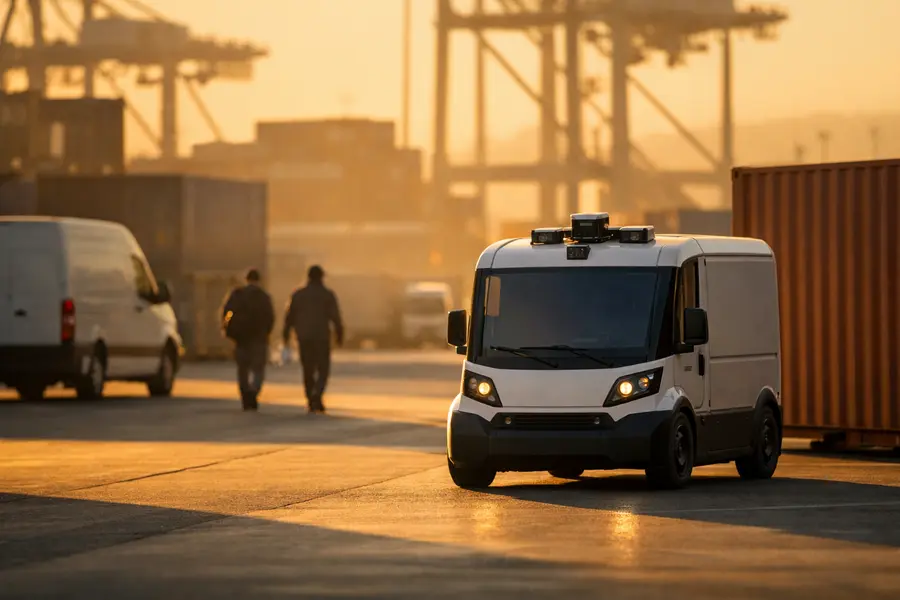
Rivian spinout Also raises $150 million in a Prysm Capital-led Series D, pushing its cargo quads and e-bikes toward full autonomy for Amazon and DoorDash delivery networks.
Key Takeaways:
- Prysm Capital led the round; Eclipse, Greenoaks, and MVP Ventures also participated.
- Also has raised approximately $455 million since spinning out of Rivian in March 2025, at a valuation above $1 billion.
- The TM-Q cargo quad already supplies Amazon; new capital targets autonomous versions for DoorDash.
Lead
Also, the Palo Alto startup born from Rivian's internal skunk works, closed a $150 million Series D on August 19, with Prysm Capital leading alongside returning investors Eclipse, Greenoaks, and MVP Ventures. The raise brings Also's total funding to roughly $455 million in under 18 months of independent operation - a pace that reflects both genuine commercial traction with Amazon and DoorDash and a broader market chase for anything that might reduce last-mile delivery costs at scale.
What Is Also Actually Building?
The company's two products answer that directly. The TM-B is a $3,500 consumer e-bike with what Also calls a "virtual drivetrain" - a software-defined motor system the company claims outperforms conventional designs. The TM-Q is a four-wheeled cargo quad capable of hauling over 400 pounds, engineered to travel in bike lanes rather than traffic.
That bike-lane design choice is not incidental. It lets Also get a smaller, cheaper machine into the hands of major shippers without needing robotaxi-grade safety certification, sidestepping the regulatory friction that has slowed full-size autonomous vehicles for a decade.
Amazon has agreed to purchase thousands of TM-Q units for package delivery. DoorDash, which struck a multi-year commercial agreement and took an equity stake at the $200 million Series C in March 2026, is aligned to deploy autonomous versions of the quad for food delivery at scale. The new capital targets that autonomous transition specifically - across multiple form factors, Also says, covering both goods movement and passenger transport in urban environments.
What Does This Round Actually Signal?
The question any funding round raises is whether fresh capital reflects business progress or investor patience wearing thin. Here, the evidence leans toward progress. The Series C arrived in March 2026 at a $1 billion valuation; the Series D, at a valuation above that mark, closed five months later. The fact that Prysm Capital - which participated in the Series C - stepped up to lead this round rather than waiting is the most legible signal in the deal structure. Existing investors who increase exposure between rounds are typically reacting to something concrete in the operating data.
Also has not disclosed a timeline for full autonomy deployment, but the DoorDash agreement creates a commercial forcing function. The delivery company wants autonomous vehicles at scale; Also's capital plan is now built around delivering them.
Why the Rivian Connection Still Matters
Also was spun out of Rivian in March 2025 after running as a stealth project inside the EV manufacturer. Rivian founder RJ Scaringe co-founded Also and remains chairman of both companies. That relationship gives Also credibility in supply chain and manufacturing conversations that a pure software startup could not plausibly claim at this stage.
Rivian has been navigating its own capital pressures as it scales consumer truck production. Having a high-profile spinout raise $455 million separately - without drawing on Rivian's balance sheet - is structurally clean for both entities. It validates the original decision to carve Also out rather than absorb it as an internal program.
The model also carries a calculated risk. Small-EV autonomy and full-size EV manufacturing are different disciplines. Also's ability to build genuinely autonomous cargo quads at commercial scale will be determined by software and sensor stack, not heritage from a truck maker.
Outlook
Also has the commercial relationships, the capital, and the platform credibility to move fast on autonomous delivery. The critical variable is execution on autonomy itself, which consistently takes longer and costs more than even well-funded teams project. Amazon's TM-Q orders validate the human-operated product. The DoorDash autonomous agreement is what the Series D is actually betting on. How quickly Also transitions its cargo quads from supervised to unsupervised operation - and at what unit economics - will determine whether the next raise comes on the company's terms or the market's.