Pomegra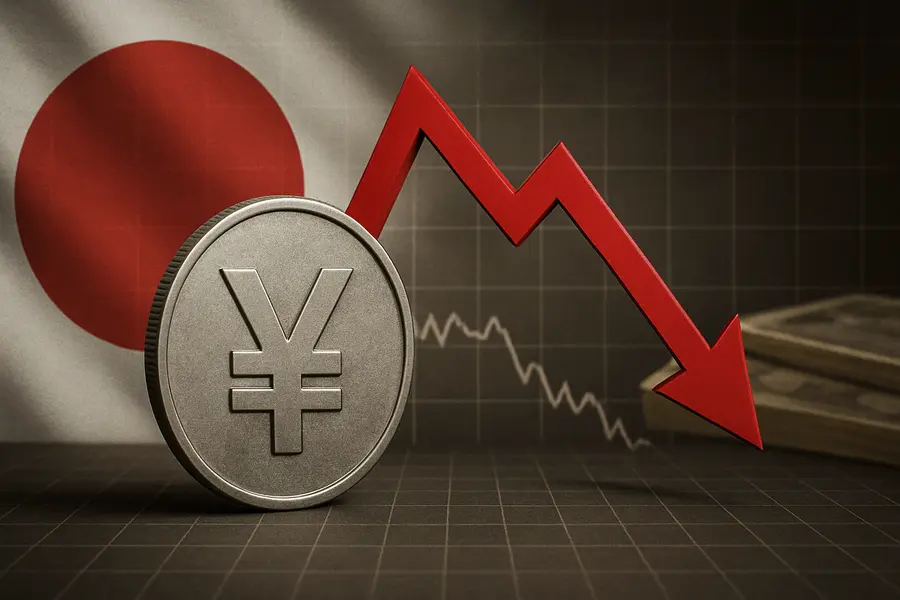
The yen tumbled to 162.38 per dollar — a 40-year USD JPY low not seen since 1986 — as Japan's Ministry of Finance signals a shift to ambush-style tactics on the forex market.
- USD/JPY touched 162.58 on July 3, the weakest yen reading against the dollar since 1986, driven by entrenched carry-trade demand.
- Japan deployed ¥11.7 trillion ($73.6 billion) between April 28 and May 27, yet the pair fully retraced those gains within two months.
- Tokyo is abandoning telegraphed warnings in favor of surprise operations, raising the cost of holding large yen-short positions.
Lead
TOKYO, July 3 — The Japanese yen weakened to 162.38 per dollar on Thursday, breaching levels not traded since 1986 and placing USD/JPY at the center of global forex market attention. The move extends a relentless multi-month slide that has survived Japan's largest-ever currency intervention campaign and a Bank of Japan rate increase, leaving policymakers weighing increasingly aggressive options to arrest the decline.
What Happened
The yen crossed 162 for the first time in four decades during the Asian session on Thursday, with the pair touching an intraday peak of 162.58 before pulling back marginally. The breach immediately reignited what traders have termed yen intervention watch — the heightened state of alert that precedes Tokyo's market operations.
The move did not occur in isolation. Japan's currency has been under sustained pressure throughout 2026 as the interest rate differential between Washington and Tokyo remains near historic extremes. The U.S. Federal Reserve's benchmark stands at 3.50%–3.75%, against the Bank of Japan's policy rate of 0.75% — a spread of up to 300 basis points that continues to incentivize the yen carry trade, where investors borrow cheaply in yen and redeploy the proceeds into higher-yielding dollar assets.
Market Reaction
Currency markets displayed the classic anatomy of an intervention-fear session: thin liquidity in the late Asian and early European hours, erratic one-to-two yen swings on reduced volume, and widening bid-offer spreads on USD/JPY. Options markets reflected elevated premium for yen calls as hedgers moved to protect against a sudden reversal.
Broader asset classes absorbed the news with relative calm. Japanese government bond yields edged fractionally higher on the prospect of intervention financing, while Nikkei 225 futures dipped as exporters balanced a favorable earnings tailwind from yen weakness against escalating policy risk. Gold and U.S. Treasuries held steady, indicating that markets are treating the yen's decline as a Japan-specific story rather than a signal of generalized dollar strength.
Why Prior Intervention Has Not Held
Between April 28 and May 27, Japan's Ministry of Finance deployed ¥11.7 trillion — roughly $73.6 billion — in the largest foreign-exchange defense operation in the country's history. The campaign briefly arrested the slide, pushing USD/JPY from 160 back toward 155. Within two months, those gains were fully erased.
The episode exposed the limits of unilateral intervention against structural economic forces. As long as the Federal Reserve holds rates well above those of the Bank of Japan, carry traders retain a powerful incentive to rebuild yen short positions after each official squeeze. Intervention buys time; it does not alter the underlying return calculus.
Finance Minister Satsuki Katayama acknowledged the constraint but reiterated on Wednesday that authorities would respond "appropriately to currency market developments at any time." The language echoed prior warnings while signaling diminishing official patience. Foreign exchange chief Atsushi Mimura sharpened the tone further, characterizing a previous warning as a "final advisory" and declining to elaborate on timing or scale.
Shifting Tactics: From Warnings to Ambushes
More consequential than the level itself is the reported change in approach. Japan's Ministry of Finance has abandoned its traditional practice of issuing escalating verbal warnings before acting — a sequence that historically allowed speculative traders to position ahead of official yen-buying operations.
The new posture favors striking without prior signals to maximize shock effect on short positions. This "ambush-style" framework matters for risk pricing: historically, the gap between Japanese official warnings and actual intervention created a window for traders to estimate entry points and government buying size. A surprise-first approach collapses that window, raising the cost of holding large yen short positions even when the structural case for weakness remains intact.
The Fed Variable
The trajectory of USD/JPY may ultimately be decided in Washington more than Tokyo. Markets have sharply revised Federal Reserve expectations in recent weeks, abandoning earlier forecasts for two rate cuts and now pricing an 80% probability of an additional hike by December 2026. Simultaneously, futures-implied end-2026 expectations for the Bank of Japan have slipped from 1.29% to 1.20%, narrowing the anticipated convergence between the two central banks.
If the Fed tightens further while the BOJ stays on hold, the interest-rate differential driving the carry trade could widen — pushing the yen toward levels that would demand a coordinated policy response. Coordinated U.S.-Japan intervention would be materially more effective than unilateral action; however, Washington has historically maintained a strong-dollar preference and shown limited appetite for joint currency operations outside crisis conditions.
Outlook
The Japan currency is caught in structural tension between a Bank of Japan tightening gradually and a Federal Reserve that may yet move higher. Tokyo's record ¥11.7 trillion intervention campaign proved insufficient to reverse the trend, and the tactical shift toward surprise operations signals that officials are prioritizing disruption of speculative positioning over sustained exchange-rate management.
The next threshold likely to concentrate official attention is 165 yen per dollar — a further 1.6% decline that would intensify political pressure on both the Ministry of Finance and the Bank of Japan to act in concert. Until the interest-rate gap closes materially, yen intervention watch remains the defining theme in the global forex market, and speculative short sellers face a growing operational risk even as the structural case for yen weakness persists.