Pomegra
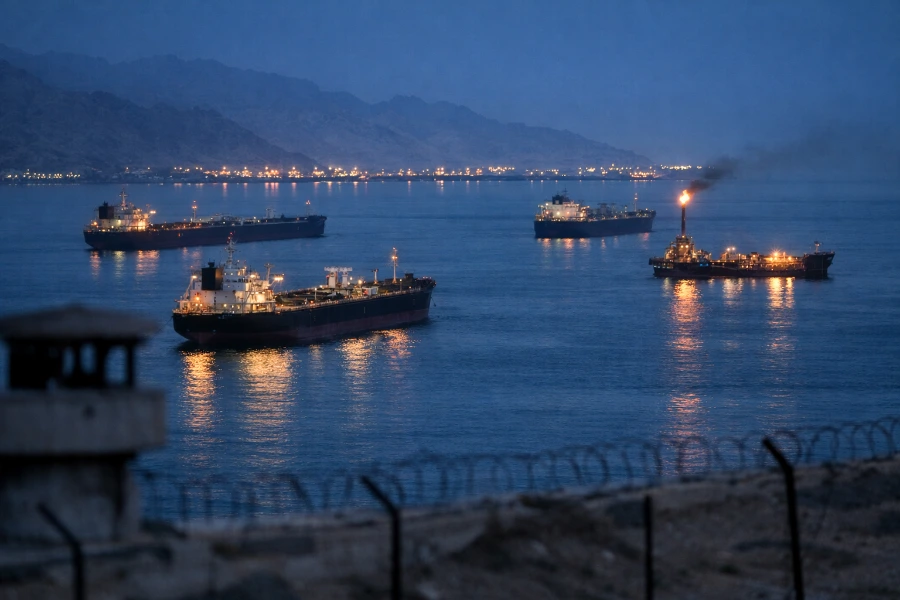
Vice President Vance is weighing direct talks with Iran's Mohsen Rezaei, while Tehran says Hormuz stays shut until seven conditions are met; Brent is near $94.
- Vance is weighing a face-to-face meeting with Iran's security chief Mohsen Rezaei, with Doha as the likely venue.
- Rezaei denies any talks and says Hormuz stays closed until Tehran's seven conditions are met.
- Brent rose nearly 3% to $93.90 on the denial, after falling about 21% since the start of November.
Lead
Vice President JD Vance is considering direct talks with Mohsen Rezaei, secretary of Iran's Supreme National Security Council. Rezaei responded on November 11 that the Strait of Hormuz will stay closed until Iran's seven conditions are fulfilled. He called US claims of ongoing negotiations or a meeting in Qatar "a pure lie." The war, which began on February 28, is in its ninth month. The exchange pushed Brent crude up nearly 3% to $93.90 a barrel and West Texas Intermediate up almost 2% to $87.98.
What Is Vance Proposing?
Vance has become the lead US negotiator with Iran and is weighing a face-to-face meeting with Rezaei. He sent Rezaei a letter in October requesting a meeting. No date has been set, and Doha has been discussed as a venue, with the two sides exchanging messages through mediators. Vance met Qatar's prime minister this week.
President Trump has authorized Vance to lead the effort. This gives the vice president a larger role than special envoys Steve Witkoff and Jared Kushner, who remain focused on Russia-Ukraine diplomacy. Trump told Qatar's prime minister he sees "positive momentum." Secretary of State Marco Rubio says Washington is open to diplomacy but has called Iran's demands "totally unrealistic." Vance has said any renewed negotiations must address Iran's nuclear program.
What Are Iran's Seven Conditions?
Iran has not published the full list of its seven conditions. Public statements point to three elements: lifting sanctions, ending the US naval blockade, and halting fighting on all fronts, including Israeli strikes on Lebanon.
Rezaei says the conditions are meant to settle points left open by an earlier understanding reached in Islamabad. Those points include arrangements for passage through Hormuz and the collection of transit fees. He describes Washington's first response as "insufficient and deceptive" and says Tehran is waiting for a clear reply.
Rezaei has also said enriched uranium "will remain in Iran," which rules out the relocation of nuclear material that Washington has raised. Parliament Speaker Mohammad Bagher Ghalibaf has said Iran wants to end the "no war, no peace" situation through military deterrence. Foreign Minister Abbas Araghchi says the conflict "will not be resolved through military means."
Why Did Oil Prices Jump on the Iranian Denial?
Oil rose because the denial removed the expectation of a near-term de-escalation that had driven prices lower all month. Brent had fallen about 21% since the start of November on hopes of a deal. It then rose nearly 3% to $93.90, and heating oil jumped 4.1%. Brent has traded between roughly $92 and $94 in recent sessions.
The crude oil price now reflects two opposing risks. Hormuz carries about 20% of global crude and gas flows and is largely closed, with Tehran requiring military approval for vessel passage. At the same time, a deal would not restore normal traffic quickly. Mine clearance and war-risk insurance would delay a full reopening.
The physical risk is rising. October recorded 37 attacks on ships, the highest monthly count since the war began. Iran's Revolutionary Guards reported this week that three tankers caught fire after hitting mines. Iran also struck navigation infrastructure on Oman's Didamar island. Elsewhere, a Ukrainian drone strike started fires at Russia's Ust-Luga export terminal, disrupting roughly 30% of Russian refining capacity and keeping diesel prices above crude benchmarks.
Some forecasters describe Brent at this level as too low if the conflict escalates and too high if a settlement is reached.
What Does the Hormuz Closure Mean for Energy and Shipping?
The closure raises costs through tanker rerouting, higher insurance premiums and tighter supply. Shipowners are waiting for clearer guidance on access, and Tehran's demand for transit fees is itself a point of dispute. Asian importers are the most exposed to Gulf crude, while European buyers face higher diesel and gas costs. A report that Iran had eased its demands, including dropping its claim to charge tolls, briefly pushed prices lower. Tehran disputed the report, and prices recovered.
What Comes Next for the Talks?
The next step is whether Vance and Rezaei meet in Doha, and the denials make that uncertain. Iran's public line is that talks cannot start until Washington answers its conditions. Washington's is that the nuclear file must be on the table.
Trump said at Veterans Day remarks on November 11 that "We won. It's just a question of when we end it," and demanded "total victory, not a 93 percent victory." Iranian officials have threatened US bases in Europe, Cyprus and Diego Garcia if attacks resume. State television commentators have urged a complete closure of the strait to keep oil prices high as leverage.
Outlook
A meeting between Vance and Rezaei would be the most senior direct US-Iran contact since the war began, but neither side has confirmed one. Over the next three to twelve months, the oil price depends on three factors: whether Washington answers the seven conditions, whether mine and tanker attacks continue, and how quickly insurers return once the strait reopens. Until then, Brent is likely to keep trading on headlines around $92 to $94.
Mentioned tickers: None