Pomegra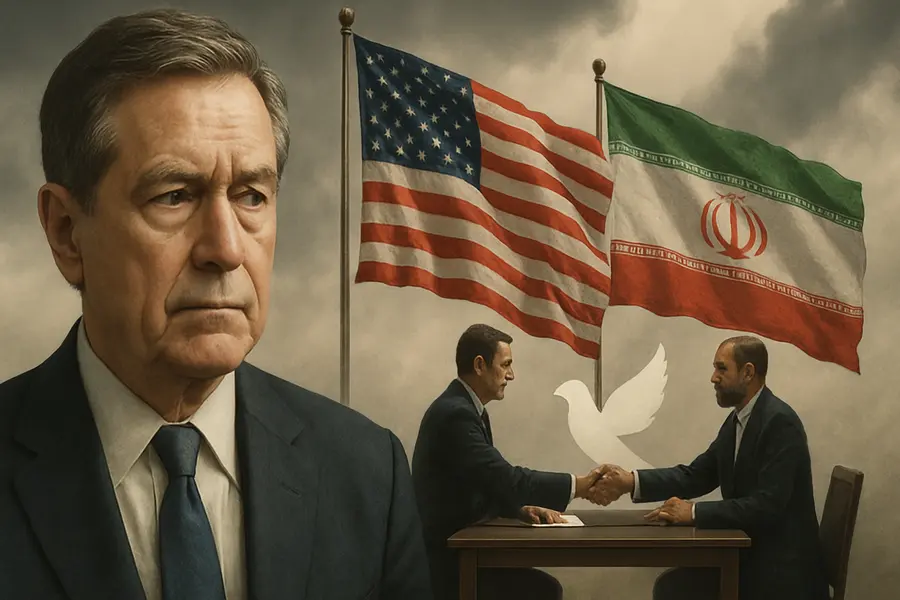
Vice President JD Vance's cancellation of his Switzerland trip on June 18 exposes deep fault lines in the fragile US-Iran peace framework, as Washington and Tehran dispute core terms of the Islamabad Memorandum.
- Vance scrapped his planned June 19 trip to Switzerland after Israeli strikes in Lebanon prompted Tehran to pull out of scheduled negotiations.
- Trump publicly rejected Iranian state media's version of the Islamabad Memorandum, calling disputed terms "fake" and unrelated to the written agreement.
- Senate Minority Leader Chuck Schumer labeled the emerging accord a "fiasco," while Republican senators raised concerns over a potential $300 billion investment commitment to Iran.
Lead
WASHINGTON — Vice President JD Vance canceled his planned trip to Geneva on June 19, 2026, halting the first face-to-face implementation talks under the US-Iran peace deal just two days after President Trump and Iranian President Masoud Pezeshkian remotely signed the 14-point Islamabad Memorandum. The US-Iran peace deal delay follows a fresh Israeli military offensive in southern Lebanon that killed at least four people, triggering Tehran's withdrawal from the scheduled session and reigniting a broader dispute over what the two governments actually agreed to in writing.What Happened
The White House described Vance's last-minute pullback as a matter of "logistics," but U.S. officials acknowledged that Iran had conditioned its participation on assurances that fighting in Lebanon would cease in accordance with the memorandum's terms. Israel's military conducted strikes in southern Lebanon on the night of June 18, prompting intense exchanges between Israeli forces and Hezbollah and rendering Tehran's preconditions unmet.
Vance did not stay silent. At a White House briefing, he criticized Israeli operations in Lebanon as having "sometimes gotten in the way of negotiations," and warned that Israeli cabinet members attacking Trump were alienating "the only powerful ally" Israel had remaining internationally. The rebuke widened an already visible fracture inside the Republican Party, with some GOP lawmakers defending Israel's right to act in Lebanon while others backed Vance's framing that Israeli actions were undercutting American diplomatic progress.By June 19, Israel and Hezbollah agreed to renew their truce, clearing the path for a partial resumption of diplomacy. A first formal session eventually convened by June 23.
Conflicting Claims Over the Deal's Terms
The diplomatic delay compounded a parallel crisis of credibility over the Islamabad Memorandum itself. Within hours of the June 17 signing — which Trump concluded during dinner with French President Emmanuel Macron at Versailles following the G7 summit — Iranian state media circulated a version of the agreement that included provisions sharply at odds with the U.S. account.
Tehran's version described Washington committing to a cash transfer of $24 billion and a $300 billion private investment fund, as well as assurances covering Hezbollah and Israeli military operations in Lebanon. Trump dismissed those claims directly on Truth Social: "The terms that Iran leaked out to the fake news have nothing to do with the terms that were agreed to, in writing."
The US-Iran peace deal as described by American officials is a performance-based, five-point framework. Iran is to receive economic benefits — including the release of frozen assets and eventual access to the investment fund — only after fulfilling specific obligations: turning over nuclear material, dismantling enrichment infrastructure, and forswearing the production or acquisition of nuclear weapons. The memorandum also reopens the Strait of Hormuz to commercial shipping toll-free for a 60-day window, with the broader architecture dependent on a final agreement reached within that period.
Iran's state media version included language implying Tehran could reassert future leverage over the Strait of Hormuz and made no performance-based linkage between economic concessions and nuclear obligations. Prime Minister Netanyahu separately rejected Iranian assertions that the deal guarantees a cessation of hostilities between Israel and Hezbollah in Lebanon, a claim that remains live and unresolved.
Senate Foreign Policy Concerns
On Capitol Hill, the Islamabad Memorandum has encountered bipartisan skepticism, with the sharpest attacks coming from Senate foreign policy voices on both sides of the aisle. Senate Minority Leader Chuck Schumer called the agreement a "fiasco," arguing the administration had "given away the store." Several Republican senators raised alarms about the scale of financial commitments to Tehran before Iran had demonstrated compliance with nuclear obligations, questioning the sequencing of the deal's incentive structure.
The division inside the GOP reflects a deeper tension: traditional pro-Israel conservatives uncomfortable with Vance's public criticism of the Netanyahu government, and nationalist factions more focused on neutralizing Iran's nuclear program at any cost and ending what has been a costly military entanglement.
Geopolitical Dimension
The JD Vance Iran talks delay illustrates a structural challenge embedded in any agreement that requires simultaneous compliance from actors — Iran, Israel, Hezbollah — with divergent interests and no direct communication channels. The Islamabad Memorandum was brokered with Pakistan as the primary facilitator, with Qatar, Saudi Arabia, Turkey, and Egypt all playing supporting roles, a diplomatic architecture that reflects both the depth of US-Iran mutual distrust and Washington's limited direct leverage over Israeli tactical decisions.
Oil markets registered the tension. Brent crude remained elevated above pre-agreement levels as traders assessed whether the Strait of Hormuz would remain open beyond the 60-day window and whether a final deal could be finalized before the framework expired.
The June 22 session added a further complication when Vance and Iranian state media issued conflicting statements over UN nuclear inspector access to Iranian facilities — a core verification mechanism without which the performance-based reward structure has no enforcement teeth.
Outlook
The Islamabad Memorandum is intact in name but contested in substance. The core tension — Iran seeking upfront economic relief, Washington insisting on verified nuclear rollback first — mirrors the same fault line that collapsed previous agreements. Vance's diplomatic authority within the process remains formally intact, and a working session did eventually proceed by June 23. Whether the 60-day window can absorb continued Israeli-Hezbollah flare-ups, resolve the dueling interpretations of the written text, and produce a verifiable nuclear compliance framework will define whether this accord represents a durable settlement or another fragile pause in a decades-long standoff.
Mentioned tickers: USO, BNO, XOM, CVX