Pomegra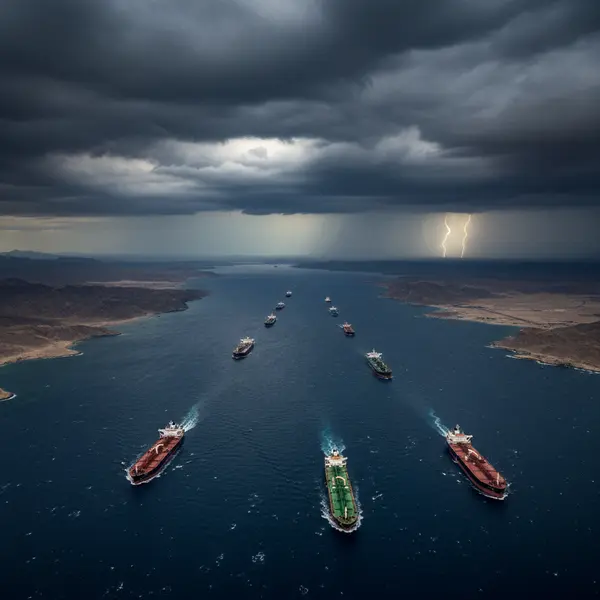
Talks at a Crossroads — The 14-Point Memo
As of May 23, 2026, the United States and Iran are locked in a painstaking back-channel exchange over a one-page, 14-point framework memo drafted through Pakistani mediators. The document — the most concrete diplomatic instrument to emerge since the April 7 ceasefire — calls on Tehran to commit to a moratorium on uranium enrichment and outlines conditions for a permanent end to hostilities. President Donald Trump has warned that failure to accept the deal will trigger a resumption of US airstrikes.
- The US and Iran are negotiating a 14-point memo via Pakistani intermediaries, with Trump threatening to resume bombing if Iran rejects terms.
- The Strait of Hormuz remains effectively closed, pushing Brent crude above $4.50/barrel and triggering the IEA's "greatest energy security challenge in history" warning.
- Iran's IRGC threatened a global offensive on May 21 if US-Israeli strikes restart, while Trump has set five preconditions to resume formal deal negotiations.
The fragility of the process became visible on May 17 when Trump hardened his posture, setting five explicit preconditions before any formal negotiations can resume: Tehran must transfer 400 kilograms of enriched uranium to the United States, retain only one operational nuclear facility, link negotiations to a cessation of hostilities, accept a refusal of at least 25% of Iran's frozen assets, and abandon demands for war reparations. Iran has so far rejected each condition individually.
From Nuclear Talks to Open War — How 2026 Arrived
The current standoff is the culmination of a 14-month diplomatic and military arc. Indirect Omani-mediated talks began on April 12, 2025, following a letter from Trump to Supreme Leader Ali Khamenei. Five rounds of negotiations — spanning Muscat, Rome, Geneva, and Istanbul — collapsed in June 2025 after Israel launched large-scale strikes on Iranian nuclear facilities on June 13, killing top military commanders and scientists. The US followed on June 21, bombing Fordow, Natanz, and Isfahan.
Talks restarted in February 2026 under new pressure, now with Jared Kushner and CENTCOM Admiral Brad Cooper added to the US delegation. A third round in Geneva on February 26 produced an apparent breakthrough — Oman's Foreign Minister Badr Al Busaidi announced Iran had agreed to "zero stockpiling" of enriched uranium — but Washington left disappointed, describing Iranian negotiators as having "boasted" their 460 kilograms of 60%-enriched uranium could produce 11 nuclear bombs. On February 28, the US and Israel launched the full-scale 2026 Iran war, assassinating Supreme Leader Ali Khamenei and key negotiator Ali Larijani in coordinated strikes.
The Strait of Hormuz — World's Most Dangerous Chokepoint
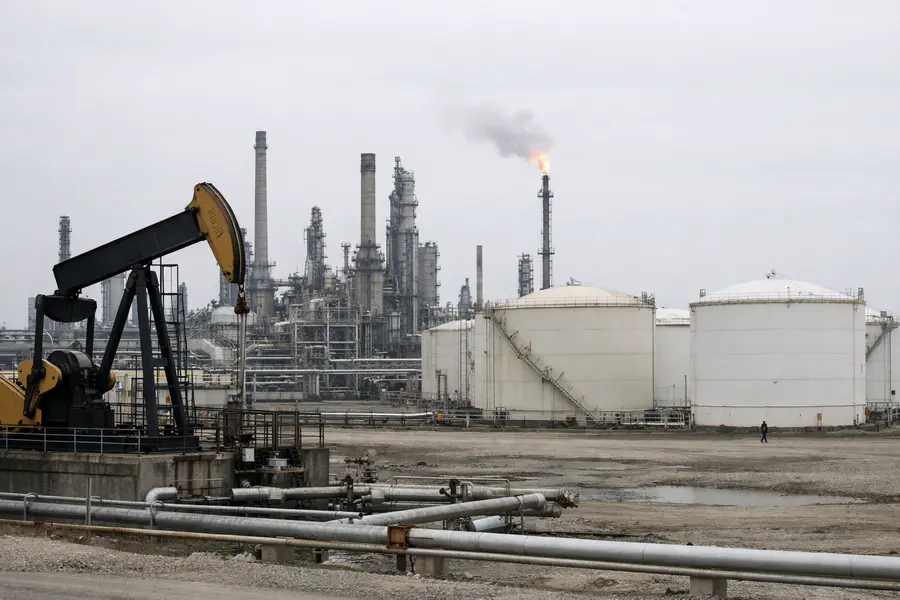
The Strait of Hormuz closure, in effect since March 4, 2026, has produced what the International Energy Agency formally designated the "largest supply disruption in the history of the global oil market." Through the strait flows roughly 20% of the world's seaborne crude oil and a comparable share of global liquefied natural gas. Iran's blockade has stranded more than 200 vessels and caused oil production across Kuwait, Iraq, Saudi Arabia, and the UAE to collectively fall by at least 10 million barrels per day by mid-March.
Brent crude surged from $72 per barrel on February 28 to $112 per barrel by March 27 — a 55% spike — before partial ceasefire signals caused brief relief. By May, Brent was still trading above $4.50 per barrel on an index basis, with the Vitol CEO warning on April 21 that one billion barrels of total production had already been lost. US gasoline crossed $4 per gallon nationally and topped $5 per gallon in California, while the OECD raised its 2026 US inflation forecast to 4.2%, 1.2 percentage points above previous projections.The May 7–23 Window — Strikes, Ultimatums, and Signals
The final weeks of May represent the most diplomatically active phase since the April ceasefire. On May 7, US and Iranian technical teams began working through Pakistani intermediaries to finalize the memo framework. On May 8, the US and Iran exchanged fire in the Strait of Hormuz, briefly spiking oil prices. On May 17, Trump confirmed the five preconditions for negotiation, framing the memo as a final diplomatic off-ramp. On May 21, the IRGC issued a statement threatening a "global offensive" if attacks restarted, a declaration that rattled commodities markets and pushed Brent higher.
By May 23, a fifth round of 2025 talks anniversary date, both sides are in an uncomfortable holding pattern. Trump told markets on May 6 that the Strait would be "open to all" if Iran accepted terms — a message that temporarily pulled oil prices lower. Iranian parliament speaker Mohammad Bagher Ghalibaf countered that the US was "sending messages of negotiation and dialogue" while secretly planning ground operations, reflecting the deep institutional mistrust that has defined the entire negotiation arc.
Market and Economic Fallout: A Global Contagion
The economic damage extends well beyond oil prices. The Strait of Hormuz crisis has severed the Gulf Cooperation Council's economic model, cutting 70% of food imports to Gulf states, causing QatarEnergy to declare force majeure on all LNG exports, and triggering desalination plant attacks that threatened the drinking water of Qatar, Kuwait, Bahrain, and the UAE. A UN Development Programme study estimated the war could reduce Arab economies' GDP by $120–194 billion.
Europe faces a second energy crisis in three years. Dutch TTF gas benchmarks nearly doubled to over €60/MWh by mid-March. The European Central Bank postponed rate cuts on March 19, and economists project Germany and Italy face technical recession by late 2026, with UK inflation forecast to breach 5%. Chemical and steel manufacturers across the EU imposed surcharges of up to 30% to offset input costs.
In the United States, the 30-year mortgage rate climbed to 6.38% by March 26, the 10-year Treasury yield hit 4.46% — its highest since July 2025 — and Goldman Sachs raised the probability of a US recession within 12 months to 30%. Defense spending on the conflict has already exceeded $200 billion, sparking a Republican budget fight in Congress.
Global commodity markets absorbed secondary shocks: helium prices doubled to tripled, disrupting semiconductor manufacturing; nitrogen fertilizer costs surged 40%, threatening Northern Hemisphere spring planting; sulfuric acid prices rose 30%; and tungsten tripled in price after China restricted exports. The Philippines declared a national energy emergency on March 24. Sri Lanka reintroduced fuel rationing. Pakistan adopted a four-day government workweek.Where Things Stand: No Deal, No Resumption — But No Escalation Either
The situation on May 23, 2026 is best characterized as a frozen conflict with open economic bleeding. The April 7 ceasefire has held precariously — the Strait of Hormuz has partially reopened during ceasefire windows but has not been permanently unblocked. Iran's Interim Leadership Council, formed after Khamenei's assassination, faces intense domestic pressure from both hardliners demanding resistance and a population exhausted by inflation — bread and cereal prices rose 140% year-on-year through March 2026, and food inflation broadly hit 105%.
Trump canceled a planned Islamabad envoy trip on April 25, citing divisions within Iran's leadership, and the 14-point memo framework remains unratified. With the IRGC reissuing escalatory threats and oil markets watching every diplomatic signal for price direction, the gap between a negotiated settlement and renewed bombardment remains uncomfortably narrow. The Islamabad Talks format — backed by Pakistan, once briefly supported by Qatar and Turkey — represents the last surviving multilateral channel, and its viability on May 23, 2026 depends entirely on whether Tehran's Interim Leadership can accept terms its predecessor Supreme Leader spent a year rejecting.
Mentioned tickers: USO, BNO, CL, XOM, CVX, SLB, LNG, QE, HAL, NOV