Pomegra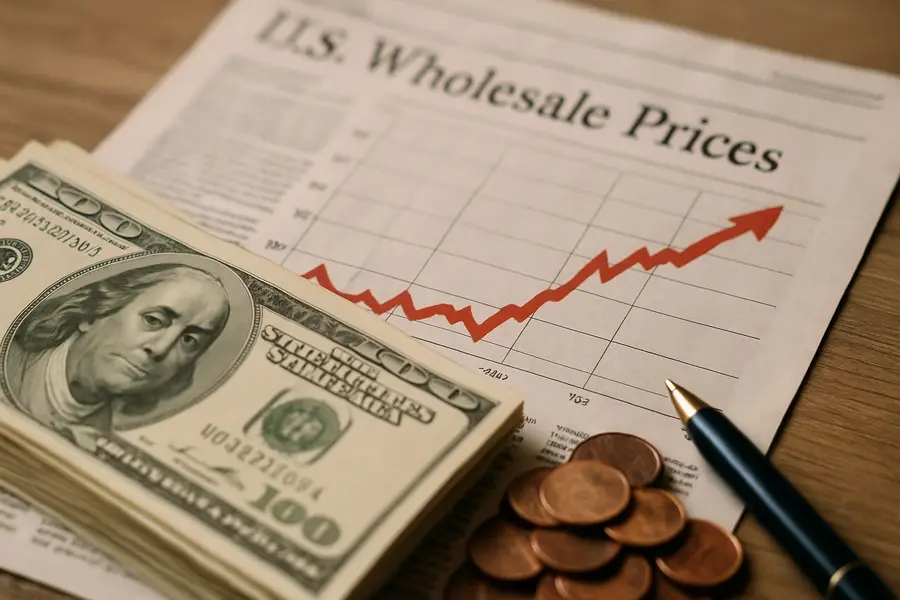
U.S. wholesale prices surged in May, pushing the annual PPI to 6.5%—a four-year high—as energy costs spiked and core pressures built across supply chains.
- The Producer Price Index rose 1.1% in May, beating estimates of 0.7%, with the 12-month rate reaching 6.5%—the highest since November 2022.
- Energy prices for final demand jumped 10.7% month-over-month; gasoline alone surged 23.4%, accounting for more than half of the goods-sector gain.
- The Federal Reserve held rates at 3.50%–3.75% in June; markets have fully priced out cuts for 2026 and now anticipate no easing before late 2027.
Lead
U.S. wholesale inflation accelerated sharply in May, with the Producer Price Index (PPI) rising 1.1% on a monthly basis and 6.5% year-over-year, the Bureau of Labor Statistics reported on June 11. The annual reading—the highest since November 2022—came in well above the 0.7% monthly gain economists had forecast, reviving concerns over entrenched upstream price pressures and reinforcing the higher-for-longer interest rate outlook heading into the second half of 2026.
What Happened
The monthly jump in PPI inflation was overwhelmingly driven by goods prices, which surged 2.8% in May—the largest single-month advance since the BLS began tracking final demand data in December 2009. Energy prices for final demand climbed 10.7%, with a 23.4% spike in gasoline wholesale prices accounting for more than half of the goods-category gain. Diesel and jet fuel contributed additional upward pressure across the supply chain.
Services prices for final demand rose a more modest 0.3%, reflecting softer but still-elevated demand in transportation, warehousing, and trade-margin categories.
Core PPI—which strips out food, energy, and trade services—rose 0.8% in May, the steepest monthly advance since March 2022. That signal matters: it demonstrates that underlying supply-chain cost pressures are not confined to energy and are instead spreading into a broader range of input categories.Intermediate demand told an equally stark story. The index for stage 1 processed goods—the most upstream segment of the production pipeline—rose 3.2%, also a record since December 2009, indicating that cost escalation is building well before it reaches the consumer.
Market Reaction
Financial markets responded with immediate caution. U.S. equity futures fell after the release, with stocks opening lower on June 11. Treasury yields edged higher across the curve, with the benchmark 10-year note trading near 4.54%–4.56% and the 2-year yield settling around 4.13%–4.15%—levels consistent with a prolonged pause in Federal Reserve easing.
Rate-cut expectations, already compressed by a string of hotter-than-expected reports earlier in 2026, were effectively extinguished. Markets now price zero Federal Reserve cuts in 2026, with the earliest meaningful easing not expected until late 2027.
Federal Reserve and Higher-for-Longer
The Federal Reserve held the federal funds rate at 3.50%–3.75% at its June 2026 meeting—its fourth consecutive hold—in the first policy decision under new Chair Kevin Warsh. Updated FOMC economic projections reflected a sharp reassessment of the inflation trajectory: PCE inflation for 2026 was revised upward to 3.6% from 2.7%, while the 2027 forecast moved to 3.3% from 2.7%.
Nine of the nineteen FOMC participants now see at least one rate hike as appropriate this year, with six anticipating two or more increases. The projection shift marks one of the most significant hawkish re-pricings since the post-pandemic tightening cycle, and stands as a decisive repudiation of expectations for a soft-landing pivot.
The PPI reading arrived one day after the CPI for May showed consumer prices rising 4.2% annually—compounding the case for a cautious policy stance. Because wholesale prices flow through the production chain before reaching consumers, the May PPI reinforces concerns that consumer-level disinflation will remain elusive in the near term.
Strategic Context
The energy shock at the root of May's PPI surge traces in part to disruptions in global oil supply tied to ongoing tensions in the Middle East, with an Iran oil shock rippling through commodity markets since late May. Gasoline's 23.4% monthly wholesale jump reflects both crude price volatility and refinery margin expansion—dynamics that rarely reverse quickly or predictably.
Businesses exposed to fuel and transportation costs—including logistics, manufacturing, agriculture, and retail—face continued margin pressure as hedging windows narrow and contract renegotiations lag spot prices. Small and mid-sized enterprises, with less pricing power than large multinationals, bear a disproportionate share of the adjustment burden.
Outlook
The combination of a 6.5% annual PPI inflation rate, a 4.2% consumer price index, and a Federal Reserve recalibrating toward possible rate hikes leaves little room for a near-term easing pivot. Intermediate demand pressures and core PPI strength suggest wholesale price increases are not purely energy-driven and may persist into the third quarter. The next PPI release, covering June 2026 data, is scheduled for July 15—when markets will reassess whether May's spike marks the beginning of a new inflationary trend or a temporary energy-driven anomaly.