Pomegra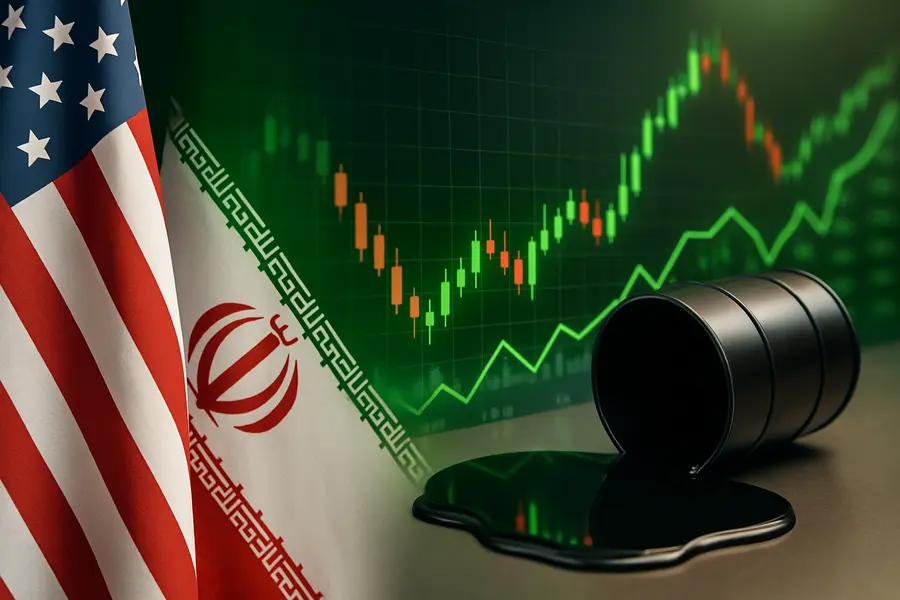
Now I have all the verified data. Writing the article.
- Brent crude fell 4.7% to $83.17 a barrel on June 18 — its lowest close in more than three months — as the US-Iran interim deal took hold.
- S&P 500 futures rose ~1% and Nasdaq futures gained up to 2%, extending a two-week Wall Street rally that pushed the index toward record territory.
- The memorandum covers a 60-day ceasefire extension, the immediate reopening of the Strait of Hormuz, and follow-on talks on Iran's nuclear program, sanctions relief, and Lebanon.
---
A US-Iran interim deal to reopen the Strait of Hormuz sends stock futures sharply higher and triggers the steepest oil price drop today in more than three months, reshaping global energy market news.
Lead
The United States and Iran signed a memorandum of understanding on June 17, 2026, ending a four-month conflict that had sealed the Strait of Hormuz and produced what the International Energy Agency characterized as the largest oil supply disruption in the history of global energy markets. On June 18, markets moved decisively: Brent crude dropped 4.7% to $83.17 a barrel and West Texas Intermediate fell 4.8% to $80.75 — the sharpest single-session oil price drop today since the early days of the war — while stock futures rise accelerated across every major U.S. index, with Nasdaq 100 futures adding more than 2% and Russell 2000 futures opening at a record high.
What Happened
President Donald Trump announced the agreement late Sunday via social media, declaring the deal with Iran "now complete." Pakistani Prime Minister Shehbaz Sharif, who served as the primary intermediary between Washington and Tehran throughout the negotiations, confirmed the accord and stated that the US-Iran interim deal obliges Iran to promptly reopen the Strait of Hormuz while the American naval blockade of Iranian ports ceases immediately. A formal signing ceremony is scheduled for June 19 in Geneva.
The war began on February 28, 2026. Within days, virtually all commercial shipping through the Strait — the world's single most critical oil transit chokepoint — had halted. The closure removed more than 14 million barrels per day from global supply, and cumulative losses across the four-month conflict exceeded one billion barrels. National average gasoline prices in the United States rose by as much as $1.50 per gallon at the conflict's peak.
The memorandum is explicitly interim: it locks in a 60-day ceasefire extension and secures the reopening of the Strait in exchange for a suspension of U.S. port blockades, while establishing a structured diplomatic framework for permanent-status talks covering Iran's nuclear program, multilateral sanctions relief, and regional security arrangements including Lebanon.
Market Reaction
The oil price drop today accelerated through the Monday session as traders priced in the restoration of Gulf export flows. Brent crude hit its lowest level since early March, and WTI settled below $81 for the first time in the conflict period. Goldman Sachs placed its base-case Brent target at approximately $80 per barrel by Q4 2026, contingent on Gulf producers returning to pre-war output volumes by the end of July.
Geopolitical Dimension
The US-Iran interim deal represents the most consequential bilateral agreement in the Middle East since the Abraham Accords. Its immediate strategic effect is the normalization of the Strait of Hormuz, through which roughly 20% of the world's seaborne oil trade passes on a normal day. The waterway's four-month closure had reordered global shipping routes, forcing tankers to circumnavigate the African continent and adding weeks and hundreds of millions of dollars in freight costs to energy supply chains across Asia, Europe, and South Asia.
Pakistan's role as mediator elevated Islamabad's diplomatic standing significantly. Prime Minister Sharif's direct communication with both the White House and Iranian President Masoud Pezeshkian throughout the crisis positioned Pakistan as an indispensable back-channel — a shift in regional geometry that carries implications for the country's relationships with Gulf states and Washington alike.
The deal stops well short of a permanent resolution. Tehran retains its nuclear infrastructure, and the follow-on talks face substantial structural obstacles — chief among them the sequence of sanctions relief versus nuclear rollback steps that has derailed prior frameworks. A collapse of the 60-day process would risk reigniting the supply shock that defined the first half of 2026.
Energy Market News: Supply Path Forward
The IEA's May 2026 Oil Market Report had flagged cumulative supply losses of more than one billion barrels and projected a prolonged period of tightness even in a resolution scenario, given the lead time required to bring mothballed Gulf production back online. OPEC+ members with available spare capacity — principally Saudi Arabia and the UAE — are expected to move cautiously on output increases to avoid a price collapse that would undermine fiscal breakevens across the Gulf Cooperation Council.
The energy market news from LNG markets mirrored crude: Qatari and Australian spot LNG prices fell sharply on the reopening announcement, easing pressure on European importers who had been forced to bid aggressively for non-Gulf cargoes.
Outlook
The US-Iran interim deal arrests the largest energy supply disruption in modern market history and removes the geopolitical risk premium that had sustained elevated crude benchmarks since late February. With Brent now approaching the Goldman base-case target and stock futures rise dynamics pushing equities back toward records, the critical variables in the weeks ahead are the pace of Strait reopening, the speed of Gulf production normalization, and the durability of the diplomatic framework ahead of the 60-day deadline. A successful transition to permanent-status talks would cement lower energy prices through year-end; a breakdown would rapidly reinstate the war premium that markets spent the past four months absorbing.
Mentioned tickers: SPY, QQQ, IWM, DIA, USO, BNO, XLE, XOM, CVX, BA, DAL, UAL