Pomegra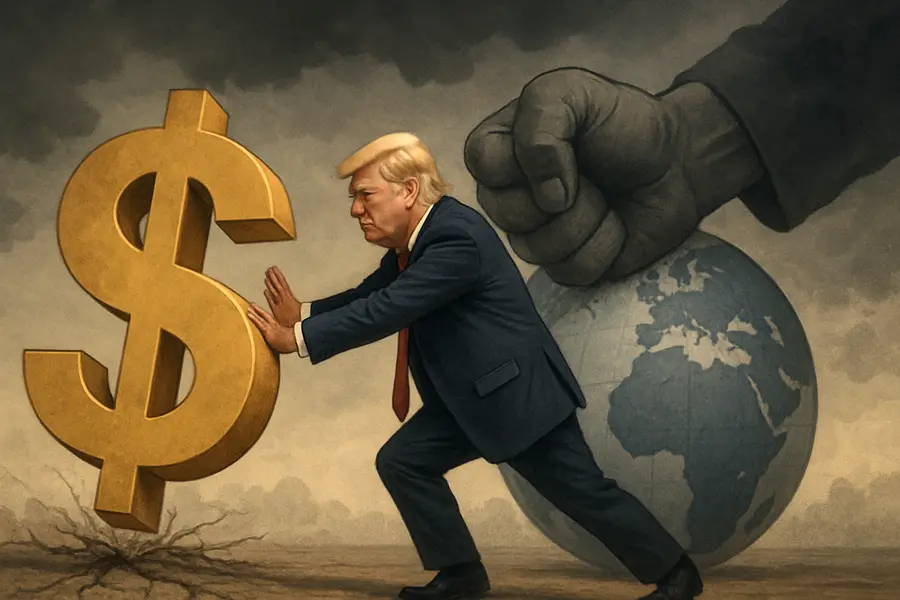
Trump's tariff agenda has slowed US growth and sparked a sweeping global trade backlash, threatening the long-term foundations of American economic power in 2026.
- The effective US tariff rate rose from 2.1% to 11.7% by January 2026, imposing an estimated $1,500 average annual cost increase per American household.
- US GDP growth is projected between 1.5% and 2.4% in 2026, down sharply from 2.8% in 2024, with stagflation risks compounding the slowdown.
- Traditional US allies, including France and Canada, are accelerating de-dollarization and forging new trade agreements that exclude Washington.
Lead
The trajectory of American economic power is on trial in 2026. The Trump administration's aggressive tariff-first strategy — the largest single increase in US import duties relative to GDP since 1993 — has generated a global trade backlash spanning Beijing, Brussels, and traditional allied capitals. Even as nine bilateral trade deals have been signed since April 2025, the structural question for policymakers and institutional investors is whether the disruption builds durable leverage or accelerates a lasting realignment of the global economic order away from US leadership.
What Happened
The administration's Liberation Day tariff order of April 2025 raised the effective US tariff rate from 2.1% to 11.7% by January 2026. The measures cost American households an estimated $1,700 in the twelve months following the announcement, settling to approximately $1,500 on an annualized basis in 2026 as selective bilateral negotiations trimmed some rates.
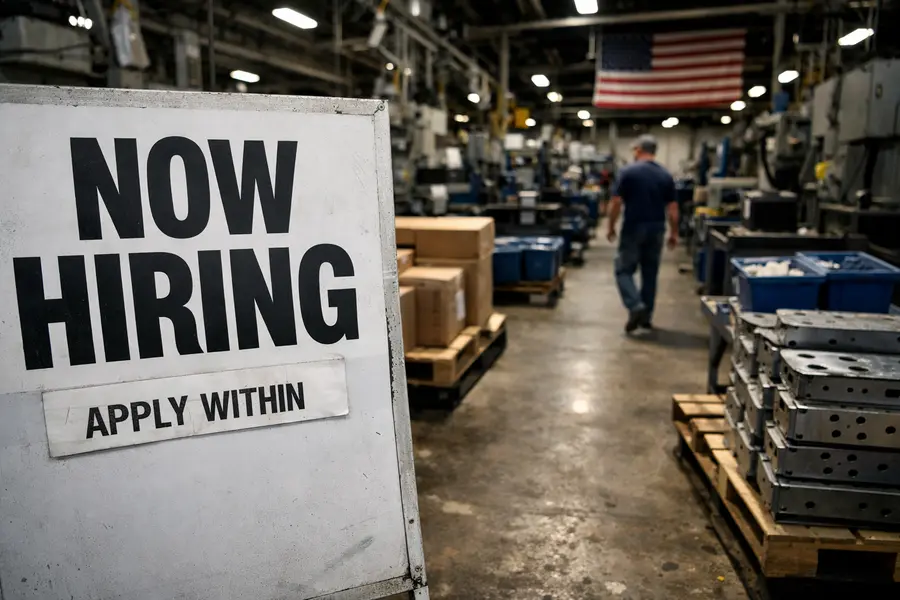
GDP growth decelerated from 2.8% in 2024 to 1.6% in 2025. The IMF's April 2026 World Economic Outlook projects a partial recovery to 2.4% expansion for the full year, underpinned by fiscal support, lower policy rates, and technology-sector productivity gains. The range of forecasts — as low as 1.5% from pre-tariff projections — reflects how much uncertainty still surrounds the net impact of Trump economic policy on domestic output.Manufacturing bore the heaviest immediate cost. The sector contracted for nine consecutive months following Liberation Day before posting a modest rebound in early 2026, while 89,000 manufacturing jobs were eliminated over the same period. The trade deficit in goods reached a record high in 2025, the opposite of the administration's stated objective. The overall trade balance improved only because of a services surplus, underscoring that tariff policy alone cannot rebalance a structurally services-oriented $28 trillion economy.
The Global Trade Backlash
The global trade backlash arrived on multiple simultaneous fronts. China imposed retaliatory levies covering more than $106 billion in US goods, including a 15% additional duty on American coal, coke, and liquefied natural gas, and a 10% duty on crude oil and agricultural machinery — a combined estimated $11.6 billion burden on US exporters. Beijing simultaneously filed a formal WTO dispute and imposed export controls on five critical minerals essential to US semiconductor, defense, and clean-energy supply chains.
The European Commission moved to challenge the WTO's Most Favoured Nation principle in February 2026 — a structural response to US unilateralism tabled for the WTO Ministerial Conference in Cameroon. More consequentially for long-run US influence, traditional allies have begun constructing new trade architectures that exclude Washington. Canada, India, Japan, South Korea, and the EU have each pursued or concluded new bilateral and multilateral agreements without US participation since Liberation Day — a pace of economic realignment without precedent in the postwar era.
The administration responded with nine Agreements on Reciprocal Trade (ARTs), framed as market-access tools and instruments of China containment. The US-Taiwan agreement, signed January 15, 2026, caps reciprocal tariffs at 15%. Deals with smaller economies, including a one-percentage-point reduction for Bangladesh, illustrate the limits of leverage even over trade-dependent partners.
De-Dollarization and Structural Risk
Beneath the immediate tariff conflict lies a slower-moving but potentially more consequential challenge to American economic power: the erosion of dollar dominance. The greenback's share of global foreign exchange reserves has declined from 71% in 1999 to 57% in 2025 — a 25-year low — and the acceleration is being driven for the first time primarily by allied rather than adversarial capitals.
France withdrew all 129 tons of gold it held at the Federal Reserve Bank of New York between July 2025 and January 2026, relocating reserves to Paris and realizing approximately $15 billion from the sale. Indian companies have begun settling Russian coal imports in Chinese yuan. Bangladesh is paying Russia for a 1.4-gigawatt nuclear power plant in yuan. In commodity markets, a growing proportion of energy contracts is priced in non-dollar denominations.
The mechanism is structural. The United States has imposed active sanctions affecting more than 9,000 individuals, companies, and economic sectors — more than the EU, United Nations, and Canada combined. The breadth creates a documented paradox: the same financial tools designed to project US power in the short term incentivize long-term diversification away from dollar infrastructure, even among allies who hold no ideological preference for a rival system.
The dollar retains commanding structural advantages. It accounts for 88% of traded foreign exchange volumes and approximately 70% of foreign currency debt issuance — positions no rival currency approaches. The financial and legal infrastructure sustaining dollar primacy will not be displaced quickly. But the directional trend is measurable and, crucially, self-reinforcing as allied governments respond to the same sanctions risk they once overlooked.
Technology as a Counterweight
The US economic future is not defined solely by trade friction. Productivity anchored in artificial intelligence and cloud infrastructure has provided a meaningful buffer against tariff headwinds and is a primary factor behind the IMF's upward revision of the 2026 US growth forecast. American dominance in AI hardware design, large-model development, and hyperscale cloud services represents a structural competitive moat that trade policy cannot easily erode — and that rivals have not yet replicated at scale.
The administration's ART framework explicitly conditions market access on alignment with US technology and supply-chain policy toward China, attempting to convert tariff leverage into broader tech-decoupling commitments from partners. Whether that linkage holds as allies develop independent semiconductor and AI investment programs will be a defining variable for American economic power through the late 2020s.
Outlook
The United States enters the second half of 2026 in a position of contested but still-substantial economic primacy. GDP growth remains positive, technology-sector strength provides a structural floor, and bilateral deal-making has kept diplomatic channels open. The headwinds, however, are compounding: slower growth, a record goods trade deficit, persistent manufacturing weakness, and an accelerating pattern of allied economic realignment. The dollar's structural dominance persists, yet the policy behavior accelerating de-dollarization is self-reinforcing. The arc of the US economic future will ultimately hinge on whether the administration's bilateral leverage produces sufficient allied coordination against Chinese trade practices — or whether the broader unilateralism embedded in Trump economic policy permanently fragments the economic order it was designed to lead.
Mentioned tickers: N/A