Pomegra
Trump says the US and China share a stake in Hormuz energy flows and blocking an Iranian bomb, while markets await a trade truce extension past January 10.
- Trump said the US and China both want energy flowing through the Strait of Hormuz and agree Iran cannot have a nuclear weapon.
- The US-China trade truce expires January 10, 2027, and the Chinese readout contained no extension.
- Brent traded near $92 a barrel as the summit ended, little changed by a pledge to raise oil supply.
Lead
President Donald Trump said on Thursday in Shenzhen that Washington and Beijing share an interest in keeping energy moving through the Strait of Hormuz and in stopping Iran from acquiring nuclear weapons. He spoke on the sidelines of the APEC summit, where he met Chinese President Xi Jinping and, in a first three-way session, Russian President Vladimir Putin. "Both the United States and China have an interest in ensuring that energy flows through the Strait of Hormuz," Trump said. "Iran cannot have a nuclear weapon, we both feel that very strongly."
The remarks matter to investors because the US-China trade truce, struck at last year's APEC meeting in South Korea, expires on January 10, 2027. Neither the Chinese readout nor the leaders' joint declaration set out terms for an extension.
What Did the Shenzhen Summit Produce?
The summit produced a short declaration rather than a trade deal. The three leaders agreed to pursue United Nations reform, increase oil supply and open a dialogue on reducing nuclear risks and preventing proliferation. The text did not mention the wars in Iran or Ukraine, although Trump said he raised both earlier in the talks.
Xi called his meeting with Trump "positive and constructive" and warned that the so-called Thucydides Trap, the idea that a rising and an established power drift toward war, "is by no means inevitable." The trilateral session lasted a little over an hour, and Trump held a separate bilateral with Putin of about 40 minutes.
Why Does the Strait of Hormuz Dominate the Agenda?
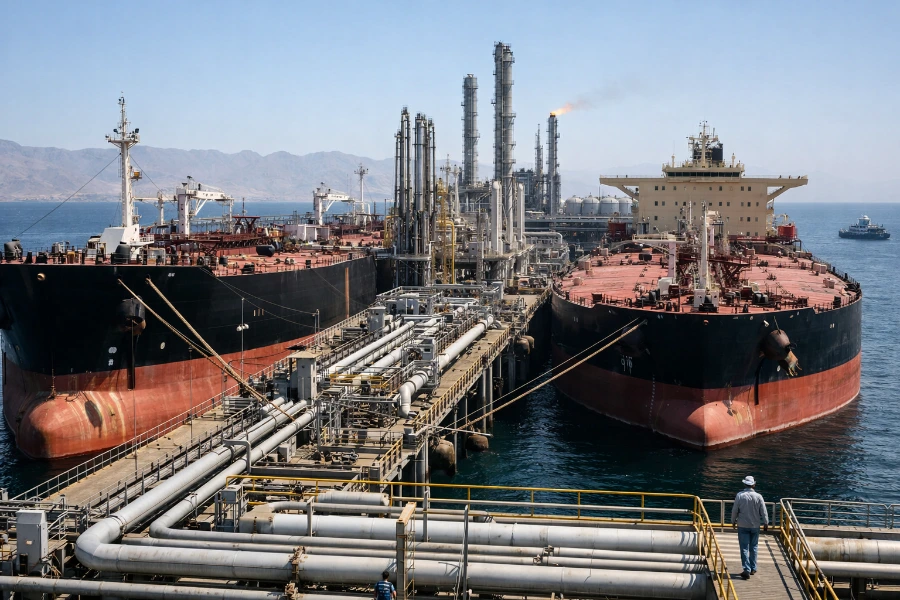
Hormuz dominates because an Iranian blockade, imposed in response to US-Israeli attacks on Iran, has restricted shipments through the channel and lifted energy prices. The strait carries a large share of Middle East crude and refined products to Asian buyers, and China is among the largest.
That gives Beijing both an interest in reopening the waterway and leverage with Tehran. Washington has sought help from China and Russia in securing Iranian commitments on transit and in curbing attacks on shipping, as Trump looks for a way to wind down the conflict. Beijing has so far avoided public commitments on Iran.
How Are Oil Markets Reacting?
Oil barely moved. Brent crude traded around $92.12 a barrel in Asian hours on Thursday, after settling at $91.95 on Wednesday, down 1.28%. On Monday, Brent had been near $95.15. The crude oil price drifted lower on Wednesday after the US Energy Information Administration reported a 3.4 million barrel rise in domestic crude stocks.
The summit pledge to raise oil supply did little to change that. Iran's navy said three tankers east of the strait were disabled by mines, yet prices held steady because Gulf exports are flowing near pre-war levels. Goldman Sachs expects Brent to average $88 a barrel in 2027 and to ease to $78 by the end of that year as supply returns to surplus. The market is therefore pricing a gradual normalization rather than a diplomatic breakthrough.
China's onshore yuan was little changed at about 6.6667 per dollar in morning trading.
What Happens to the Trade Truce After January 10?
The truce rests on a trade-off. The US lowered tariffs. China agreed to curb fentanyl precursor exports, resume soybean purchases and pause its rare-earth export controls, which it first imposed in April 2025 and which disrupted factory output in the US and Europe.
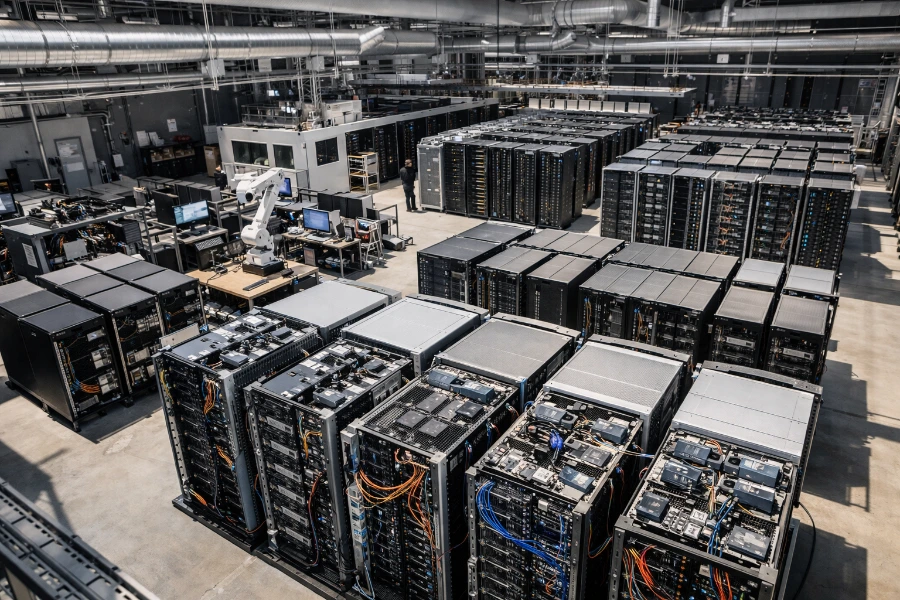
Since then the friction has moved from tariffs to technology. On November 16, Washington required licenses for exports of advanced chips to Singapore, Malaysia, Thailand, Indonesia and Brazil. Data center operators must also obtain licenses before offering computing power to Chinese clients. Both steps target indirect routes by which restricted chips could reach China, and Beijing has treated such measures as a threat to the truce.
Trump has also pressed China over the trade imbalance. China's overall trade surplus passed $1 trillion by October.
Without an extension, tariff reductions and the rare-earth pause could lapse in the same weeks, which would put supply chains for autos, electronics and defense components back under pressure. A rollover on current terms, or a longer arrangement tied to purchase commitments, would remove that risk for the first half of 2027.
Geopolitical Dimension
The summit linked trade, energy and security more tightly than any recent US-China meeting. Washington wants Chinese help on Iran and Hormuz. Beijing wants relief from chip controls and stability in its largest export market. Moscow, newly included in a three-way format, gains standing as an energy producer and nuclear power.
The shared language on nuclear risk is notable given the size of the arsenals involved. The US and Russia each hold more than 5,000 warheads, and China holds more than 600. The declaration set no limits or timetable, so it works as a statement of intent rather than an arms control framework.
Outlook
Over the next three months, the main variable is whether the January 10 deadline is met with a formal extension. Shenzhen narrowed none of the open disputes, but the tone from both leaders points to preservation rather than rupture. For energy markets, the near-term drivers remain physical: mine risk in and around Hormuz, US inventory builds and the pace at which Gulf exports recover. Beyond that, the Brent forecast of a return to surplus in 2027 depends on shipping through the strait staying open.
Mentioned tickers: N/A