Pomegra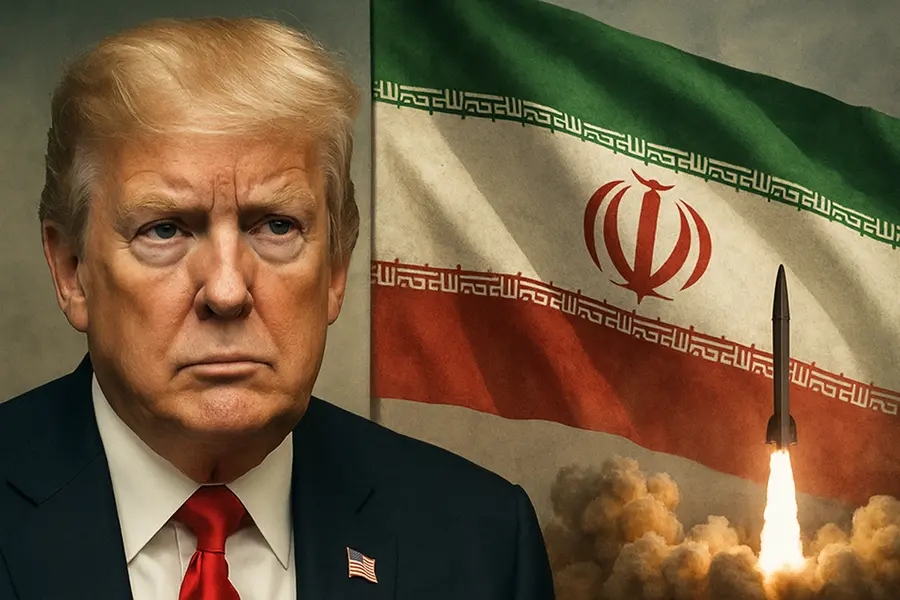
Trump threatened intensified U.S. military action against Iran after nuclear peace talks stalled, triggering fresh strikes and pushing Brent crude to $93 a barrel amid rising Middle East risk.
- Trump posted on Truth Social that Iran is taking "too long to negotiate a deal" and "will pay the price," prompting fresh U.S. strikes on June 9-10 against multiple Iranian targets.
- The sixth round of U.S.-Iran talks in Oman, scheduled for June 15, was suspended indefinitely after the renewed strikes.
- Brent crude trades near $93 per barrel after surging 30% since February 28; global crude stockpiles have fallen more than 70 million barrels in five weeks.
Lead
Washington, June 11, 2026 — President Donald Trump escalated pressure on Iran this week by threatening renewed and intensified military strikes if Tehran fails to accelerate stalled nuclear peace talks, warning in a Truth Social post that Iran was taking "too long to negotiate a deal" and "now they will have to pay the price!!!" Hours later, the U.S. military struck multiple targets inside Iran on June 9-10, deepening a conflict that began with Operation Epic Fury on February 28 and sustained a 30% surge in Brent crude prices for a fourth consecutive month. The confrontation has suspended a near-finalized ceasefire framework and elevated Middle East risk to its highest level since the conflict's opening salvo.What Happened
Trump's ultimatum represented the sharpest escalation in tone since a fragile two-month truce took hold in April. In a Fox News interview on June 10, Trump described Iran as "becoming much more aggressive" at the negotiating table. The core impasse centers on Iran's 440.9 kilograms of uranium enriched to 60% purity — a short technical step from weapons-grade 90% levels. Washington has made disposal of that stockpile a non-negotiable precondition for any final agreement. Tehran has refused, demanding immediate sanctions relief and access to frozen sovereign assets prior to signing any framework — a sequencing Trump has flatly rejected.
Iranian Defense Minister Aziz Nasirzadeh compounded diplomatic pressure by warning that if negotiations collapse entirely and a new conflict erupts, Iran will target U.S. military bases throughout the region.
Diplomatic Breakdown
The sixth formal round of talks, led by U.S. Special Envoy Steve Witkoff and Iranian Foreign Minister Abbas Araghchi, was suspended indefinitely within days of the June 9-10 strikes. The suspension ended a negotiating arc that had, as recently as late May, approached a preliminary memorandum of understanding — a 60-day ceasefire extension paired with a new nuclear talks framework that included a temporary moratorium on Iranian uranium enrichment.
Trump personally requested edits to the draft deal his envoys had negotiated before declining to announce a "final determination" at a May 29 meeting, injecting uncertainty about Washington's precise conditions. On June 17, the White House began exploring a direct Witkoff-Araghchi channel to revive discussions before the situation deteriorates further.
In a parallel signal, Trump warned Israeli Prime Minister Benjamin Netanyahu that Israel would be "on your own" if it continued independent strikes against Iran — a notable indication of friction between Washington and Tel Aviv over the conflict's scope.
Energy and Market Impact
Middle East risk has become the defining variable in global commodity pricing since February 28. Brent crude settled near $93 per barrel on June 11, trading within a $92 to $93.50 intraday range. U.S. strategic and commercial crude stockpiles have declined more than 70 million barrels over the five weeks ending June 9 — the largest drawdown since the 1980s — reflecting the cumulative weight of a supply disruption estimated at over 1 billion barrels of lost production.The Strait of Hormuz remains the conflict's most consequential economic lever. Approximately 27% of global maritime crude oil and 20% of global liquefied natural gas trade passes through the waterway. Iran declared the Strait "closed" on March 4, and began placing naval mines the following week. U.S. Energy Secretary Chris Wright said on June 9 that ship traffic through the Strait is now "rising very meaningfully," and oil prices have so far avoided a catastrophic spike because energy production infrastructure inside Iran has largely been spared. Nevertheless, Iran has demonstrated its capacity to interdict traffic and regards Hormuz closure as its primary strategic leverage point.
Geopolitical Dimension
The conflict traces to the coordinated U.S.-Israeli air campaign that struck Iranian military installations, nuclear sites, and leadership on February 28, killing Supreme Leader Ali Khamenei. Iran retaliated with missile barrages against Israeli cities and U.S. bases in the UAE, Qatar, and Bahrain. A ceasefire enacted in April has repeatedly threatened to unravel — most recently when Iran launched missiles at Israel following separate Israeli strikes in Lebanon.
Geopolitics across the wider region have been reordered by the conflict. Gulf states face dual pressure from Washington and from economic disruption caused by Hormuz instability. Asian importers have scrambled to reroute supply chains. The IMF has flagged growing downside risks to global growth if the conflict extends.Outlook
The near-term trajectory depends on whether Witkoff and Araghchi can re-establish a working channel before Trump's deadline language converts to further military action. Iran has agreed "in principle" to discuss uranium disposal but has not committed to a verifiable mechanism. Brent crude's sensitivity to each diplomatic development — a $1.50 per barrel intraday range on June 11 — illustrates how tightly financial markets are tracking the negotiating calendar. With the Strait of Hormuz partially open but fragile and the six-week ceasefire at risk, the next round of talks — if it convenes — will test whether both sides can separate the nuclear file from competing demands on sanctions and frozen assets.
Mentioned tickers: USO, BNO, XOM, CVX, LMT, RTX, NOC