Pomegra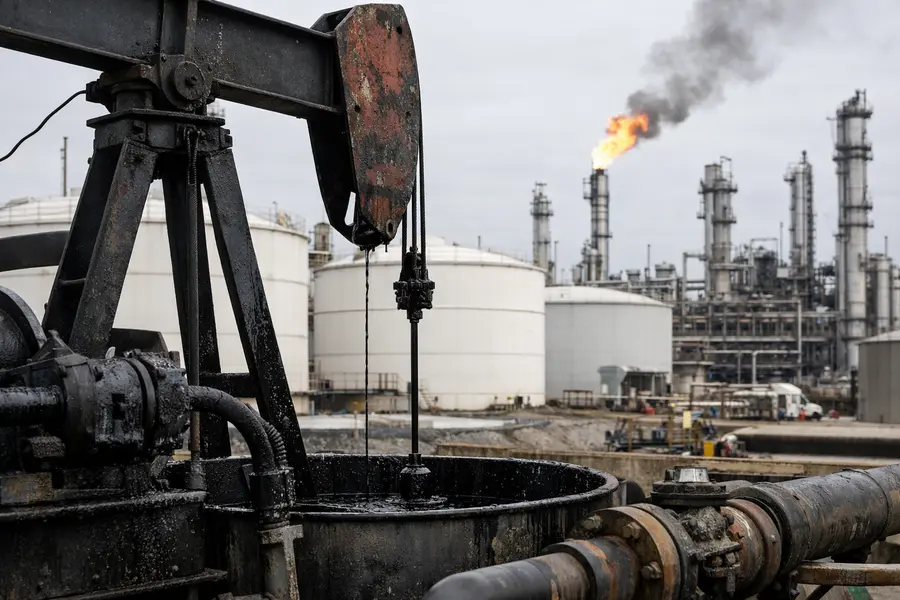
The 10-year yield climbed to a monthly high near 4.70% and the 2-year hit 4.24% Monday as rising crude oil prices reignited inflation concerns days before Wednesday's pivotal CPI report.
- The 10-year Treasury yield rose 4+ basis points to 4.705%, its highest level in August, while the 2-year reached 4.241%.
- U.S. crude futures advanced to $80 per barrel, stoking fears that energy-driven inflation could complicate the Federal Reserve's path to rate cuts.
- July CPI, due Wednesday August 12, is forecast at 3.42% year-over-year; a hot print could push September rate-cut odds sharply lower.
Lead
Washington / New York — August 10, 2026. U.S. Treasury yields pushed to a monthly peak on Monday as a fresh rally in crude oil prices revived fears that inflation could prove stickier than the Federal Reserve's baseline assumes. The 10-year Treasury yield climbed more than 4 basis points to 4.705% — a monthly high near 4.70% — while the 2-year Treasury yield rose more than 3 basis points to 4.241%, reflecting broad-based selling across the curve ahead of Wednesday's Consumer Price Index release for July.What Happened
The bond market selloff coincided with a surge in U.S. crude futures, which advanced to $80 per barrel as supply-side concerns resurfaced following geopolitical friction in key producing regions. Rising energy costs carry direct pass-through risk into headline consumer prices, and with the July CPI report scheduled for Wednesday August 12, traders were unwilling to hold positions at prevailing yields.
The 30-year Treasury bond also came under pressure, its yield rising more than 4 basis points to 5.251%, suggesting the inflation anxiety was concentrated in the longer end of the curve — the segment most sensitive to structural price expectations rather than near-term Fed policy moves.
Monday's yield surge extended a trend that had been building since late July, when a spike in crude oil first pushed the 10-year to its highest levels since January 2025.
Market Reaction
Equity futures were mixed during the overnight session, with rate-sensitive sectors — utilities, real estate investment trusts, and consumer staples — the most exposed to the steeper yield environment. The U.S. dollar index edged higher, a common reflex as rate expectations reprice upward.
Oil inflation dynamics were at the center of Monday's repricing. Brent crude tracked closely with its U.S. counterpart, reinforcing concerns that the disinflationary impulse from energy markets that helped cool prices in late 2025 and early 2026 may be reversing. A sustained move in crude above $80 would likely flow into transportation costs and manufactured-goods prices within one to two months.The Federal Reserve's preferred measure of underlying inflation, the core PCE deflator, printed above target as recently as June, keeping policymakers cautious about a premature pivot. Monday's yield move reflected bond markets adjusting to that reality before Wednesday's data provides fresh evidence.
Strategic Context
The intersection of 10Y 4.70% yields and elevated crude oil is strategically significant for several reasons. At those yield levels, the cost of capital rises tangibly across corporate balance sheets, mortgage markets, and emerging-market dollar debt — amplifying the tightening effect of monetary policy without a single additional rate hike.
For the Federal Reserve, the timing is delicate. The September FOMC meeting is the next opportunity for a policy adjustment, and policymakers have signaled data dependency as the guiding principle. A CPI reading for July that surprised to the upside — particularly in core or services categories — would substantially reduce the probability of any September rate relief.
June's headline CPI came in at 3.5% year-over-year, down from 4.2% in May. The July consensus forecast calls for a further deceleration to approximately 3.42% annually, with a monthly gain of around 0.09%. Core CPI, which excludes food and energy, is expected at 2.52% year-over-year, modestly below June's 2.6%. That trajectory is constructive but does not constitute the sustained return to 2% that the Fed has prescribed as a precondition for meaningful easing.
Oil inflation complicates that picture. Energy prices are excluded from core CPI but appear in headline figures, and sustained crude strength has historically bled into core services categories — airfares, logistics, and housing-adjacent costs — with a lag of several months.The CPI Wednesday Test
Wednesday's release from the Bureau of Labor Statistics will be scrutinized for three variables: the monthly headline print, the monthly core print, and the shelter component, which has remained elevated even as rental market data has softened.
A monthly core reading at or below 0.20% would likely be received as benign, preserving optionality for a September cut. A print at or above 0.30% would force a significant repricing of the 2Y 4.24% level — the maturity most directly tethered to near-term Fed rate expectations — and could push the 2-year above 4.40%, levels last seen during the tightening cycle's final phase.
Prediction markets as of Monday morning assigned roughly 60% probability to a sub-consensus core reading, implying that the base case remains disinflationary. However, the simultaneous move in crude and Treasuries Monday reflected a market unwilling to take that outcome for granted.Producer price data on Thursday and retail sales on Friday complete the week's macro calendar, providing a fuller picture of demand-side inflation pressures.
Outlook
The 10Y 4.70% and 2Y 4.24% yield levels frame the boundaries of a high-stakes week for fixed income and equities alike. Wednesday's CPI report stands as the clearest near-term catalyst: a tame print validates the disinflation narrative and keeps September rate-cut prospects intact, while a hot reading — compounded by rising oil inflation — risks repricing both the short and long ends of the curve in ways that would weigh on risk assets broadly. The Fed enters the data window with limited room for error, and bond markets are pricing that constraint with precision.
Mentioned tickers: TLT, IEF, SHY, USO, CL, SPY, IYR, XLU