Pomegra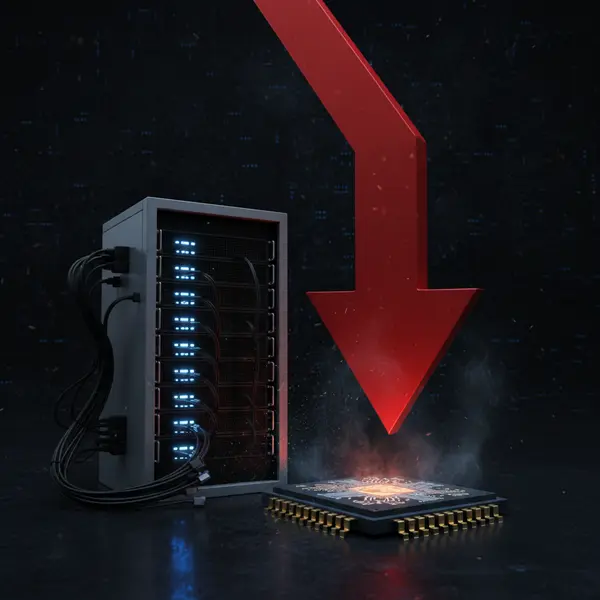
Arrest and Federal Charges Unveiled
The U.S. Justice Department unsealed an indictment on Thursday charging Yih-Shyan "Wally" Liaw, co-founder and senior vice president of business development at Super Micro Computer, along with Ruei-Tsang "Steven" Chang, a sales manager at Super Micro's Taiwan office, and Ting-Wei "Willy" Sun, an outside contractor who previously worked with the other two. Each of the three defendants faces one count of violating U.S. export control law, one count of conspiring to smuggle goods from the United States, and one count of conspiring to defraud the United States. Liaw, a 71-year-old U.S. citizen, and Sun, 44, have been arrested. Chang, 53, a Taiwanese national, remains at large and is currently considered a fugitive by the Justice Department.
A $2.5 Billion Transshipment Operation
Prosecutors allege the trio engineered a highly coordinated transshipment scheme operating since 2024 that generated approximately $2.5 billion in illicit sales. At the center of the operation was a Southeast Asian front company — referred to in the indictment as "Company-1" — used to fabricate shipping paperwork, stage dummy server assemblies, and act as a logistical cutout to redirect Nvidia GPU-packed servers to Chinese end-users in violation of U.S. export restrictions.
The scheme involved maintaining a warehouse inventory of thousands of hollow, non-functional server shells in Southeast Asia. These dummy units were presented as locally deployed hardware to deceive customs inspectors. In a detail that has drawn wide attention, CCTV footage captured warehouse workers using hair dryers to transfer serial number stickers from genuine, chip-filled servers onto the empty shells — a physical sleight-of-hand designed to defeat serial number tracing by U.S. authorities. The real servers, loaded with restricted Nvidia AI accelerators, were then quietly routed through third-party brokers into China.
Market Reaction: SMCI Suffers Worst Day Since October 2024
Shares of Super Micro Computer collapsed 25.3% in premarket trading on Friday, dropping to approximately $23 per share — marking the company's sharpest single-session decline since October 2024, when the stock shed 32% amid an earlier wave of accounting-related controversy. The sell-off erased roughly $4.7 billion in market capitalization, slashing the company's valuation from approximately $18.4 billion to an estimated $13.7 billion. Trading volumes surged dramatically as institutional sellers moved quickly to reduce exposure ahead of market open.
Nvidia shares also came under modest pressure as the news reverberated across the broader AI hardware ecosystem, though the chipmaker itself was not named as a defendant or target in the investigation.
Super Micro Distances Itself From the Defendants
Super Micro Computer issued an official statement confirming it placed Liaw and Chang on administrative leave and immediately terminated its relationship with contractor Sun. The company emphasized that it is not named as a defendant in the indictment and described the conduct alleged in the charges as "a contravention of the Company's policies." Super Micro also stated that it "maintains a robust compliance program and is committed to full adherence to all applicable U.S. export and re-export control laws and regulations."
Nvidia issued a parallel statement, affirming that "strict compliance is a top priority" and that it works closely with customers and government agencies on export compliance programs. The company underscored that it provides no service or support for systems unlawfully diverted to China.
Co-founder Liaw holds approximately $464 million in Super Micro shares, a stake that saw more than $100 million in paper value evaporate in the immediate aftermath of the charges being made public.
Export Control Backdrop and Broader Implications
The case emerges against a turbulent backdrop for U.S.-China AI chip policy. The Biden administration first imposed sweeping restrictions on advanced Nvidia chip exports to China in 2022. Since taking office, President Donald Trump has navigated a more fluid posture — at times indicating further restrictions, then reversing course in December 2025 to permit the export of Nvidia's H200 chip to China, extending the eased policy to AMD, Intel, and other U.S. chipmakers, with Washington collecting a 25% cut from such advanced chip sales.
The evolving regulatory environment has created ambiguity in global AI hardware supply chains, and enforcement agencies have intensified scrutiny of transshipment routes through Southeast Asia and the Middle East. Bernstein analyst Mark Newman noted that while Super Micro is not a named defendant, the arrest of a co-founder with deep operational ties to the firm raises significant governance and compliance risk questions that the market will be repricing in the near term.
The defendants face potential sentences of up to 30 years in federal prison, substantial financial penalties, asset forfeiture, and lifetime bans from employment in export-controlled industries.
Outlook: Compliance Risk Now Front and Center
The charges represent the most direct federal action yet against individuals inside a major U.S. AI server manufacturer for alleged export control violations. For Super Micro, a company still rebuilding investor confidence following its 2024 accounting and auditor controversy, the indictment of its co-founder compounds an already fragile reputational position. The case is expected to accelerate regulatory examination of AI supply chain compliance across the sector, with particular focus on server manufacturers that act as integrators of restricted Nvidia technology.
The Justice Department's decision to prosecute individuals within a publicly traded company — rather than the company itself — signals a targeted enforcement strategy aimed at deterrence through personal criminal liability at the executive level.
---
Mentioned tickers: SMCI, NVDA, AMD, INTC