Pomegra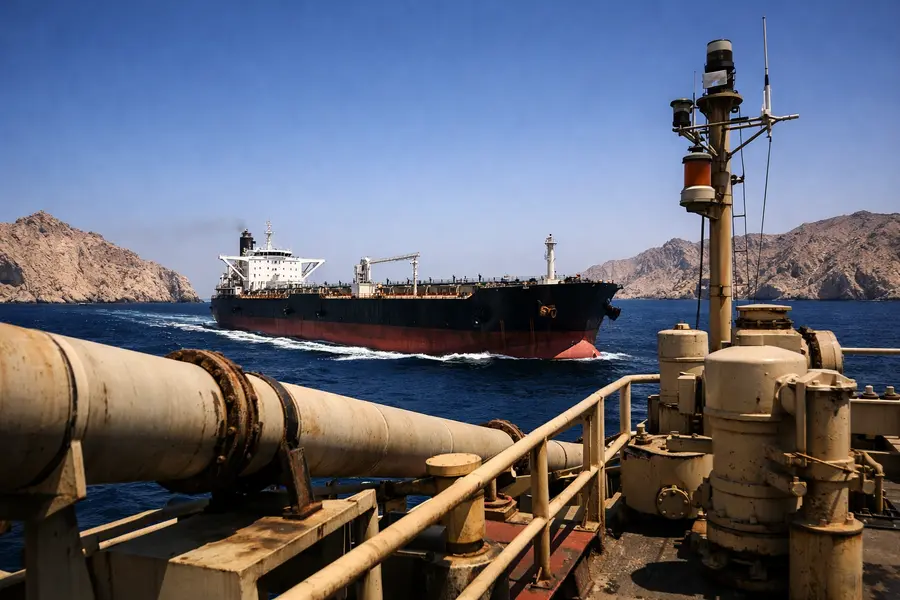
Persian Gulf tensions push crude oil price toward $80 a barrel, with a Strait of Hormuz disruption poised to reignite global inflation as the Federal Reserve holds interest rates near two-decade highs.
- Brent crude nears $77/barrel; $80 is the threshold at which Persian Gulf tensions would trigger a global energy and inflation shock.
- The Strait of Hormuz channels 21 million barrels daily - roughly 21% of global supply - making any closure an immediate catastrophic supply event.
- A sustained price spike would reignite inflation while the Federal Reserve holds rates near two-decade highs, raising stagflation risk.
Lead
Brent crude futures climbed toward $77 a barrel on September 13 as geopolitical pressure in the Persian Gulf reached a new pitch, with energy markets pricing an escalating probability that any disruption to the Strait of Hormuz would send crude surging past $80 a barrel and deliver a fresh inflationary shock to a global economy already strained by two years of elevated borrowing costs. The scenario arrives as the Federal Reserve sustains one of its most restrictive monetary postures in two decades, leaving policymakers with sharply diminished capacity to absorb an externally driven price surge without deepening an economic slowdown.
The Strait of Hormuz - a 21-mile-wide passage between Iran and Oman at the mouth of the Persian Gulf - channels approximately 21 million barrels of crude oil and petroleum products each day, roughly one in five barrels consumed globally. A sustained closure, even partial, would immediately expose structural undersupply across European and Asian import markets that have not rebuilt strategic reserves since the 2022-2023 drawdowns.
What Has Driven Crude Oil Price to This Level?
Regional hostilities have accelerated a repricing of geopolitical risk premium across energy markets that had been largely absent since mid-2025. West Texas Intermediate (WTI) crude has moved in lockstep with Brent, climbing approximately 8% over the prior two weeks, while front-month futures open interest has expanded sharply - signaling fresh speculative positioning rather than physical demand alone.
Tanker rates through the Gulf of Oman have surged more than 30% in the past 10 days as shipping operators reprice war-risk insurance premiums. Several major charterers have begun rerouting Very Large Crude Carriers around the Cape of Good Hope, adding roughly two weeks and $2-3 million per voyage in incremental costs - an early indicator of supply-chain strain that precedes any physical shortage phase. Energy equities, including ExxonMobil (XOM) and Chevron (CVX), have outperformed the broader market benchmark SPY as investors rotate toward energy as an inflation hedge.
Why Does the $80 Threshold Matter?
The $80-per-barrel level functions as a critical macro inflection point for two interconnected reasons. First, it represents the price at which energy import costs for large crude-dependent economies - including Germany, Japan, India, and South Korea - begin to materially widen current account deficits, pressuring currencies and sovereign bond markets simultaneously.
Second, $80 crude is the level at which headline inflation in the United States, eurozone, and United Kingdom would reverse their recent downward trajectories and move back above central bank targets. Consumer energy costs feed directly into transportation, food production, and manufacturing inputs, amplifying the inflationary signal well beyond the pump price. The U.S. consumer price index, which had moderated to approximately 3.1% year-over-year through August 2026, carries a roughly 7% direct energy weighting, with indirect pass-throughs that can double the effective impact over a six-month horizon.
How Does This Affect the Fed's Next Move?
The Federal Reserve's position is structurally exposed to an external supply shock of this magnitude. After raising the federal funds rate to a peak range of 5.25%-5.50% and maintaining it through mid-2026, the Fed had entered a data-dependent holding pattern with markets pricing modest reductions in late 2026. An oil-driven inflation resurgence eliminates the conditions under which that easing cycle begins.
Historical precedent is instructive: the 1973 oil embargo and the 1979 Iranian Revolution both forced the Federal Reserve into reactive tightening, deepening recessions that were already underway. The current cycle presents an asymmetric risk - interest rates are already elevated, growth is moderating, and household balance sheets have absorbed two years of high borrowing costs. A prolonged period above $80 crude confronts the Fed with a stagflationary trade-off between controlling inflation and avoiding a contraction. The European Central Bank faces a structurally similar dilemma, given the eurozone's higher dependence on Persian Gulf crude.
Strategic Context: Who Controls the Chokepoint?
Iran holds the geographic capacity to mine or otherwise impede Strait of Hormuz shipping, having rehearsed such scenarios in naval exercises as recently as July 2026. The United States Fifth Fleet, headquartered in Bahrain, maintains a continuous presence specifically to deter such action - but the strategic calculus shifts materially if conflict escalates to include Iranian naval assets or proxy forces operating from Yemen and Iraq.
Saudi Arabia's East-West Pipeline, with a throughput capacity of roughly 5 million barrels per day, represents the primary bypass route, but that capacity covers less than a quarter of current Hormuz flows and requires weeks to ramp to full utilization. Iraq, Kuwait, and the UAE have no viable alternative export routes, meaning any prolonged closure would remove those volumes from global markets immediately.
The United States Oil Fund (USO) has attracted elevated trading volume throughout the current period of tensions. SPDR Gold Shares (GLD) have also advanced, consistent with the flight-to-safety dynamic that historically accompanies Middle East supply disruptions.
Outlook
The near-term trajectory for crude oil price hinges on whether diplomatic channels in the Persian Gulf produce a de-escalation agreement in the coming weeks. Absent that, the market-implied probability of an $80-per-barrel print is rising toward levels not seen since the post-Ukraine invasion spike of 2022. For the Federal Reserve, a sustained move above that threshold would force a reassessment of its rate path at precisely the moment economic momentum is most vulnerable. The convergence of energy shock risk, elevated interest rates, and stretched consumer finances defines the central macro risk scenario for Q4 2026.
Mentioned tickers: USO, XOM, CVX, SPY, GLD