Pomegra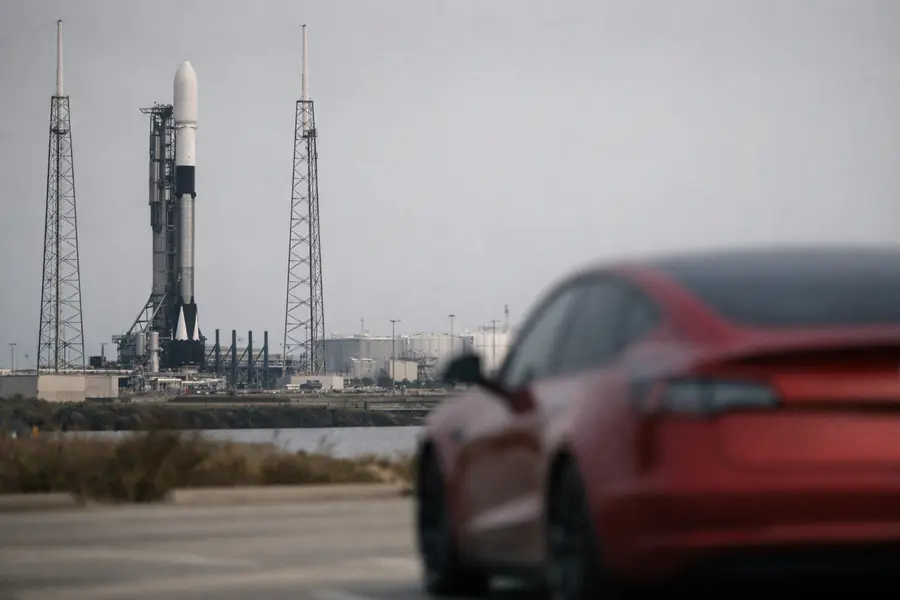
Roughly $123 billion in SpaceX insider shares begin trading Thursday as the largest post-IPO lock-up expiry on record tests investor appetite, with Tesla shares down 0.8% in sympathy.
- SpaceX's staggered lock-up releases up to 911.5 million insider shares, worth close to $123 billion, starting Thursday, August 6.
- SPCX has fallen roughly 22% from its June 16 all-time high of $225.64 to about $125.33, with a market cap near $1.64 trillion.
- Tesla shares slipped 0.8% in sympathy trading, extending a 2026 decline of roughly 31% tied to weak Q2 earnings.
Lead
The post-IPO lock-up period for Space Exploration Technologies (SPCX) starts expiring Thursday, August 6, 2026, opening the door for insiders to sell as much as 20% of their restricted holdings — up to 911.5 million shares, valued near $123 billion at recent prices. The unlock, one of the largest in market history, follows SpaceX's first earnings report as a public company on August 4 and has rippled across risk sentiment in high-multiple growth names, with Tesla (TSLA) slipping 0.8% in sympathy.
What Happened
SpaceX listed on Nasdaq on June 12, 2026, at $135 a share and closed its debut session at $160.95, a 19% first-day gain. Rather than a single lock-up cliff, the company structured a staggered release schedule, with tranches of roughly 7% of restricted shares unlocking at 70, 90, 105, 120 and 135 days after the offering. Thursday marks the first major tranche tied to that lockup expiry calendar, arriving two trading sessions after the company's inaugural quarterly results.
SPCX shares have since retreated well off their post-IPO peak. The stock hit an all-time high of $225.64 on June 16 before sliding to a low of $107.01 on July 28. As of August 5, shares traded near $125.33, leaving the company's market capitalization at roughly $1.64 trillion, down from $1.77 trillion at listing — a decline of about 7%.
Market Reaction
The approaching unlock has weighed on sentiment across the broader space and defense-technology complex, and the spillover has been visible in adjacent high-profile names tied to Elon Musk. Tesla shares slipped 0.8% in early trading, a modest but notable sympathy move given the stock's already fragile technical picture. In pre-market trading Wednesday, TSLA changed hands near $324, down from a prior close of $327.35.
The sympathy move compounds a difficult stretch for Tesla, which is down approximately 31% year-to-date in 2026. The stock has yet to stabilize since its 12% single-session drop on July 23 following second-quarter results that missed on profitability. Adjusted net income fell 17% to $1.2 billion, or $0.33 per share, versus consensus estimates near $0.54. Operating income collapsed 57% to $398 million, with operating margin compressing to 1.4% from 4.1% a year earlier.
Strategic Context
For SpaceX, the mechanics of the unlock matter as much as the headline figure. Roughly $123 billion in newly tradable shares compares with an estimated $86 billion currently available in the public float — meaning the potential supply of sellable stock could more than double overnight. Unlike conventional single-date lock-up expirations, the staggered structure was designed to dampen the shock of concentrated selling, spreading pressure across five separate windows rather than one.
Even so, the scale dwarfs typical large-cap unlocks by a wide margin — market estimates put a standard mega-cap lock-up expiry closer to $1.8 billion, making Thursday's release more than 60 times the usual size. That scale, combined with SPCX's roughly 45% drawdown from its June peak, has left investors watching closely for signs of forced or opportunistic insider selling.
AI and Technology Angle
SpaceX's public-market debut has functioned as a proxy for investor appetite in capital-intensive, infrastructure-heavy technology bets — satellite constellations, reusable launch systems and adjacent compute and connectivity businesses. The company's first quarterly report as a public entity on August 4 gave the market its first look at unit economics behind Starlink, launch cadence and next-generation vehicle programs, results that will now be tested against a wave of insider liquidity. The read-through extends to Tesla, where Musk's simultaneous responsibilities across Optimus robotics, Robotaxi deployment and capital-intensive AI infrastructure spending — capital expenditure guidance north of $25 billion for 2026 — has made the two companies increasingly linked in investor positioning, even though they trade on separate exchanges under separate structures.
What Comes Next
Attention now turns to how insiders behave once shares become tradable Thursday, and whether selling concentrates immediately or is absorbed gradually given the staggered schedule. Subsequent tranches at the 90-, 105-, 120- and 135-day marks will keep supply pressure in focus into the fourth quarter, meaning Thursday is unlikely to be the last test of demand for SPCX stock.
For Tesla, the near-term catalysts remain unchanged: progress on Robotaxi expansion, Optimus production timelines, and whether elevated capital spending begins translating into margin recovery. Continued softness in operating margin, combined with cross-asset sympathy moves tied to Musk-linked names, suggests volatility in TSLA shares is likely to persist independent of Tesla-specific news flow.
Outlook
Thursday's lockup expiry represents a landmark test of market depth for one of the largest and most closely watched listings in recent history. SPCX's ability to absorb up to $123 billion in newly tradable insider shares, without a repeat of the volatility seen since its June peak, will shape sentiment across adjacent growth and technology names. Tesla's 0.8% sympathy decline underscores how tightly linked investor psychology around Musk-affiliated companies has become, even as Tesla's own fundamentals — margin compression, delayed autonomy timelines and rising capital intensity — continue to drive the bulk of its 2026 underperformance.