Pomegra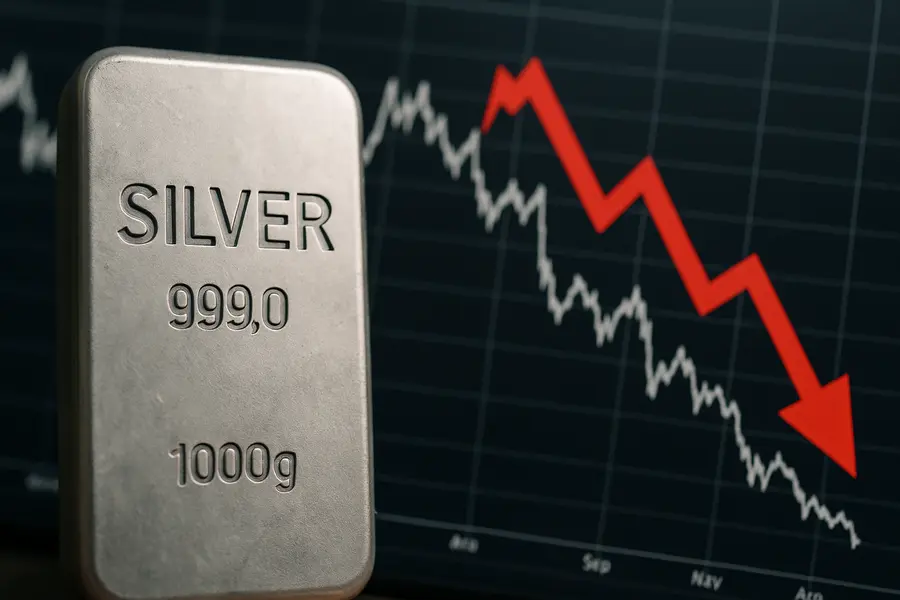
Silver spot prices slumped more than 7% to their weakest level since May 2024, breaching the $30-per-ounce floor as a surging dollar, retreating rate-cut bets, and heavy ETF outflows combined to trigger one of the sharpest sell-offs in the silver market this year.
- XAG/USD fell more than 7% to $29.75, the lowest print since May 2024, as the U.S. dollar posted its strongest weekly performance in six months.
- Federal Reserve rate-cut expectations were sharply pared back, removing a key support pillar for non-yielding precious metals including gold and silver.
- SLV and silver-backed commodity ETFs recorded accelerating outflows, deepening the technical breakdown below the critical $30 support level.
Lead
Silver spot (XAG/USD) plunged more than 7% through the $30-per-ounce floor this week, settling at $29.75 — a six-month low last seen in May 2024 — as a post-election surge in the U.S. dollar and a rapid repricing of Federal Reserve policy erased weeks of gains in the precious metals complex. Gold (XAU/USD) declined alongside silver but absorbed proportionally less of the selling pressure, widening the gold-silver ratio to its highest level since early spring. The move marks a sharp reversal from silver's October peak of $35.07, the metal's strongest reading since 2012.What Happened
The immediate catalyst was a sustained rally in the U.S. Dollar Index (DXY) following the U.S. election, which sent the greenback to its highest level in nearly seven months. Because silver is priced in dollars globally, a stronger dollar raises the effective cost of the metal for foreign buyers, compressing demand across Asian and European markets simultaneously.
Compounding the dollar effect, Federal Reserve officials signaled in the days after the election that the pace of interest-rate reductions would be more gradual than markets had previously priced. With fewer rate cuts anticipated, the opportunity cost of holding non-yielding assets such as silver increased sharply. Investors responded by rotating out of the metal and into dollar-denominated yield-bearing instruments, including short-dated Treasuries, which saw inflows as silver lost ground.
The breakdown below $30 — a level that had served as a technical floor for much of the second half of 2024 — was itself a self-reinforcing trigger. Algorithmic and systematic trading strategies oriented around that threshold generated additional sell orders once the price slid through it, accelerating the decline into the close.
Market Reaction
iShares Silver Trust (SLV), the largest U.S. silver-backed exchange-traded fund, registered significant outflows over the period, reflecting institutional and retail investors exiting the commodities trade rather than holding through the drawdown. Futures open interest on CME Group silver contracts also declined, a sign that speculative long positions built during the October rally were being actively liquidated rather than rolled forward.Silver's underperformance relative to gold was notable. The gold-silver ratio — which measures how many ounces of silver it takes to buy one ounce of gold — widened materially, reflecting the metal's dual identity: silver is sensitive both to safe-haven flows (where gold is the more favored instrument) and to industrial demand expectations (where growth concerns amplify selling pressure). When rate-hike fears and a stronger dollar dominate, silver's industrial component reprices downward even as gold partially retains its monetary reserve appeal.
Strategic Context
Silver's 2024 rally had been underpinned by a convergence of forces: tightening mine supply, growing industrial consumption from the solar energy and electric vehicle sectors, expectations for Fed rate reductions, and elevated geopolitical risk premiums supporting the broader precious metals complex. The Silver Institute had forecast a sixth consecutive annual supply deficit, providing structural support for prices.
The current sell-off does not invalidate those structural dynamics, but it does demonstrate how quickly momentum-driven commodities positions can unwind when monetary policy expectations shift. Elevated positioning heading into the election left the market vulnerable to a sentiment reversal, and the rapid reassessment of the rate-cut timeline — from four reductions in 2024's final two months to potentially just one — acted as the trigger.
Historically, sharp drawdowns in silver following periods of extended outperformance have tended to overshoot fundamental value on the downside before stabilizing. Silver's industrial demand base, which accounts for roughly 55% of total consumption, has not materially deteriorated; the selloff is predominantly a financial market repricing event driven by macro rate and currency dynamics rather than a signal of demand destruction.
Geopolitical Dimension
The post-election dollar surge that anchored the selloff carries broader implications for commodities markets globally. A persistently strong dollar tightens financial conditions across emerging-market economies — many of which are key consumers of industrial silver — and raises the real cost of dollar-denominated commodity imports. If the dollar remains elevated into year-end, the headwind for silver and the broader complex could persist beyond the immediate selloff window.
What Comes Next
The pace of any recovery in silver prices will depend heavily on the Federal Reserve's December meeting, where officials will update their dot-plot projections for the 2025 rate path. A notably hawkish revision — fewer cuts, later timing — would likely extend the pressure on non-yielding assets including silver and gold. Conversely, softer-than-expected economic data in the intervening weeks could stabilize rate expectations and provide a technical floor for the metal.
The $28.50–$29.00 zone represents the next identifiable support band on a longer-term chart basis, corresponding to levels that acted as resistance during silver's initial breakout earlier in 2024. Whether the metal consolidates above $30 or tests that lower range will be a closely watched indicator of broader commodities market risk appetite into year-end.
Outlook
Silver's breach of $30 represents a significant technical and psychological reset after an exceptional year of performance, driven by a convergence of dollar strength, recalibrated Fed expectations, and forced liquidation of overextended speculative positions. The structural supply deficit and industrial demand story remain intact, but financial market dynamics are currently dominant. The December FOMC meeting and incoming U.S. economic data will determine whether the $30 level is reclaimed as support or gives way to a more extended corrective phase.
Mentioned tickers: XAG/USD, XAU/USD, SLV, GLD, GDX