Pomegra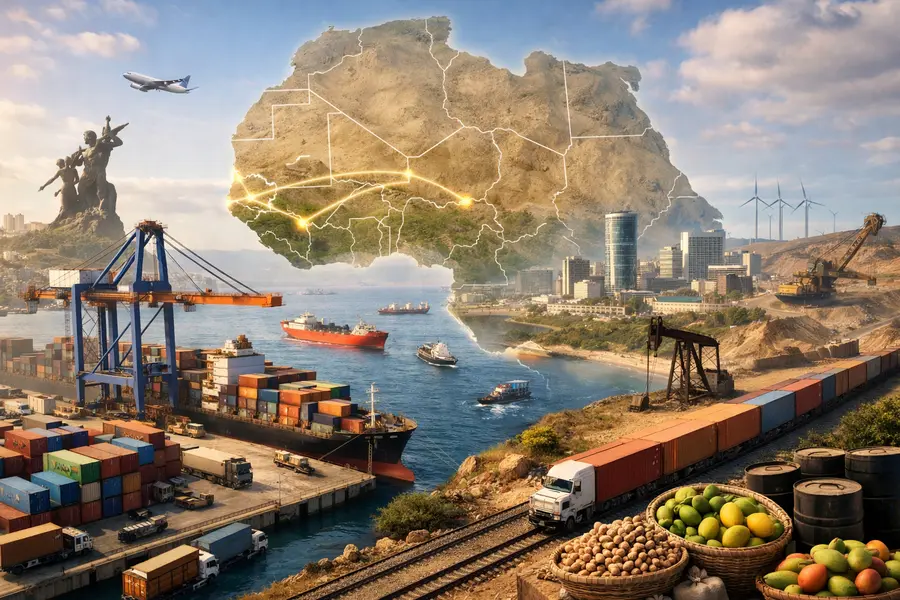
Dakar signs landmark agreements with Spain and The Gambia, leveraging oil-driven growth to position Senegal as West Africa's pre-eminent regional trade power.
- Senegal and Spain signed 6 agreements under a €180 million framework — Spain's first strategic partnership with any sub-Saharan African nation.
- A 12-agreement package with The Gambia, signed June 12 in Dakar, spans energy, trade, digital transformation, and cross-border governance.
- The AfDB projects Senegal GDP growth of 7.1% in 2026, driven by Sangomar oil output and a natural gas sector ramp-up.
Lead
Senegal has moved decisively to convert its hydrocarbon-fueled rise into diplomatic and commercial leverage, signing 18 bilateral agreements with Spain and The Gambia within a span of three months. The deals — anchored by a €180 million European partnership framework and a comprehensive 12-pact cooperation roadmap with its immediate neighbor — signal how Senegal's emergence as a West African energy producer is reshaping the country's standing in regional trade networks and attracting new tiers of strategic investment.
What Happened
President Bassirou Diomaye Faye traveled to Madrid on March 26, 2026, where Prime Minister Pedro Sánchez elevated the bilateral relationship to a full Strategic Partnership — the first Spain has conferred on any country in sub-Saharan Africa. Six structuring agreements were signed, collectively organized under the Senegal–Spain Sustainable Development Partnership Framework 2026–2030. Backed by €180 million, the framework aligns with President Faye's "Senegal Vision 2050" long-term development blueprint and covers fisheries enforcement, tourism, investment promotion, education, and the protection of shared underwater cultural heritage.
On June 12, the 4th Senegalo-Gambian Presidential Council convened in Dakar, co-chaired by President Faye and Gambian President Adama Barrow. The session produced 12 cooperation agreements spanning defense and security, Senegal trade and commerce, energy and hydrocarbons, digital transformation, youth empowerment, environmental protection, and cross-border governance. Both governments committed to establishing joint working groups to monitor implementation and accelerate the delivery of agreed roadmaps.
Economic Context
The diplomatic surge is inseparable from Senegal's transformation into a hydrocarbon economy. The Sangomar oil field — developed jointly by Australia's Woodside Energy and state-owned Petrosen — exported 3.8 million barrels in April alone, with 2025 full-year output projected between 30.5 million and 34.5 million barrels. Gas production from the Greater Tortue Ahmeyim LNG project, straddling the Senegal–Mauritania maritime border, has entered its ramp-up phase.
The African Development Bank projects real West Africa growth of 7.1% for Senegal in 2026, following an estimated 6.7% expansion in 2025 — a step-change from the country's pre-oil-era trajectory. The IMF posts a more cautious 2.2% estimate for 2026, citing fiscal pressures stemming from a misreported debt legacy inherited by the Faye administration. Outstanding liabilities from the prior government are assessed at between $7 billion and $13 billion — equivalent to up to 40% of GDP — and remain subject to ongoing resolution talks with the Fund. Inflation is contained at a projected 2.1% in 2026, underpinned by food and electricity subsidies.
Regional Trade Dimension
The bilateral activism sits within a broader structural shift in West Africa trade architecture. As a member of both the Economic Community of West African States (ECOWAS) and the African Continental Free Trade Area (AfCFTA), Senegal operates inside a regional bloc of approximately 300 million consumers. The AU Assembly's February 2026 adoption of eight annexes to the AfCFTA Protocol on Intellectual Property Rights adds legal infrastructure for technology transfer and innovation commerce — terrain where Dakar, as West Africa's leading financial and logistics hub, is positioned to capture early-mover advantage.
The Spain partnership carries particular weight in energy and capital terms. Investment-promotion clauses are designed to attract European capital toward Senegal's infrastructure and offshore energy value chain, while fisheries-enforcement provisions address a sector that intersects directly with Senegal's maritime hydrocarbon interests.
Strategic Significance
The Gambia agreements hold distinct geographic logic. Gambian territory is fully enclosed by Senegal, making the two countries among the most economically interdependent in Africa. Reducing friction on cross-border commerce, energy access, and digital infrastructure unlocks a corridor that has historically constrained growth on both sides of the border. Energy-sharing provisions carry added urgency as Senegal's offshore surplus creates an opportunity to supply landlocked neighbors at competitive terms.
For President Faye, the treaty portfolio serves dual purposes: broadening external financing at a moment when the fiscal position demands alternative capital sources, and demonstrating that Senegal's resource wealth is being channeled into structural economic partnerships rather than short-term revenue extraction.
Outlook
Senegal's expanding ledger of bilateral and regional trade agreements reflects a deliberate strategy to convert natural-resource receipts into durable geopolitical and commercial relationships. The Spain framework, the Gambia roadmap, and deepening AfCFTA integration collectively extend Dakar's reach into Europe, sub-regional West Africa, and the continental market simultaneously. Whether the fiscal consolidation required to satisfy the IMF can proceed without crowding out the capital expenditure underpinning these partnerships will be the central variable shaping Senegal's economic trajectory through 2027 and beyond.
Mentioned tickers: WDS