Pomegra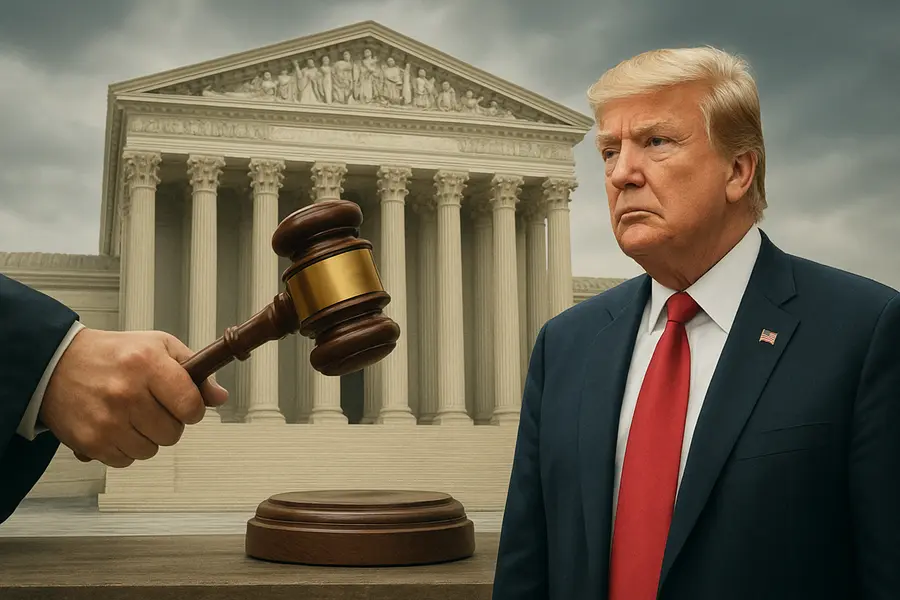
The Supreme Court's 6-3 decision in Trump v. Slaughter dismantles a 91-year-old precedent protecting independent agency commissioners, granting the president broad authority to reshape federal regulation.
- SCOTUS voted 6-3 on June 29 to overturn Humphrey's Executor, letting Trump fire independent agency heads without cause.
- The ruling directly affects roughly two dozen multi-member agencies, including the FTC, NLRB, MSPB, and CPSC.
- A separate 5-4 decision carved out a Federal Reserve exception, allowing Fed Governor Lisa Cook to retain her seat pending litigation.
Lead
The U.S. Supreme Court on June 29, 2026, issued one of the most consequential expansions of Trump presidential power in modern American history, ruling 6-3 that the president may dismiss members of independent federal agencies without cause. The decision in Trump v. Slaughter overturns Humphrey's Executor v. United States, a 1935 precedent that for nine decades had shielded regulators across roughly two dozen agencies from direct White House political control. The ruling is the signature SCOTUS Trump ruling 2026, arriving on the final day of the court's term and immediately reshaping the architecture of the U.S. administrative state.
What Happened
The case originated in March 2025, when the Trump administration dismissed Federal Trade Commission Commissioner Rebecca Slaughter and Commissioner Alvaro Bedoya without citing statutory cause, stating only that their continued service was "inconsistent with the Administration's priorities." Slaughter challenged the removal; lower courts ruled in her favor.
On Monday, all six conservative justices joined the majority in finding that the FTC's statutory provision — permitting removal only for "inefficiency, neglect of duty, or malfeasance in office" — violated the separation of powers embedded in the Constitution. Writing for the majority, the court endorsed the unitary executive theory: the doctrine holding that the president must retain plenary authority over every officer who exercises executive power, without congressional insulation.
The decision also validates Trump's earlier firings of board members at the National Labor Relations Board, the Merit Systems Protection Board, and the Consumer Product Safety Commission — all agencies structured with similar statutory removal protections.
The Federal Reserve Exception
In a parallel 5-4 ruling issued the same day, the court blocked the administration's attempt to dismiss Federal Reserve Governor Lisa Cook, permitting her to remain in her post while litigation proceeds in lower courts. The majority treated the Fed as structurally and historically distinct from other independent commissions, citing its unique dual mandate, its role in monetary policy transmission, and a century-long tradition of operational independence from the political branches.
The carve-out is narrow and provisional: the court did not rule definitively on whether the president can ever remove a Fed governor, leaving that question for a future term. For now, the Fed's independence — and by extension, the credibility anchor underpinning U.S. monetary policy — survives intact.
Strategic Context
The Supreme Court power expansion ratified Monday has been a stated goal of conservative legal scholars since the Reagan administration. The unitary executive framework, long debated in law schools, has now been converted into binding constitutional doctrine by the Roberts Court. The immediate operational consequence is that Trump presidential power over the regulatory apparatus extends to agencies that set competition policy, labor rules, product safety standards, nuclear licensing, and civil service adjudications.
Presidents of either party will inherit this expanded authority. Future administrations may install commissioners who reflect their political priorities without waiting for Senate-confirmed vacancies, effectively ending Congress's design of bipartisan, staggered-term boards as a structural check on executive will.
Dissent and Legal Reaction
Justice Sonia Sotomayor, writing for the three dissenting justices, warned that the majority's decision "upends nearly a century of settled law" and risks concentrating authority in the White House that the Founders intended to be distributed. The dissent argued that Congress retains constitutional authority to insulate expert regulators from political removal as part of its power to establish the agencies in the first place.
Legal scholars characterize the ruling as the most significant restructuring of the federal bureaucracy since the New Deal era, comparable in administrative law terms to *Chevron*'s 2024 demise in Loper Bright Enterprises v. Raimondo. Together, the two decisions remove major structural and interpretive constraints on executive branch dominance over the regulatory state.
US Legal News: Scope and Near-Term Consequences
The US legal news implications extend beyond personnel. Agency commissioners who once operated under the assumption that they could resist White House directives without risking removal now serve at the president's pleasure. At the FTC — which is currently conducting active antitrust proceedings in the technology and healthcare sectors — Trump can now appoint a full slate of loyalists, potentially redirecting enforcement priorities within months.
At the NLRB, the ruling accelerates the dismissal of Biden-era board members and opens the door to rapid reversal of labor rulings issued during a period of divided agency leadership. The CPSC, MSPB, and Nuclear Regulatory Commission face equivalent upheaval.
Outlook
The Trump v. Slaughter ruling closes the 2026 Supreme Court term with a structural verdict that will outlast the current administration. While the Federal Reserve's independence survives as a narrow exception, the broader edifice of congressionally designed regulatory independence has been dismantled. The decision invites immediate litigation over agency actions already taken or reversed since January 2025, and Congress faces mounting pressure to determine whether and how it can legislate limits on presidential removal authority that the court would still uphold. The question of the Fed's long-term status — and whether a future court majority revisits even that exception — remains the principal unresolved variable in the new constitutional settlement.
Mentioned tickers: None