Pomegra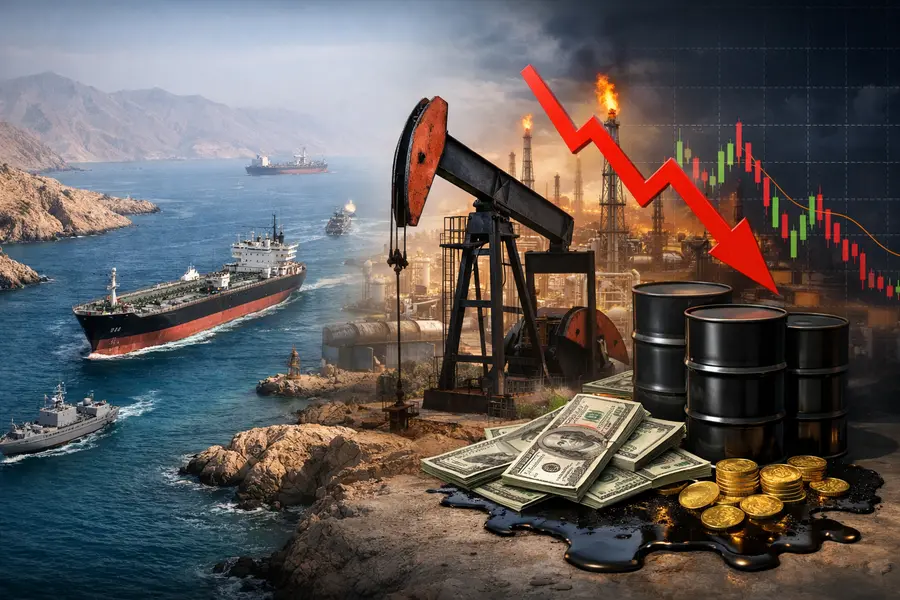
Treasury Secretary Scott Bessent signaled a US-Iran deal to reopen the Strait of Hormuz within days, sending Brent crude down 5.3% to below $80 per barrel for the first time in three weeks.
- Scott Bessent said a deal to restore "freedom of movement" through Hormuz could arrive "today or tomorrow," triggering a 5%+ crude selloff.
- Brent crude fell 5.3% to $79.00/barrel; WTI dropped 5.7% to $75.77, its lowest settlement since mid-July.
- Roughly 500 ships remain trapped inside the Persian Gulf; their exit would release tens of millions of barrels onto global markets.
Lead
Treasury Secretary Scott Bessent said Tuesday, August 4, that the United States and Iran are close to an agreement to reopen the Strait of Hormuz to commercial shipping, predicting a deal could materialize within 24 to 48 hours. The remarks immediately drove Brent crude 5.3% lower to settle at $79.00 a barrel and pushed WTI crude down 5.7% to $75.77 — the sharpest single-session decline for both benchmarks in weeks.What Happened
Speaking on CNBC, Bessent said "there is a chance we may have a deal today or tomorrow to open the strait and move towards a more normalized position in this conflict." He framed any agreement around "freedom of movement" for commercial vessels, with no Iranian-imposed tolls. Bessent added that once the fleet of oil tankers currently moored inside the Persian Gulf begins to exit, downward pressure on crude prices would deepen further.
Secretary of State Marco Rubio confirmed the United States is engaged in active negotiations between Oman and Iran over short-term transit access through the strait. Longer-term discussions, Rubio indicated, target Iran's denuclearization as the ultimate objective. Qatar, functioning as a parallel diplomatic channel, separately described talks as having entered "very progressive stages."
Background: How the Hormuz Standoff Began
The crisis traces directly to February 28, 2026, when US and Israeli forces launched coordinated strikes on Iran. Tehran responded by asserting control over the Strait of Hormuz — a 21-mile-wide chokepoint through which roughly 20% of the world's oil and gas supplies typically move — imposing approval requirements on all commercial traffic and charging transit fees of as much as $2 million per vessel.
The effective closure cut seaborne energy supply by approximately 20% and sent crude prices surging roughly 50% above pre-war levels at their peak, with Brent briefly trading above $120 a barrel. The International Maritime Organization estimated at the height of the backlog that some 2,000 ships and 20,000 mariners were stranded inside the Gulf. As of late July, approximately 500 vessels remained trapped, carrying an estimated 6,000 seafarers. About 10% of the global container fleet was caught in the backup at peak congestion. A UN-backed evacuation scheme — coordinated among Iran, Oman, the United States, and regional partners — has moved vessels out incrementally since late June, but full normalization of traffic remains well short of pre-war levels.
Market Reaction
Crude oil's response to Bessent's remarks was immediate and sharp. Brent crude, which had opened the session at $83.45, slid to a three-week settlement low of $79.00 per barrel. WTI fell from $80.00 at the open to close at $75.77, a loss of $4.32 on the session. Maritime data provider Kpler tracked only 21 ships transiting the strait on Tuesday, a fraction of the pre-war average.
Equity futures climbed after Bessent's television appearance, reflecting broader relief that a resolution to the months-long energy supply shock may be approaching. Oil tanker operators, fertilizer producers, and chemical companies — sectors most exposed to the Hormuz bottleneck — tracked higher on the day.
Strategic Context
Washington's legal position — that the Strait of Hormuz constitutes an international waterway — stands in tension with Tehran's insistence on supervisory authority over vessel movement. The terms under negotiation suggest a possible interim arrangement allowing freer outbound commercial traffic while preserving elements of Iranian oversight over inbound lanes, a framework Oman has reportedly helped construct.
The deal under discussion, as described by both Rubio and Bessent, would represent a first stage in a sequenced diplomatic process: Hormuz normalization first, nuclear negotiations second. Both officials were deliberate in framing any Hormuz agreement as a step rather than a resolution to the broader conflict. Iran had previously seized multiple oil tankers and maintained that transit fees reflected its sovereign rights over the waterway.
Outlook
A signed Hormuz access agreement within the timeline Bessent described would constitute the most significant diplomatic development in the US-Iran conflict since hostilities began in late February. The immediate market effect would be amplified by the release of the stranded tanker fleet — carrying tens of millions of barrels of crude — back onto global seaborne markets. Sustained downward pressure on Brent crude and WTI would follow if the arrangement holds and shipping-insurance premiums normalize. Whether that momentum carries into a durable nuclear settlement will depend on negotiations that both sides have acknowledged are likely to take considerably longer.