Pomegra
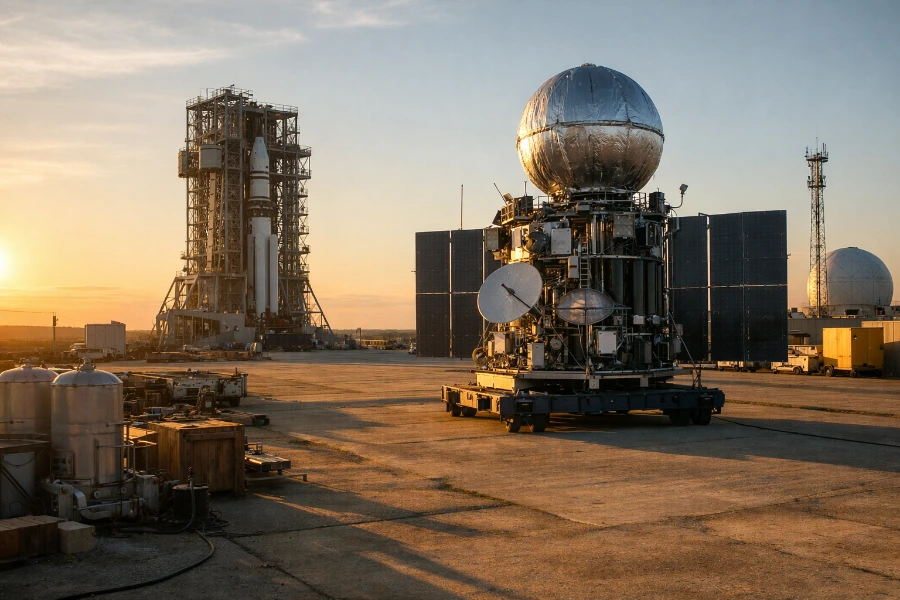
Western intelligence says Russia could launch the nuclear-armed Sputnik-S satellite as soon as December; Chancellor Merz calls it shocking and Moscow denies it.
- Western intelligence shared within NATO says a Russian launch of the Sputnik-S nuclear anti-satellite system could come within 60 days.
- Chancellor Friedrich Merz called the reports shocking; the Kremlin says they are hardly worth taking seriously.
- A nuclear device in orbit would breach the 1967 Outer Space Treaty and threaten satellites that underpin communications and navigation.
Lead
Western intelligence agencies have warned that Russia may launch a nuclear-armed satellite as soon as December, according to reporting published on November 24 by German broadcasters WDR and NDR and the newspaper Süddeutsche Zeitung. The assessment, circulated among NATO members in early November, put the launch window at within 60 days. The system, known as Sputnik-S, has reportedly been assembled and stored in the greater Moscow area for several years.
German Chancellor Friedrich Merz said the intelligence showed how far Russia is prepared to escalate. He added that reports of a Russian nuclear presence in space were not new, but that this did not make them less shocking. Moscow rejected the claim.
What Is Sputnik-S and Why Does It Matter?
Sputnik-S is described in the intelligence as a satellite carrying a nuclear device, designed to be detonated in orbit to disable other satellites. A detonation in space would produce an electromagnetic pulse and radiation capable of destroying spacecraft across low, medium and geosynchronous orbits, without distinguishing between military and commercial targets.
The precedent is the 1962 Starfish Prime test, in which the United States detonated a device about 400 kilometers above the Pacific. The blast damaged several satellites, including Telstar-1. The modern orbital environment is far more crowded and far more central to the global economy. Satellites carry broadband, broadcast, GPS timing used by financial exchanges and power grids, and weather and logistics data.
How Has Moscow Responded?
The Kremlin denies it is developing or preparing to launch such a weapon. Spokesman Dmitry Peskov said the new intelligence on Sputnik-S was hardly worth taking seriously. The Russian embassy in Berlin called the allegations unfounded and part of a propaganda campaign, and said Russian space activity serves exclusively peaceful purposes.
Russia is among the more than 100 parties to the Outer Space Treaty, which bars placing nuclear weapons or other weapons of mass destruction in orbit. Moscow has made similar denials before. The earlier case involved Kosmos-2553, launched shortly before the February 2022 invasion of Ukraine. Russia described it as a scientific radiation-research satellite. Western intelligence assessed it as a platform for testing nuclear effects in space.
Is This Warning New?
The warning is not new, but the timeline is. U.S. intelligence began circulating concerns about a Russian nuclear anti-satellite capability in February 2023. In early 2024, then House Intelligence Committee Chairman Mike Turner publicly flagged an unspecified serious national security threat that was later tied to the same program. US Space Command has also said Russia's description of its related satellites does not match their characteristics.
What has changed is the stated proximity of a launch. The assessment now points to weeks rather than years, which moves the issue from long-term capability planning to near-term crisis management.
What Is the Geopolitical and Economic Dimension?
NATO Secretary General Mark Rutte said the alliance would defend every inch of NATO territory and that allies are safe when it comes to space. The statement signals that the alliance treats orbital security as part of collective defense, but it leaves open how a response would work against a weapon whose effects are indiscriminate.
The economic channels are direct. Satellite operators, insurers, defense contractors and any business reliant on precise timing or satellite connectivity are exposed to a debris and radiation event that could degrade orbits for years. Russia's own satellite fleet would also be at risk from an orbital detonation, which is one reason the weapon is regarded as a deterrent and coercion tool rather than a conventional military asset. With Europe already under strain from the war in Ukraine, the warning adds a new layer of security risk for energy, shipping and financial infrastructure that depends on space-based services. Russian assets, including the MOEX Russia index, remain sensitive to sanctions and escalation headlines.
What Comes Next?
Three scenarios frame the next 3 to 12 months. In the first, no launch occurs and the warning becomes another episode in the information contest between Moscow and NATO. In the second, a launch takes place and Western governments respond through the UN Security Council, sanctions and space-defense measures. In the third, a launch is followed by an orbital detonation, an outcome that would be unprecedented in the space age and would disrupt global communications and navigation.
Outlook
The immediate test is whether a launch window opens in December, as the intelligence suggests. Until then, the dispute turns on verification: Western governments have not published the underlying evidence, and Moscow rejects the premise. Governments, satellite operators and insurers will watch for any sign of a launch, while NATO members weigh how to deter a weapon that treaty law already prohibits.
Mentioned tickers: none