Pomegra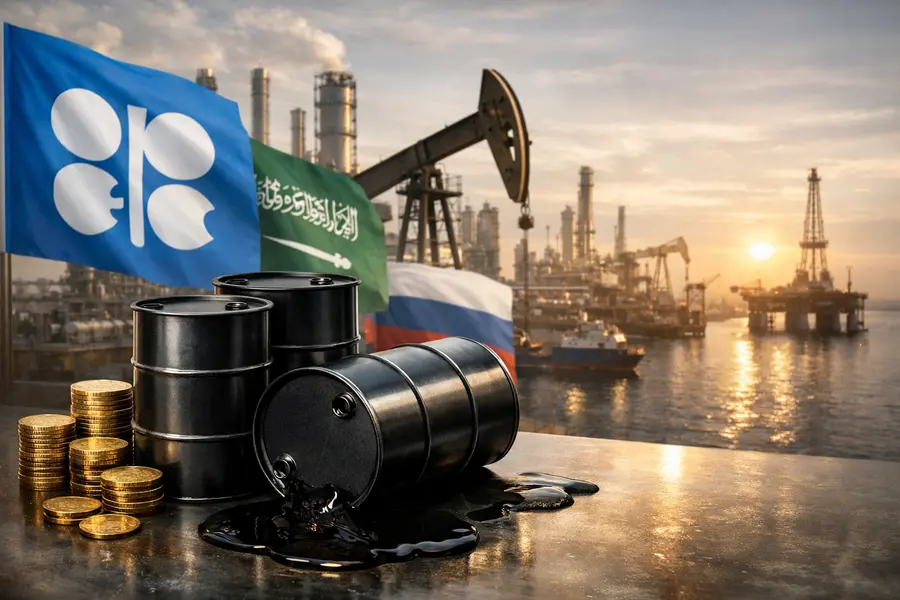
OPEC+'s fourth consecutive monthly quota increase adds 188,000 barrels per day, pulling Brent crude below $92 and signaling a gradual return to normalcy in the global energy market.
- OPEC+ approved a 188,000 bpd output increase for July 2026, its fourth straight monthly hike since the Strait of Hormuz crisis began.
- Brent crude rose 2.1% on July 21 to $91.10/bbl, still well below the $112 peak hit at the height of the supply disruption.
- The alliance has collectively restored 940,000 bpd of quota since May, equivalent to nearly 1% of global daily demand.
Lead
Seven OPEC+ nations — Saudi Arabia, Russia, Iraq, Kuwait, Kazakhstan, Algeria, and Oman — agreed in early July 2026 to raise collective output by 188,000 barrels per day, marking the group's fourth straight monthly production increase since a US-Iran conflict shut down the Strait of Hormuz and triggered the largest oil supply disruption in the modern era. Crude oil prices, after briefly touching $112 per barrel in the depths of the crisis, have retreated sharply, with Brent crude settling around $88–$91 per barrel in late July as easing oil supply fears revive hopes for market stabilization.
What Happened
The OPEC+ decision, reached in a virtual ministerial session, follows three prior monthly quota expansions that together have restored nearly 940,000 bpd of supply since the alliance began reversing its 2023-era production cuts. The July hike alone adds roughly 0.2% of global daily demand, bringing the cumulative recovery to nearly 1% of world consumption — currently estimated at approximately 103 million barrels per day.
The alliance simultaneously endorsed a longer-term structural reform: a new quota framework anchored to audited Maximum Sustainable Production Capacity figures, which will serve as the production baseline from 2027 onward. Third-party capacity audits are scheduled for completion by September 2026, a move designed to inject greater transparency into an organization long dogged by questions about member compliance and overstated reserves.
In a separate, precedent-setting development, the UAE formally exited OPEC+ effective May 1, 2026, ending six decades of membership — the most significant organizational change to the cartel's composition in a generation.
Market Reaction
The immediate response to the announcement was a brief dip. Brent crude futures fell $1.02, or 1.4%, to $71.10 per barrel at the time of the news, while WTI dropped $0.80, or 1.2%, to $67.89 per barrel. Prices have since recovered alongside a broader easing of geopolitical risk, with Brent rebounding to $91.10 on July 21 — a 2.1% single-session gain — as tanker traffic through disrupted shipping corridors began to normalize.
Still, the global energy market remains on edge. Brent is up nearly 17% over the past month, reflecting the residual geopolitical risk premium, and has surged approximately 33% year-over-year. The OPEC+ production quotas signal a deliberate intention to cap any further price spike, a strategy that has effectively stripped the market of the acute fear premium that drove prices toward $117 per barrel in the worst trading sessions of the crisis.
Strategic Context
The backdrop for the current easing is one of the most severe energy disruptions in decades. The US-Iran conflict earlier in 2026 effectively throttled the Strait of Hormuz, the narrow passage through which approximately 20% of global oil trade flows daily. The International Energy Agency characterized the disruption as the largest in the history of the global crude oil market. Several Gulf producers were forced to curtail output after attacks on onshore and offshore infrastructure; tanker insurance costs skyrocketed and shipments were temporarily rerouted or halted.
Saudi Arabia and the UAE moved quickly to redirect a portion of their exports through Red Sea terminals and loading points outside the Strait, partially cushioning the supply shock. Consuming nations drew down strategic petroleum reserves, releasing additional barrels into the market. The combined effort, alongside the OPEC+ quota increases, has helped reduce the acute imbalance, though shipping through the Strait remains below pre-crisis levels.
Supply Glut on the Horizon
With the crisis receding, the market's attention is shifting from a supply shortage to a potential oversupply. The IEA projects a global surplus of approximately 3.8 million bpd in 2026 — a substantial overhang relative to daily consumption. As shipping lanes reopen more fully and producers ramp output toward their restored quotas, downward pressure on crude oil prices is expected to intensify in the second half of the year.
Analysts note that the OPEC+ increases were initially characterized as largely symbolic, given that the Strait closure limited actual export capacity. As infrastructure recovers, however, the increases translate into real supply additions, accelerating the move toward balance — or beyond.
Demand-side variables add further complexity. Slowing industrial activity in Europe and moderating growth in parts of Asia have tempered consumption forecasts for the remainder of the year, reducing the buffer that strong demand once provided against rising OPEC+ production quotas.
Geopolitical Dimension
The broader geopolitical settlement — or absence of one — will determine the durability of the current easing. A near-finalized peace framework between the United States and Iran has intermittently stalled, and any fresh escalation could quickly reverse the progress made. Houthi threats against Saudi maritime traffic in the Red Sea have not fully abated, adding a layer of residual risk to oil supply news calculations.
Within the alliance itself, the departure of the UAE — a producer with substantial ambitions to expand capacity — introduces uncertainty about the group's long-term cohesion. Any divergence between member production ambitions and the new MSC-based quota framework could complicate future coordination efforts.