Pomegra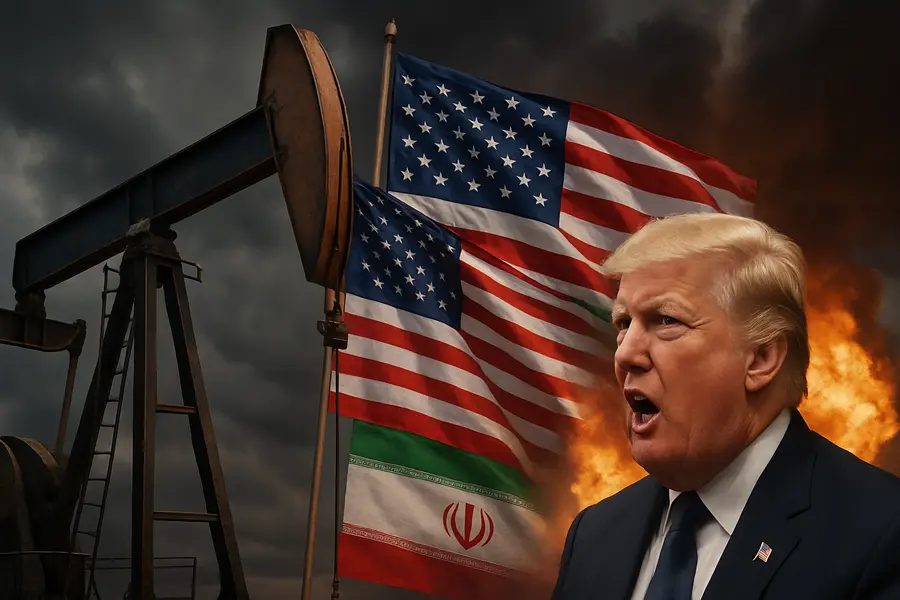
Oil prices near $72 and a deal that leaves Iran's nuclear program unresolved keep energy markets on edge ahead of a critical June 19 signing ceremony in Switzerland.
- WTI crude fell to ~$74.56/barrel on June 18, down 2.91% on the session; Brent traded around $77.22 — both at multi-month lows.
- The US and Iran are scheduled to sign a memorandum of understanding June 19 at Bürgenstock, launching a 60-day negotiation window.
- Trump explicitly warned resumed strikes if talks collapse, sustaining a geopolitical risk premium in crude even as supply optimism builds.
Lead
Global oil prices slid toward multi-month lows on Wednesday, June 18, 2026, as markets priced in the imminent reopening of the Strait of Hormuz and a flood of returning Iranian barrels — while President Donald Trump's unambiguous warning that he would "go back to bombing" if talks broke down reminded traders that the ceasefire remains reversible. West Texas Intermediate crude settled near $74.56 per barrel, down 2.91% on the session, its lowest close since the earliest days of this year's Iran conflict. Brent crude traded around $77.22 — down roughly 20% from the March peak of $126 and approaching the $72 threshold that analysts have identified as the deal-optimism floor.
What Happened
The United States and Iran are set to formalize a memorandum of understanding on June 19 at the Bürgenstock resort in Switzerland. The agreement launches a 60-day negotiating window aimed at resolving the deeper disputes — uranium enrichment levels, highly enriched uranium stockpiles, and the permanent status of Iran's nuclear program — that the initial ceasefire left unaddressed.
Under the MoU, Iran will be permitted to resume oil exports immediately, and Washington will end its naval blockade of the Persian Gulf. The Strait of Hormuz, through which roughly 20% of global seaborne oil trade passes, is expected to reopen to unrestricted commercial traffic.
Trump signed and announced the framework but was direct about its conditionality. Asked what happens if Iran fails to honor understandings not captured in writing, the president replied: "We'll probably go back to bombing them until they honor it." When pressed on what permanently stops Iran from acquiring a nuclear weapon, he added: "If it's not permanent, we will bomb them."
Secretary of State Marco Rubio described the talks as having made "some progress," while stopping short of characterizing the MoU as a final settlement.
Market Reaction
The prospect of Iranian crude returning to the market at scale has driven oil prices down nearly 13% from the middle of the previous week, with both benchmarks now cheaper than at any point since the conflict's opening days. Energy equities tracked crude lower across the session, with the energy sector underperforming broader indices on elevated volume — a pattern consistent with institutional de-risking rather than thin-market moves.
The International Energy Agency amplified downward pressure on June 18, projecting that global oil supply will expand by 8 million barrels per day by 2027, four times the anticipated demand increase of 2 million bpd. The IEA's supply-glut scenario assumes Iranian barrels flow freely and that non-OPEC production continues to grow, a scenario now contingent on the 60-day talks producing a durable written agreement.
Strategic Context
The deal architecture is deliberately staged. The MoU establishes a process, not a resolution, and the most consequential issues — enrichment caps, verification protocols, and the fate of Iran's existing highly enriched uranium inventory — remain unresolved. There is no specified enforcement mechanism if the 60-day window closes without agreement, leaving market participants to interpret Trump's rhetorical threats as the operative backstop.
Trump told The New York Times that Iran would be permitted low-level uranium enrichment under a final deal, a concession that has complicated relations with Israel and several Gulf states that have pushed for complete dismantlement of the Iranian nuclear infrastructure.
Geopolitical Dimension
The ceasefire's flanks remain exposed. Israel and Hezbollah have continued to exchange fire in southern Lebanon despite an official ceasefire, with Israeli Defense Minister Israel Katz stating that Israeli troops would remain in southern Lebanon indefinitely. That sustained friction complicates the broader regional stability the Iran agreement is designed to anchor.
The scale of the Strait of Hormuz disruption underscores the stakes of any breakdown. At its height in March 2026, tanker traffic through the waterway dropped by roughly 70%, with more than 150 vessels anchoring outside the strait. The combined oil output of Kuwait, Iraq, Saudi Arabia, and the UAE fell by at least 10 million barrels per day at the peak of the disruption. LNG spot prices in Asia surged more than 140%, and China, India, Japan, and South Korea — which collectively absorb nearly 70% of the crude that transits the Strait — were forced into emergency inventory draws. The March 2026 monthly rise in Brent crude was the largest ever recorded.
Pre-conflict oil prices were in the $60–$65 range. At the March peak, Brent touched $126. The current mid-$70s range reflects a market that is pricing in meaningful, but not yet certain, resolution.
What Comes Next
Three pressure points will determine the trajectory of crude oil over the next 60 days. First, the pace and volume at which Iranian barrels re-enter the global market will test how quickly the physical supply balance shifts. Second, progress on nuclear verification — particularly whether inspectors can access enrichment sites and account for existing stockpiles — will signal whether the deal has substantive teeth. Third, the Israel-Hezbollah dynamic could destabilize the broader regional framework if fighting escalates beyond current levels.
A breakdown in talks that triggers resumed US military strikes would likely push Brent back toward the $90–$100 range within days, re-closing Hormuz risk in markets. A verified, permanent agreement that removes the strait as a geopolitical flashpoint could, by contrast, confirm the IEA's supply-glut scenario and push WTI toward the low $60s as the conflict-era risk premium fully unwinds.