Pomegra
Nasdaq futures pointed lower again as investors price in tighter AI rules and local data center resistance after Democrats won both chambers of Congress in the November midterms.
- The Nasdaq Composite fell 2.5% to 24,509.76 on Monday, and the S&P 500 lost 1.9%.
- Nvidia (NVDA) dropped 4.1% to a 52-week low ahead of its quarterly report.
- Investors fear Democratic control will slow data center permitting and add compliance costs.
Lead
U.S. equity futures tied to the Nasdaq 100, the index behind the Nasdaq QQQ exchange-traded fund (QQQ), slipped again at the start of the week. Nasdaq 100 e-mini contracts fell roughly 1% before Monday's open, and the cash session followed. The Nasdaq Composite closed down 626.52 points, or 2.5%, at 24,509.76. The S&P 500 fell 145.08 points, or 1.9%, to 7,416.59, and the Dow Jones Industrial Average lost 739.38 points, or 1.4%, to 51,608.17. The slide extends a rout in AI stocks that began when midterm results came in on November 5.
Why Are AI Stocks Falling After the Midterms?
AI stocks are falling because investors now see a higher chance of regulation, congressional oversight and slower infrastructure build-outs under a Democratic Congress. The post-election selloff was not driven by weaker demand for AI services. It reflected a repricing of how quickly new computing capacity can be built legally and at acceptable cost.
The first reaction was sharp. The Nasdaq fell more than 5% in the days after the vote, erasing more than $2 trillion of market value. Nasdaq futures dropped more than 2% overnight at one point before recovering part of the loss. In South Korea, memory-chip makers Samsung Electronics and SK Hynix fell 7.5% and 9.5% on Thursday, November 5.
Neocloud providers, which rent out AI computing capacity, were hit hard. CoreWeave (CRWV) and Nebius Group (NBIS) fell more than 4% in premarket trading that day. CoreWeave dropped another 6.1% on Monday.
How Could Democratic Control Change Data Center Plans?
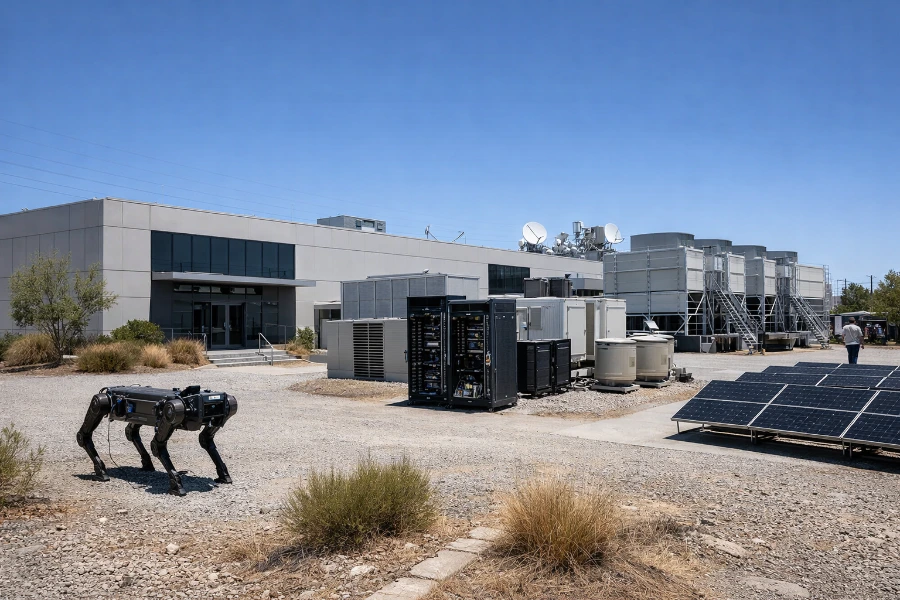
Democratic control could change data center plans through more congressional hearings, tougher permitting and new compliance requirements. It could also embolden local opposition to large facilities. Data centers take years to build and require heavy capital, so any delay pushes revenue forecasts further out and widens valuation uncertainty.
Geography adds to the concern. Texas and Georgia are among the largest sites for AI data center expansion and together account for roughly a third of such investment. Strategists expect Democratic gains in Congress and in state governor races, particularly in Texas, to hold back construction timelines. Power-equipment suppliers tied to the build-out also fell on Monday, with GE Vernova (GEV) down 4.9%.
Market Reaction
The selling spread across the AI supply chain on Monday:
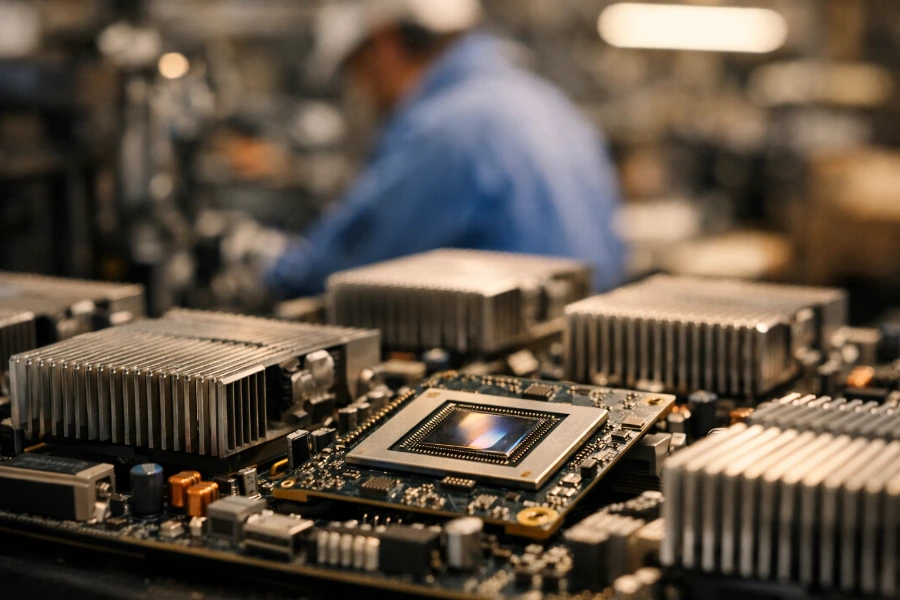
- Nvidia (NVDA) fell 4.1% to a 52-week low. It has lost about $735 billion in market value since its chief executive resigned amid a personal scandal.
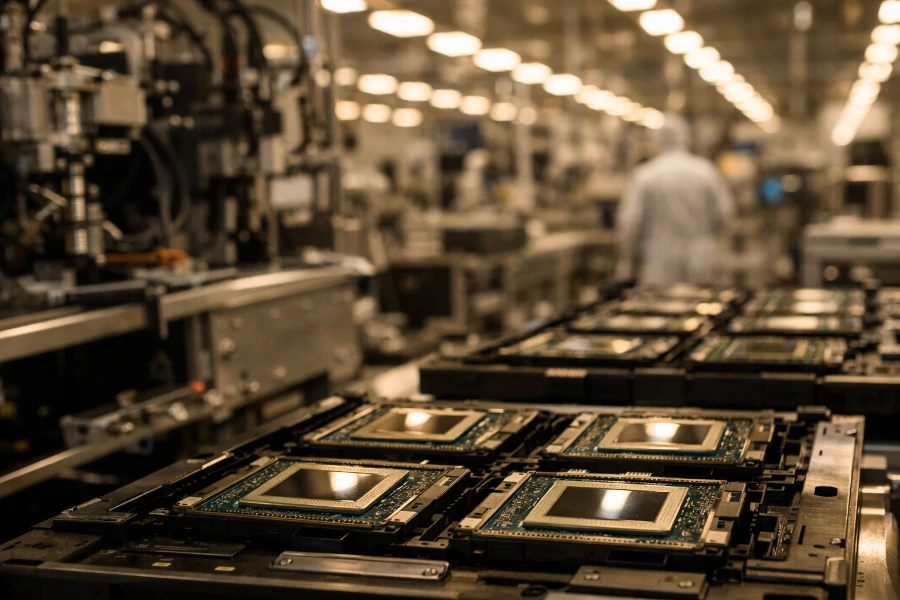
- Advanced Micro Devices (AMD) dropped 5.6%.
- Broadcom (AVGO) lost 3.9% for a second straight session.
- Micron Technology (MU) and Intel (INTC) each fell more than 7%.
Brent crude fell 3.5% to $92.44 a barrel. The 10-year Treasury yield eased to 5.13% from 5.15% on Friday. Money markets fully price a December rate increase after hotter-than-expected inflation data. That backdrop raises the discount rate on long-duration growth stocks and compounds the pressure from policy risk.
Why Does Nvidia's Earnings Report Matter Now?
Nvidia's earnings matter because they are the first test of AI demand since the selloff began. The company reports fiscal third-quarter results after the close on Tuesday, with interim chief executive Colette Kress addressing investors. Analysts expect quarterly revenue of about $109 billion.
New U.S. moves to restrict China's access to advanced AI chips and servers add to the uncertainty. They sit alongside the domestic regulatory concerns raised by the election. Nvidia shares recorded their longest weekly losing streak since October 2012 last week.
Anthropic's roughly $64 billion initial public offering is a second test. It is expected to price Wednesday and begin trading Thursday. Investors who buy the new shares may sell existing technology holdings to fund them, so a strong debut would not necessarily lift the wider sector.
What Comes Next for the Nasdaq QQQ?
The direction of the Nasdaq QQQ depends on three near-term factors: Nvidia's guidance, the reception for Anthropic's offering, and any signal on how a Democratic Congress will approach data center permitting and AI oversight. The new Congress does not take office until January, so concrete legislation is months away. Markets are trading the probability of rules rather than the rules themselves.
A strong Nvidia report could steady sentiment, but it would not remove the policy overhang. If guidance disappoints, the pressure on neoclouds, chipmakers and power suppliers is likely to persist.
Outlook
The AI trade faces a combined test of political risk, rate pressure and company-specific turmoil. Nvidia's results on Tuesday and the Anthropic debut later in the week are the next catalysts. Until investors have clearer evidence on regulation and local data center resistance, Nasdaq futures are likely to remain sensitive to every headline from Washington and the AI supply chain.