Pomegra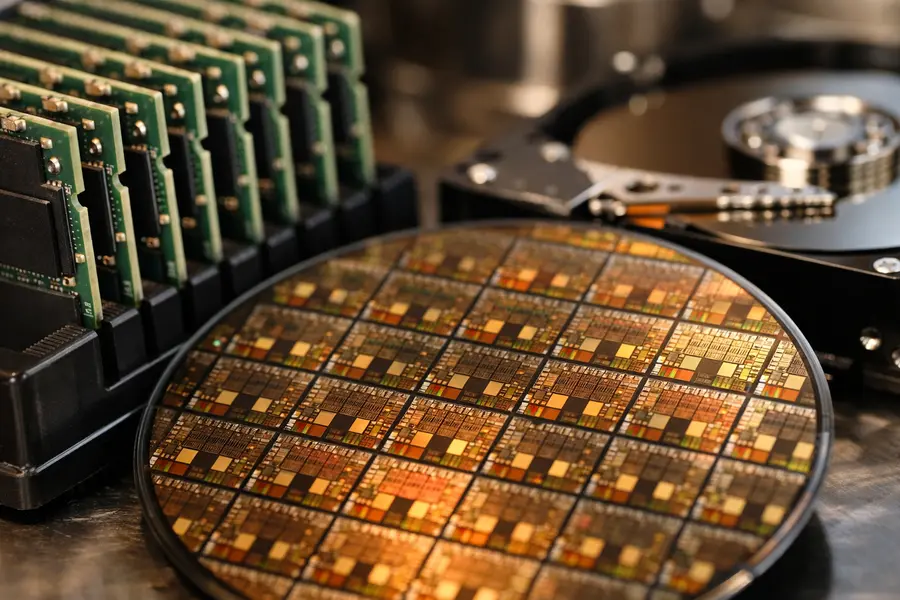
Micron and Western Digital fell 5-7% on August 18 as rising Treasury yields and an AI spending report accelerated profit-taking in an extended memory sector.
- MU slid 7% and WDC dropped 5% on August 18; the Roundhill Memory ETF is now more than 20% below its recent closing high.
- Micron's micron fab HBM4 capacity is fully contracted through 2026, yet the stock trades roughly 30% below its recent peak.
- Conventional memory modules face CXMT pricing pressure, widening the gap between HBM-oriented and standard DRAM names.
Lead
Micron Technology (MU) and Western Digital (WDC) extended a multi-week slide on August 18, falling 7% and 5% to $962.85 and $500.05 respectively, as a Wall Street Journal report disclosing an estimated $3 trillion in off-balance-sheet AI spending commitments among major hyperscalers accelerated selling across a broadly extended memory and storage sector. The decline pushed Micron and its peers more than 20% below recent closing highs, technically marking a sector bear market, even as Micron's micron fab operations continue running at full HBM capacity under multi-year supply contracts.What Sent Memory Stocks Lower on August 18?
The WSJ AI spending report amplified investor concern that infrastructure investment may be running ahead of near-term returns, prompting rotation out of semiconductor names that had been among 2026's most extended trades. SanDisk (SNDK) fell 9% and Seagate Technology (STX) dropped 6% in sympathy, with uniform declines across the sector confirming a macro trigger rather than any company-specific catalyst. Rising Treasury yields, which compress multiples on high-growth names, contributed alongside the AI cost report to the dual-pressure environment. Micron entered the session up 255% year-to-date, while SanDisk had gained 653%, leaving both names susceptible to profit-taking without fundamental deterioration.
Why Are Micron and Western Digital Sold Together?
Despite operating distinct businesses - Micron as a DRAM and NAND fabricator and Western Digital as a hard-disk-drive supplier following its February 2025 SanDisk spinoff - both names carry the memory-and-storage classification in institutional portfolios. That shared label creates correlated selling during sector rotations even when fundamental trajectories diverge sharply. The pattern has become more pronounced as the memory trade grew crowded through the first half of 2026, with passive and thematic flows into semiconductor ETFs amplifying single-session swings in either direction.
The Micron Fab Advantage Not Yet Reflected in Shares
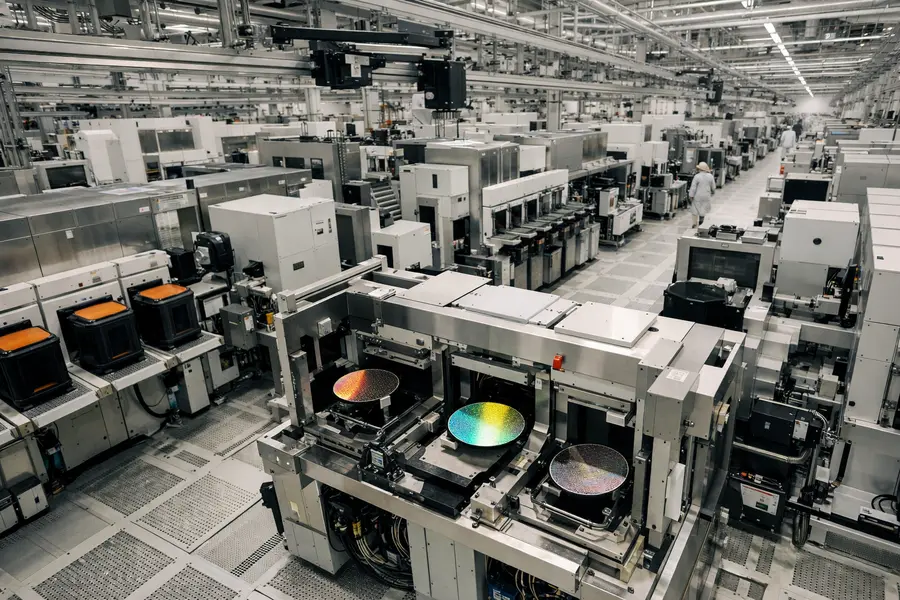
Micron's capital commitment program - approximately $200 billion directed toward new manufacturing capacity at its Idaho operations and a greenfield facility in Taiwan - reflects order visibility extending well beyond the current fiscal year. HBM4 allocations for 2026 are fully contracted, with early booking commitments for 2027 already in place. Quarterly revenue reached $41.46 billion in the most recently reported period, more than quadruple the $9.30 billion posted in the same quarter a year earlier, with management guiding toward approximately $50 billion in the following quarter on the strength of shipped HBM4 volume and multi-year supply agreements. The disconnect between operational results and the stock's 30% retreat from its 2026 peak captures the core tension in the memory trade: the micron fab pipeline is functioning as designed, but macro sentiment is dictating near-term price action.
What Is the Divergence Between HBM and Memory Modules?
Standard memory modules - DDR5 RDIMMs and MRDIMMs deployed in general-purpose server configurations - face pricing headwinds distinct from high-bandwidth memory. Chinese manufacturer CXMT has expanded its share of the standard DRAM market, applying contract-price pressure on commodity configurations while HBM commands premium margins tied directly to GPU buildouts led by Nvidia (NVDA) and AMD. A Netlist patent action filed in August compounded the standard memory module outlook for Micron, with the litigation targeting DDR5 RDIMM and MRDIMM products specifically and seeking U.S. exclusion orders. The split is structurally significant: firms supplying AI-optimized high-bandwidth memory and those selling server memory modules for enterprise general-purpose computing now face materially different demand and pricing environments, yet during macro-driven selloffs they continue to move as a single cohort.
AI Cost Discipline Adds a Structural Overlay
A UBS client survey released alongside the selloff found that 60% of companies polled are redirecting AI workloads toward lower-cost, more efficient model deployments rather than expanding premium usage. Enterprise cost discipline, combined with reports of major employers capping per-employee AI tool access, introduced a sentiment overhang on whether data center expansion timelines remain as aggressive as hyperscaler commentary implied in prior quarters. Micron's position - that HBM demand from training and large-scale inference workloads is structurally separate from the productivity-tool segment facing cost pressure - remains the central argument for the company's premium over standard memory suppliers. That argument has so far been correct on fundamentals but has not insulated the stock from sector-level selling.