Pomegra
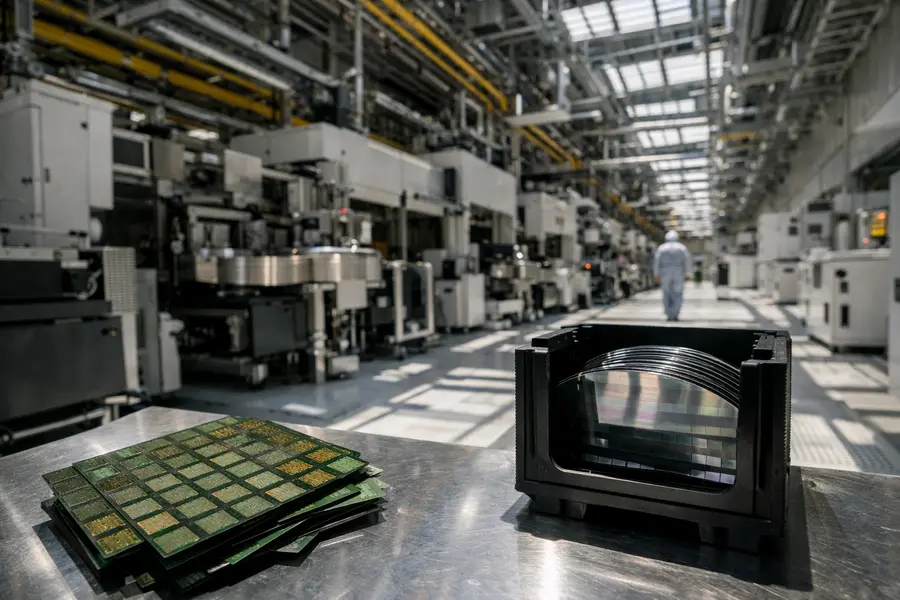
The Philadelphia semiconductor index fell eight sessions straight, its longest losing run since 2008, before rebounding on Monday as Micron regained $1 trillion.
- The Philadelphia semiconductor index fell about 16% in eight sessions through Oct. 16, wiping out roughly $2 trillion in market value.
- Micron Technology stock closed Friday at $878.84, 30% below its $1,255 high, which briefly put it under $1 trillion.
- The index rebounded about 2.7% on Oct. 19, ending the streak, and Micron closed at $904.90.
Lead
The Philadelphia semiconductor index (SOX) fell 3.83% to 11,137.29 on Friday, Oct. 16, its eighth consecutive losing session and its longest streak since October 2008. The index lost about 16% from its last gain on Oct. 6, erasing roughly $2 trillion in sector market value. Micron Technology (MU) dropped 5.63% to $878.84, about 30% below its 52-week high of $1,255, and fell below a $1 trillion market capitalization. All 30 index constituents declined on the day.
What Happened to Chip Stocks?
Chip stocks fell for eight straight sessions as hotter-than-expected U.S. inflation and doubts over how the artificial intelligence buildout is financed hit the most richly valued part of the market. The index had gained more than 60% in 2026 before the slide began.
Friday's losses were broad. Advanced Micro Devices (AMD) fell 5.95% to $528.75, Intel (INTC) fell 5.79%, Marvell Technology (MRVL) fell 5.56% and Broadcom (AVGO) fell 4.52%. Equipment makers KLA (KLAC), Lam Research (LRCX) and Applied Materials (AMAT) each lost between 4.8% and 5.0%. Arm Holdings (ARM) dropped about 7%. Nvidia (NVDA) fell only 1.43%. The Nasdaq 100 lost 2.5% and the Nasdaq Composite lost 2.1%, while the S&P 500 fell 1.1%.
Leveraged products amplified the move. Direxion Daily Semiconductor Bull 3X Shares (SOXL), the triple-leveraged chip fund, rose 5.32% on Monday on $9.5 billion in turnover, a reminder of how violently soxl stock swings in both directions. The iShares Semiconductor ETF (SOXX) closed Friday at $493.39, down 16% in eight sessions and 25% below its 52-week high.
Why Did Chip Stocks Fall So Hard?
Chip stocks fell because higher borrowing costs collided with questions about whether AI spending can pay for itself. The 10-year Treasury yield stood at 5.10% on Oct. 15, and West Texas crude traded above $100 a barrel, which kept inflation and interest rates in focus.
Consensus forecasts for hyperscaler capital spending have tripled, from about $330 billion in early 2025 to roughly $1 trillion. Much of the data center buildout has been funded with debt. CoreWeave (CRWV), which carries roughly $50 billion in borrowings, fell 12% on Friday and about 25% over five sessions, and its bond yields rose above 15%, a level associated with distress.
Memory-specific pressures added to the decline. China's CXMT has advanced in server DRAM, and the market has debated whether memory prices have peaked as producers expand capacity. Labor tensions in Taiwan also weighed on sentiment.
How Far Has Micron Technology Stock Fallen?
Micron technology stock has fallen about 30% from its high of $1,255 and about 19% from its Oct. 7 close of $1,088.00. With roughly 1.13 billion shares outstanding, Friday's close valued the company just under $1 trillion, ending a brief run above that threshold.
The decline came despite strong results. Micron reported fiscal fourth-quarter revenue of $54.23 billion, up 379% from a year earlier, and non-GAAP earnings of $33.42 a share against a consensus of $31.35. It guided to fiscal first-quarter revenue of $61.5 billion and has committed more than 75% of its 2027 output. At Friday's price the stock traded at roughly seven times forward earnings, a multiple that reflects investor concern that memory profits are near a cyclical peak.
Market Reaction
Buyers returned Monday. The semiconductor index rose about 2.7%, ending the losing streak that had cut it by roughly 15.7%. The Nasdaq Composite gained 1.11% and the S&P 500 added 0.41%, while the Dow Jones Industrial Average slipped 0.07%.
Memory names led. SanDisk (SNDK) rose 5.53%, Western Digital (WDC) rose 6.09% and SK Hynix ADRs rose 4.67%. Micron closed at $904.90, up 2.97%, restoring a market value of about $1.02 trillion. Nvidia rose 1.38% to $217.09. Even so, Micron finished the prior week down 8.49% and remains about 28% below its peak.
What Comes Next for AI Stocks?
The next test for ai stocks is whether inflation data and Treasury yields stabilize enough to ease financing pressure on the AI buildout. Monday's rally came from positioning shifts after a sharp pullback, and such rebounds can fade quickly if yields keep rising.
Two scenarios frame the near term. If yields hold near 5%, highly leveraged infrastructure names such as CoreWeave stay under strain and valuation multiples across the sector remain compressed. If inflation cools and hyperscalers reaffirm spending plans in upcoming earnings, the pullback may prove a reset in a still-growing market. Evidence on memory pricing and CXMT's progress will drive Micron's path in either case.
Outlook
The eight-session slide in the Philadelphia semiconductor index was the most severe since the 2008 financial crisis, and it removed about $2 trillion in value. Monday's rebound ended the streak and restored Micron's $1 trillion status, but the stock remains roughly 28% below its high. Interest rates, AI financing conditions and memory pricing will set the direction through the fourth quarter.
Mentioned tickers: MU, SOXL, SOXX, NVDA, AMD, INTC, MRVL, AVGO, KLAC, LRCX, AMAT, ARM, CRWV, SNDK, WDC