Pomegra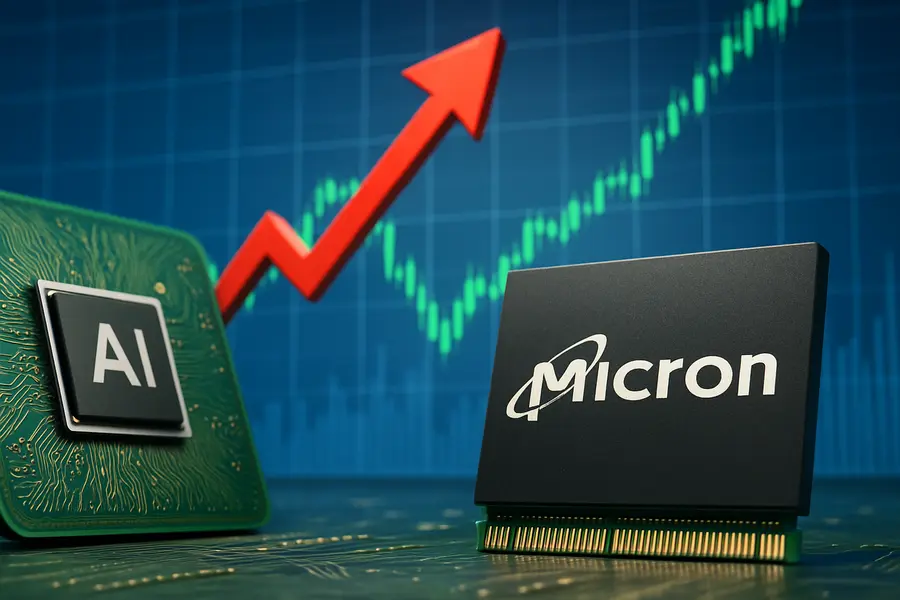
Micron stock soared 15% after Q3 FY2026 revenue quadrupled to $41.5B on AI demand, with Q4 guidance of $50B far exceeding Wall Street's $43.6B estimate.
- Micron Q3 FY2026 revenue reached $41.46B, up ~346% year-over-year, beating the $35.84B analyst consensus by 16%.
- Gross margins expanded to 84.9% from 39% a year ago; Q4 guidance of $50B topped estimates by 15%.
- Micron's HBM4 production for Nvidia's Vera Rubin AI platform is fully sold out through 2026.
Lead
Micron Technology (NASDAQ: MU) shares surged 15% in extended trading on June 24, 2026, after the Boise, Idaho-based chipmaker reported fiscal third-quarter revenue of $41.46 billion — more than four times the $9.3 billion posted a year earlier and well above the $35.84 billion Wall Street consensus. Guidance issued alongside the results sent MU higher still during regular Thursday trading, lifting Micron's market capitalization past those of Meta Platforms and Tesla among the most valuable U.S.-listed companies.What Happened
Micron's fiscal third quarter, ended May 29, 2026, produced the company's largest revenue figure in its four-decade history. Net income rose to $28.24 billion from $1.89 billion in the year-earlier period, while diluted earnings per share climbed to $24.67 from $1.68 — a gain exceeding 1,300%.
Gross margin expanded to 84.9% from 74.9% in the prior quarter and from 39% a year earlier, reflecting the structural shift in pricing power that accompanies acute supply constraints across the global memory market. The company's Cloud Memory Business Unit was the standout performer, generating $13.77 billion in revenue at an 83% gross margin, up from $3.39 billion at 58% in the year-ago quarter.For fiscal Q4 2026, Micron guided revenue to approximately $50 billion — plus or minus $1 billion — against analyst expectations of roughly $43.2 billion. The company projected adjusted gross margin of approximately 86% and adjusted diluted EPS of $31.00.
AI Chip Growth and the HBM Cycle
The defining force behind Micron's transformation is high-bandwidth memory (HBM), the specialized chip architecture mounted directly alongside every major AI accelerator in production today. Only three companies manufacture HBM at scale worldwide: Micron, SK Hynix, and Samsung.
Micron's entire 2026 HBM output is already committed. The company began high-volume shipments of HBM4 — designed specifically for Nvidia's (NASDAQ: NVDA) Vera Rubin AI platform — in the first quarter of calendar 2026. The new generation delivers bandwidth in excess of 2.8 TB/s per stack, a 2.3-times improvement over HBM3E, while consuming roughly 20% less power. Micron is targeting production capacity of 15,000 HBM4 wafers per month by end of 2026.
Nvidia Chief Executive Jensen Huang confirmed at GTC Taipei in early June that all three HBM4 suppliers — Micron, SK Hynix, and Samsung — are in active production for Vera Rubin, with first systems scheduled to ship in Q3 2026. Micron is the only U.S.-domiciled manufacturer among the trio, a distinction that carries increasing strategic weight as Washington tightens oversight of semiconductor supply chains.
The company secured 16 take-or-pay Strategic Customer Agreements locking in approximately $100 billion in minimum contracted revenue, with counterparties providing $22 billion in upfront cash. The structure de-risks Micron's capital expansion and signals durable AI chip growth across a multi-year horizon. SK Hynix's leadership has publicly projected the memory shortage will persist through at least 2030.
Memory Market Report: Sector Contagion
The memory market report embedded in Micron's results had immediate ripple effects across the broader semiconductor sector. SanDisk gained nearly 22% on Thursday. Western Digital (NASDAQ: WDC) added approximately 5%, and Seagate Technology (NASDAQ: STX) climbed 3.2%. The rally reflected a broad reassessment of the AI-driven upgrade cycle now reshaping demand for both compute and storage infrastructure simultaneously.
MU had closed at $1,211.38 the session before the report — itself up 324.61% year-to-date — before the 15% post-earnings advance placed the stock among the best-performing large-cap names in the U.S. semiconductor index for 2026.
Strategic Context
Micron historically trailed South Korean rivals in HBM capacity. The company's accelerated HBM4 ramp, combined with its sole U.S. manufacturing footprint, represents a structural repositioning now visible in its financial profile. The $100 billion in contracted revenue provides a multi-year revenue floor that insulates margins against macroeconomic softening. The CHIPS and Science Act continues to underwrite domestic capacity expansion, with Micron among the primary beneficiaries of federal incentives for on-shore production.
Outlook
Micron's Q3 FY2026 Micron earnings news confirmed that the AI memory cycle has moved well beyond the initial infrastructure build-out phase. With HBM4 in high-volume production, long-term customer contracts providing revenue visibility, and gross margins approaching 85%, the company enters its fiscal fourth quarter with structural momentum that peers in the memory market are straining to match. Sustained demand will depend on the pace of Nvidia Vera Rubin deployments and continued hyperscaler investment in AI data-center capacity — neither of which showed signs of deceleration in the June quarter.