Pomegra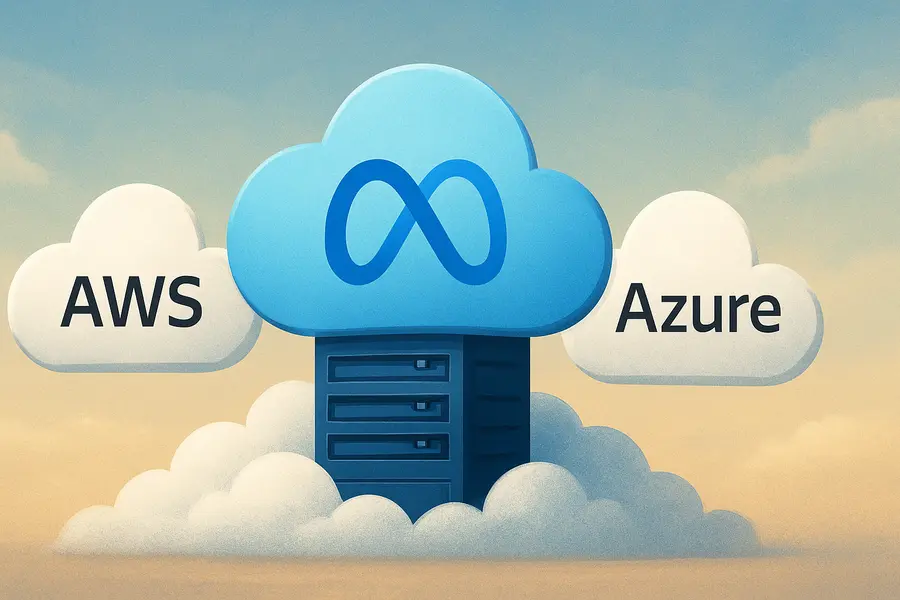
Meta Platforms launches Meta Compute to sell surplus AI infrastructure to developers, entering direct competition with AWS, Azure, and Google Cloud as capex hits $145B.
- META shares surged up to 10% on July 1, 2026 after Bloomberg reported plans for an internal cloud unit called Meta Compute, the stock's sharpest single-day gain of the year.
- Meta Compute will offer raw GPU cycles and hosted access to Muse Spark, Meta's proprietary closed AI model suite, competing directly with AWS, Azure, and Google Cloud.
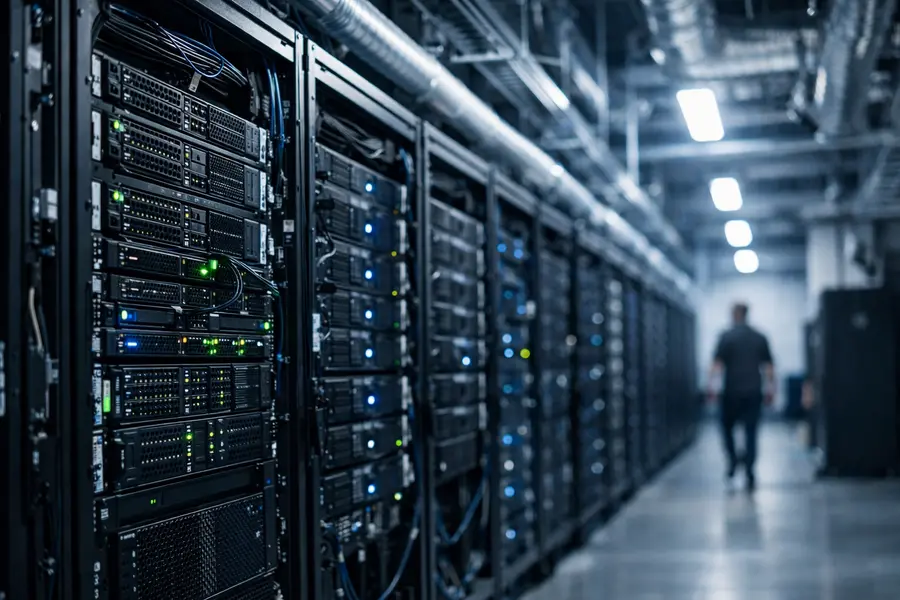
- Meta guides $115B–$145B in 2026 capital expenditure; the cloud push converts excess capacity from a cost center into a revenue stream.
Lead
Meta Platforms launched plans on July 1, 2026 for a cloud infrastructure business — internally called Meta Compute — that will sell surplus AI computing power and model access to outside developers, placing the social media giant in direct competition with Amazon Web Services (AWS), Microsoft Azure, and Google Cloud for the first time. The announcement lifted META shares as much as 10% intraday, making it the stock's strongest single-session move of the year and adding tens of billions of dollars to the company's market capitalization.What Happened
Meta Compute, the name given to the new division, will operate across two distinct revenue lines: raw GPU compute capacity sold to third-party developers, and hosted access to Muse Spark, Meta's closed, proprietary AI model suite. Unlike Llama — Meta's open-weight model family that users can download and run on their own hardware — Muse Spark is available exclusively through Meta's platform, a structure similar to Amazon Bedrock or Microsoft Azure AI Services, where the cloud provider controls both the infrastructure and the model layer.
The unit is led by Santosh Janardhan, Meta's head of infrastructure, alongside Daniel Gross, a leader within the company's Meta Superintelligence Labs AI division, and Dina Powell McCormick, Meta's president.
Strategic Context
The move follows a blueprint that Amazon established two decades ago — deploying the excess capacity of an internal infrastructure build-out as a commercial cloud service. Meta has guided to capital expenditure of $115B to $145B for fiscal 2026, on top of $70B invested in 2025, an outlay directed at chips, land, and power to support its AI ambitions. A cloud business is one of the few mechanisms available to convert idle cycles from that build-out into direct revenue.
The centerpiece of Meta's physical infrastructure is Hyperion, a flagship data center campus currently under construction in Louisiana. In April 2026, the company also secured a $21B cloud capacity agreement with CoreWeave running through December 2032 — an arrangement that underscores the scale of compute Meta is both consuming and now seeking to resell. A separate multiyear strategic partnership with NVIDIA covers the deployment of millions of Blackwell and Rubin GPUs across Meta's on-premises and cloud infrastructure.
Market Reaction
The cloud announcement triggered a divergent response across the AI infrastructure sector. While META jumped 8%–10%, shares of companies that stand to lose workloads to a better-capitalized competitor moved sharply lower. Nebius fell approximately 12%, CoreWeave declined roughly 10%, and NVIDIA shed around 2% as markets recalibrated the competitive landscape for GPU cloud services.
Investor enthusiasm reflects a structural shift in how Wall Street frames Meta's heavy AI spending. The key concern entering 2026 had been whether the company's infrastructure investment could generate commensurate returns. A cloud business offering both raw compute and model access addresses that concern directly by establishing a named revenue category against a proven market.
Cloud Competition Dimension
The cloud competition Meta enters is a mature, high-margin market. AWS generated $107B in annual revenue in fiscal 2025, representing roughly 62% of Amazon's total operating income. Microsoft Azure surpassed $200B in annualized cloud revenue run rate. Google Cloud posted its first full year of profitability in 2023 and has accelerated since.
Meta's entry differs from conventional cloud challengers in two respects. First, it controls one of the largest proprietary AI training and inference infrastructure networks in the world, built specifically around GPU-dense workloads — the fastest-growing segment of enterprise cloud demand. Second, it arrives with a closed model product already in deployment at scale, allowing it to offer the full hyperscaler stack — compute, platform, and model API — rather than raw capacity alone.