Pomegra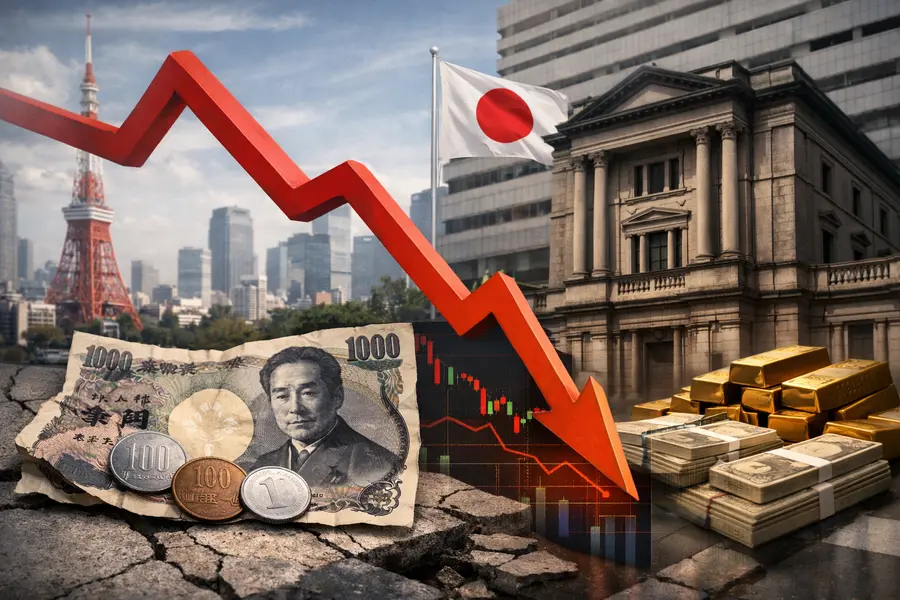
The yen slid to 163.24 per dollar this week, its weakest since 1986, as Japan's Finance Ministry escalated verbal warnings while a stubborn US-Japan rate gap keeps the carry trade alive.
- USD/JPY touched 163.24 on Tuesday, the weakest level in four decades, with the pair holding above 163.00 in Wednesday's Asian session.
- Japan's Finance Minister Satsuki Katayama pledged "decisive action at any time," but verbal warnings have produced diminishing market impact.
- Tokyo has already deployed more than $73 billion in forex intervention in 2026, yet USD/JPY has returned above every prior intervention level.
Lead
The Japanese yen fell to 163.24 per US dollar in New York trade on Tuesday, July 22, its softest reading since late 1986, as rising US Treasury yields and elevated oil prices compounded the persistent rate gap between the Bank of Japan and the Federal Reserve. Japan's Finance Ministry issued fresh warnings of imminent action, marking the most pointed language from Tokyo in weeks, yet currency markets absorbed the rhetoric with limited reaction, sustaining bearish pressure on the currency.
What Happened
USD/JPY held in a narrow band just above 163.00 during the Asian session Wednesday, consolidating near multi-decade highs reached the prior day. The move pushed the yen past the level at which Tokyo conducted a $20.7 billion unilateral intervention as recently as July 11, underscoring how quickly prior defensive lines have eroded.Finance Minister Katayama told reporters that authorities are monitoring forex developments with a high degree of urgency and are prepared to act decisively if speculative or disorderly moves persist. The statement reprised language used repeatedly through the spring, but market participants noted that the absence of immediate yen appreciation suggests waning deterrent power for verbal warnings alone.
Why the Yen Remains Weak
The fundamental driver of yen weakness is a rate differential that remains among the widest in the developed world. The BoJ lifted its benchmark short-term policy rate to 1.00% in June 2026 — the highest since 1995 — while the Fed holds its federal funds target at 3.50%–3.75%, leaving a spread of roughly 250–275 basis points that continues to fuel the yen carry trade. Investors borrow cheaply in yen, redeploy the proceeds into higher-yielding dollar-denominated assets, and profit from both the interest rate differential and any further yen depreciation.
Beyond rate differentials, two additional pressures have intensified in recent weeks. Rising US crude prices — stoked by geopolitical tension in the Middle East — weigh on Japan, which imports more than 90% of its oil through sea lanes exposed to regional disruption. An energy import bill priced in dollars is structurally dollar-buying and yen-selling. Concurrently, US Treasury yields have moved higher, widening the return gap between American and Japanese fixed income and drawing further capital out of yen-denominated assets.
Tokyo's Intervention Record in 2026
Japanese authorities entered the forex market on an unprecedented scale this year. Between late April and early May, the Ministry of Finance deployed a record ¥11.73 trillion — equivalent to roughly $73 billion — after USD/JPY breached 160, nearly doubling the largest prior single intervention episode. The effort produced a sharp short-term yen rally, but the pair clawed back all of the intervention-related gains within six weeks and returned to the 163 handle by mid-July.
A further operation on July 11, estimated at $20.7 billion, again temporarily capped the USD/JPY exchange rate, yet the pair's current position above that intervention level confirms what currency analysts and policymakers alike have acknowledged: bilateral intervention addresses symptoms rather than causes when the underlying rate gap remains intact.
Market Reaction
The yen's slide past 163 has placed additional pressure on Japanese asset markets. Tokyo equities, which typically benefit from a weaker currency through the export-earnings channel, have shown more mixed responses this cycle as input cost inflation — particularly energy — offsets the revenue translation effect for domestic manufacturers. Japanese government bond yields have edged higher in sympathy with US rates, tightening financial conditions at the margin even without additional BoJ action.
Currency options markets show elevated implied volatility around key round-number levels, reflecting hedging demand from institutional players wary of another Ministry of Finance operation. The premium for yen calls relative to yen puts — the so-called risk reversal — has shifted meaningfully in recent sessions, signaling that some speculative accounts are trimming short-yen exposure even as the directional trend persists.
Strategic Context
The BoJ's stated intention is to continue normalizing rates toward a neutral level estimated near 2%, but the pace of that journey is constrained by a domestic economy still absorbing the inflationary shock from a weaker currency and higher energy costs, as well as global growth uncertainty. Officials have signaled that further rate hikes are warranted if inflation evolves as projected, but investors are pricing no additional move before the fourth quarter of 2026 at the earliest.
In that environment, the rate gap that animates yen carry trade activity is unlikely to narrow quickly enough to reverse currency dynamics through fundamentals alone. Tokyo therefore faces a structural tension: rate normalization that proceeds too slowly fails to close the differential; intervention that is not backed by higher rates faces repeated challenge from a market that recognizes the limits of reserve deployment.
Outlook
The yen enters the second half of July pinned near its weakest level in four decades, with the Ministry of Finance's verbal intervention record showing diminishing market impact and $73 billion in spent reserves unable to sustain a trend reversal. Unless the BoJ accelerates its rate path or the Fed signals imminent easing — neither the consensus expectation — the structural case for further USD/JPY strength remains intact. The next key threshold markets are watching is 165, a level that would represent the weakest yen reading since the mid-1980s and could compel Tokyo to move beyond words. The likelihood and scale of any fresh Bank of Japan intervention will hinge on the speed of depreciation as much as the absolute rate, consistent with the pattern of official tolerance that has governed Tokyo's approach throughout the current depreciation cycle.
Mentioned tickers: FXY, DXY