Pomegra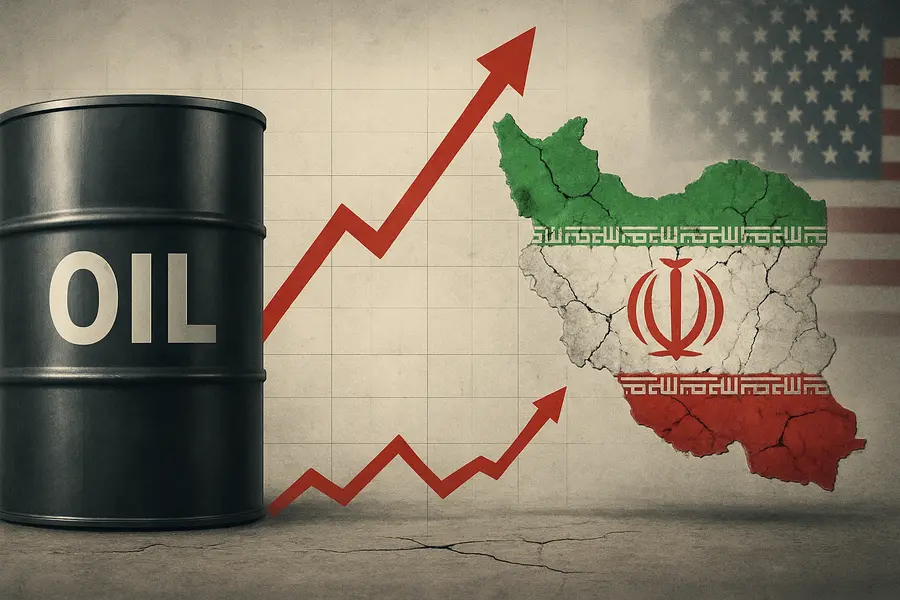
Lead
Brent crude futures climbed to approximately $79.59 a barrel in late June 2026 after diplomatic progress between Washington and Tehran unraveled, with scheduled technical talks in Bürgenstock, Switzerland, called off without explanation and U.S. Vice President JD Vance canceling travel to the site. West Texas Intermediate tracked higher to near $78.15 before paring gains. The price action underscored that the Iran truce fragile status — despite a formal memorandum of understanding signed by both presidents on June 17 — continues to command a measurable geopolitical premium in crude markets and sustains Hormuz oil risk as the dominant variable in any credible crude oil forecast 2026.What Happened
The U.S. and Iran agreed on June 12 to a 60-day ceasefire framework, formalizing it five days later when President Trump and Iranian President Masoud Pezeshkian signed an MOU that called for the Strait of Hormuz to reopen immediately and for the U.S. Navy to lift its blockade of Iranian ports. Markets initially interpreted the deal as a turning point: Brent crude had already declined roughly 36% from its wartime peak of approximately $120 a barrel reached in late April 2026, and the signing drove further selling.
- Brent crude settled near $79.59 a barrel after Geneva follow-on talks were abruptly postponed, reversing a multi-week decline.
- The 60-day ceasefire signed June 17 leaves enforcement mechanisms for Hormuz transit unresolved, sustaining structural Hormuz oil risk.
- The IEA has characterized the 2026 Strait of Hormuz disruption as the largest oil supply shock in the history of global energy markets.
The recovery in prices began almost immediately after. Tehran cited continued Israeli strikes on Hezbollah positions in southern Lebanon as a violation of the spirit of the agreement and temporarily re-closed the strait. The June 19 collapse of the Switzerland technical round — intended to translate the MOU into binding operational protocols — reinforced the view that the Iran truce fragile dynamic was not resolved but merely paused. As of late June, the U.S. Navy's Joint Maritime Information Center had announced a widened transit corridor near Oman, but approximately 42 vessels remained stranded pending clearer guarantees of safe passage, keeping physical supply flows below pre-crisis levels and sustaining oil price news today focused on geopolitical risk rather than demand fundamentals.
Market Reaction
Crude's trajectory in 2026 divides cleanly into two phases. From January through late April, Brent surged from a pre-conflict range of $65–$75 to $120 as Iranian forces restricted transit through the Strait of Hormuz, which carries roughly 20% of all globally traded crude — approximately 17 to 21 million barrels per day — with no viable alternative routing at comparable scale. The IEA estimated peak supply losses at 14.5 million barrels per day, a figure it formally classified as the largest disruption in global oil market history.
After the ceasefire framework emerged, prices shed more than 20% from peak levels. The Geneva postponement halted that slide and introduced fresh two-way volatility. WTI and Brent both remain down sharply on the year but are holding above levels that reflect full normalization of Hormuz flows, a scenario markets have declined to price in while the 60-day window runs.
Geopolitical Dimension
The ceasefire MOU is structurally incomplete. Three critical questions remain open: which international or regional force will enforce security through the strait once the 60-day period expires; whether transit fees or tolls could be legally imposed after the agreement lapses; and how future maritime disputes involving the U.S., Iran, Israel, and Gulf Cooperation Council states will be adjudicated.
Strategic Context
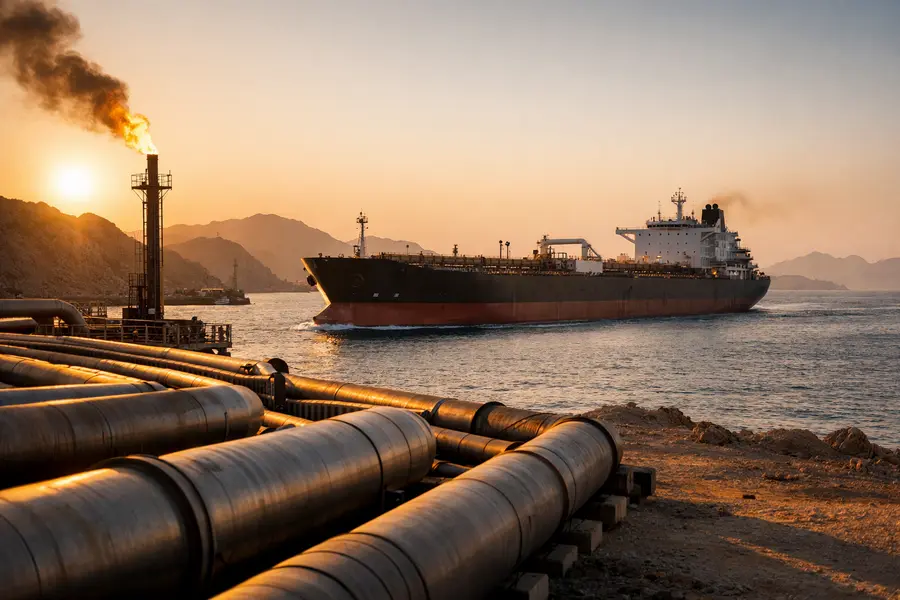
The 2026 crisis arrived as global spare production capacity outside the Persian Gulf was already constrained. OPEC+ members pumped near ceiling limits through the first quarter, leaving limited ability to offset Iranian and Gulf supply disruptions through alternative sources. Pipeline alternatives — including the East-West Pipeline across Saudi Arabia and the UAE's Fujairah export facility — were operating at near-maximum throughput but cannot fully substitute for strait volumes at scale.
The World Bank in its April 2026 Commodity Markets Outlook described the conflict as likely to produce the largest energy price surge in four years, and the IEA's May 2026 Oil Market Report revised its full-year supply deficit wider, citing ongoing Iranian production losses and transit uncertainty. A credible crude oil forecast 2026 now clusters around $86–$100 a barrel for Brent on an annual-average basis, with outcomes sensitive to whether the 60-day ceasefire converts into a durable agreement or lapses into renewed confrontation.
Outlook
The near-term oil price news today reflects a market caught between two credible scenarios: a managed diplomatic resolution that gradually restores Hormuz flows and pulls Brent toward $70–$75, and a breakdown in negotiations that pushes prices back toward the $90–$100 range or higher. The 60-day ceasefire clock, combined with unresolved enforcement architecture, keeps both tails live. The postponement of the Switzerland talks removed the near-term catalyst most likely to compress the risk premium, leaving energy markets in a holding pattern as Washington and Tehran attempt to reschedule negotiations. Until a binding, verifiable agreement on Hormuz governance is reached, oil price volatility tied to the Iran truce fragile dynamic will remain the defining feature of global commodity markets through the second half of 2026.
Mentioned tickers: USO, BNO, XLE, CVX, XOM, COP, BP, SHEL, TTE