Pomegra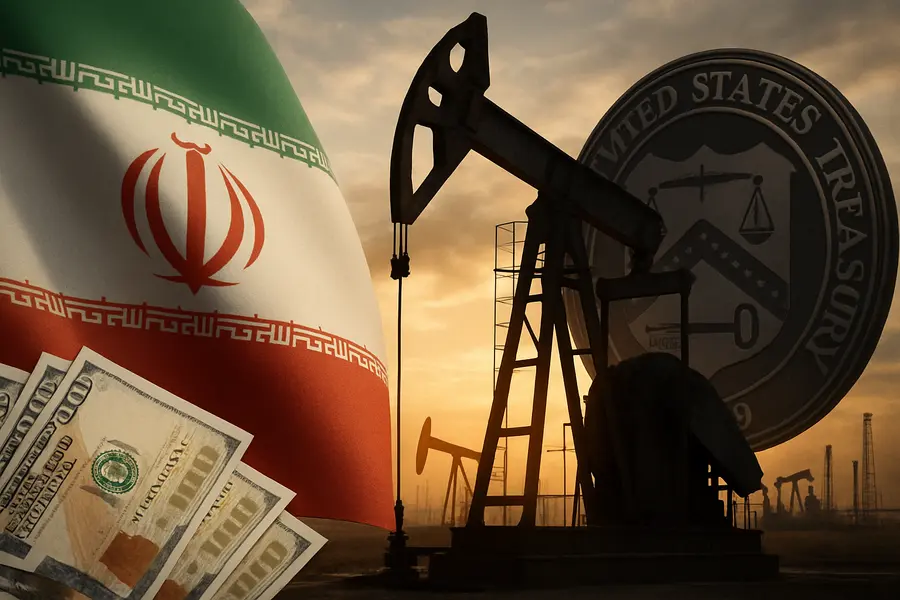
The United States Treasury Department has suspended Iranian oil sanctions for 60 days following progress in Switzerland talks, pushing Brent crude down 4% as Tehran disputes key terms of the emerging nuclear accord.
- Treasury's OFAC issued a 60-day waiver covering Iranian crude, petroleum products, and petrochemicals; license expires August 21.
- WTI crude fell 2.7% to approximately $74 per barrel; Brent dropped 4% to roughly $77, both multi-month lows.
- Iran denied agreeing to IAEA nuclear-site inspections, contradicting VP Vance's announcement within hours of the waiver.
Lead
The U.S. Treasury Department authorized the production, transportation, and sale of Iranian-origin oil for a 60-day period ending August 21, 2026, as Washington and Tehran navigate the final stages of a diplomatic framework aimed at permanently neutralizing Iran's nuclear weapons program. Treasury Secretary Scott Bessent, announcing the action on June 22, described ongoing talks in Geneva as "productive," while Vice President JD Vance declared the negotiations had achieved "great progress"—though conflicting signals from Tehran immediately complicated the picture.
What Happened
The Office of Foreign Assets Control (OFAC) issued a sweeping temporary license authorizing activities connected to the extraction, production, delivery, transportation, and sale of Iranian-origin petroleum, petroleum products, and petrochemicals. The waiver also covers associated financial services, including banking, insurance, and shipping, and—for the first time in decades—permits Iranian crude imports into the United States.
The authorization follows a memorandum of understanding signed the prior week between Washington and Tehran, which established a structured 60-day window for resolving more complex outstanding issues, including the scope and timeline of Iran's nuclear disarmament.
Bessent stated that Iran has committed to two foundational conditions underpinning the temporary relief: free and open commercial navigation through the Strait of Hormuz—the world's most critical energy chokepoint—and the readmission of International Atomic Energy Agency (IAEA) inspectors to monitor Iranian nuclear facilities. Vance went further, saying IAEA inspectors would arrive in Iran "at minimum this week."
Disputed Terms
Within hours of the Treasury announcement, Iran's Foreign Ministry issued a direct contradiction, stating the country had neither met with IAEA Director-General Rafael Grossi in Switzerland nor made any commitment to allow inspections of its damaged nuclear sites. The statement introduced immediate uncertainty over whether the two parties have reached a substantive meeting of minds or whether the interim sanctions relief is running ahead of verified diplomatic concessions.
Tehran did, however, confirm agreement to establish a Strait of Hormuz communications hotline with the United States designed to prevent and resolve maritime misunderstandings as commercial shipping traffic resumes through the waterway.
Market Reaction
Crude oil prices reacted sharply and immediately to the Treasury authorization. West Texas Intermediate (WTI) fell 2.7% to approximately $74 per barrel—its lowest level since before the Iran conflict began on February 28, 2026. Brent crude dropped roughly 4% to approximately $77 per barrel, similarly breaking below the floor that had held since hostilities commenced.The moves reflected the market stripping out a portion of the geopolitical risk premium that had been embedded in global benchmarks since the conflict disrupted tanker traffic and tightened prompt supply. The return of Iranian barrels to global markets—even under a time-limited, conditional framework—shifts the near-term supply calculus for traders and refiners alike.
Supply Dimension
Iranian crude production stood at approximately 3.2 to 3.3 million barrels per day through much of 2025 before declining under the pressure of a U.S. naval blockade that curtailed export activity to an estimated 640,000 barrels per day in recent months. The OFAC waiver reopens the legal pathway for Iranian exports to accelerate toward pre-conflict levels, though physical infrastructure rehabilitation and the pace of tanker availability will determine how quickly incremental supply reaches market.Iran's domestic refining capacity sits at approximately 2.6 million barrels per day, and significant inventories have accumulated during the export blockade period, providing a reservoir of supply that could move quickly once the logistical and legal constraints are lifted.
Strategic Context
The June 22 waiver represents the second phase of a graduated sanctions-relief architecture developed after Washington issued a shorter 30-day waiver in March 2026 to test Iranian compliance with Hormuz transit commitments. The current 60-day authorization signals increased U.S. confidence in the diplomatic trajectory, though the IAEA dispute underscores how much ground remains to be covered before a permanent agreement is formalized.
The MOU signed last week established Iran's commitment to halt its nuclear weapons program and submit to international supervision as preconditions for durable sanctions relief. The structure places Iran's complete nuclear dismantlement at the center of any comprehensive deal, with the August 21 expiration functioning as a hard deadline for resolving disputes over inspection access, enrichment caps, and verification protocols.
The Strait of Hormuz, through which an estimated 20% of globally traded oil and significant volumes of liquefied natural gas transit daily, remains the central leverage point. Iran's willingness to guarantee unimpeded passage—even through a telephone hotline mechanism—reflects the economic pressure Tehran faces as oil revenues have sharply contracted since the conflict's outset.
Geopolitical Dimension
Washington's willingness to issue broad Iranian oil sanctions relief before verifiable IAEA access is established reflects a calculated bet: that economic incentives can accelerate Iranian compliance more effectively than continued pressure. Critics of the approach point to Tehran's immediate public disavowal of the inspection commitment as evidence that the sequencing of concessions may be misaligned.
For regional energy markets, the waiver also carries implications for OPEC+ cohesion, as the potential return of substantial Iranian volumes to the market arrives at a moment when the group has been managing delicate output agreements against a backdrop of softer demand.
Outlook
The 60-day countdown to August 21 concentrates diplomatic attention on three unresolved variables: IAEA inspector access to Iran's nuclear sites, the specific parameters of any enrichment ceiling, and the enforcement mechanism for Hormuz transit guarantees. Brent crude's trajectory between now and late August will serve as a real-time barometer of market confidence in the deal's durability. Should Iran and the United States reach verifiable agreement on all three terms before the waiver expires, a permanent lifting of Iranian oil sanctions would constitute one of the most consequential energy-market realignments in a generation.