Pomegra
Iran's security council says no enriched uranium will leave the country and resists IAEA access, as Washington reportedly asks Putin to help broker talks.
- Iran's Supreme National Security Council says "not even a single particle" of enriched material will leave the country.
- The IAEA says it cannot verify the near-weapons-grade stockpile or access the Isfahan underground site.
- Brent settled at $95.82 on November 12, up 3.3%, after Trump said no Iran deal is needed.
Lead
Iran's Supreme National Security Council declared on November 11 that "not even a single particle" of its enriched nuclear material will leave the country. The statement rejects a core US demand in talks meant to end the US-Israeli war on Iran. It came as the International Atomic Energy Agency (IAEA) circulated a report on November 13 saying it is "increasingly concerned" about Iran's refusal to open its nuclear sites to inspection. Iran's chief negotiator has also said US officials asked Russian President Vladimir Putin to facilitate contacts with Tehran. The White House has neither confirmed nor denied that.
What Did Iran's Security Council Say?
The council ruled out any transfer of enriched material abroad, whether to the United States, Russia or a third country. Washington has said nuclear issues must be part of any initial negotiations. Its stated position is that Iran must eliminate its stockpile and allow free transit through the Strait of Hormuz.
Tehran has also tied the inspection question to the security environment. Iran told the IAEA this month that talks on resuming inspections cannot proceed amid "persistent, explicit, and public threats" from the US president. Inspection requests now require approval from the Supreme National Security Council and are decided case by case.
The practical effect is a deadlock. Washington wants the material removed. Tehran says it stays, and it is not letting inspectors confirm where it is.
Why Is the IAEA Concerned About Isfahan?
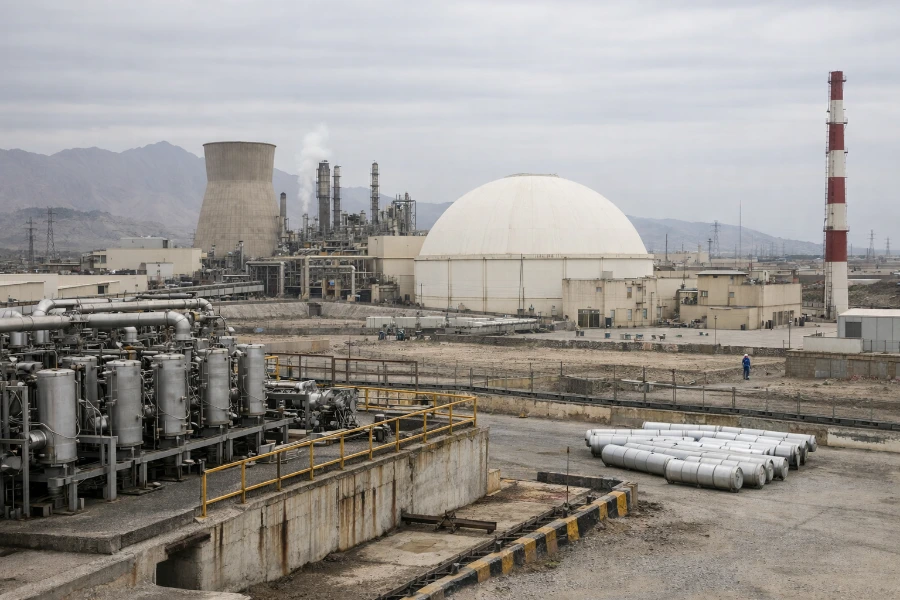
The IAEA cannot confirm the status, contents or location of the Isfahan enrichment plant that Iran declared in 2025. Inspectors have lacked access to Iran's enrichment sites since the joint US-Israeli strikes of June 2025. The whereabouts of more than 400 kg of near-weapons-grade uranium produced before those strikes remain unverified.
The agency has said a substantial share of the highest-enriched material is likely stored in an underground tunnel complex at Isfahan. Satellite imagery shows recent activity at the site. Director General Rafael Grossi has urged Tehran to consider "limited technical measures" that would allow routine monitoring to resume.
Iran's Foreign Ministry says it remains committed to the Nuclear Non-Proliferation Treaty and attributes the access limits to US and Israeli attacks.
Could Putin Mediate Between Washington and Tehran?
Putin has already offered a role, but the White House has not publicly accepted one. In May he proposed that Russia receive and store Iran's enriched uranium if a deal ends the war, citing Moscow's role in the 2015 nuclear accord. Washington rejected that arrangement at the time and insisted on US custody.
The latest report reverses part of that picture. Iran's chief negotiator told Al Jazeera that US officials asked Putin to facilitate talks, and Putin has met US envoy Steve Witkoff. Tehran's message to Moscow, however, is that all enriched material stays inside Iran.
Russia is a plausible channel because it maintains working relations with both capitals and has experience handling Iranian nuclear material. Its leverage is limited by Iran's refusal to export any stockpile, the one option Moscow has offered.
How Did Oil Prices React?
Oil rose on both days as the diplomatic outlook worsened. On November 11, Brent futures settled up $1.27, or 1.39%, at $92.76 a barrel, and WTI gained 49 cents to $86.53. On November 12, after President Trump wrote, "We don't need a deal with Iran. Those days have long since passed," Brent settled up 3.3% at $95.82 and WTI rose 2.6% to $88.74.
The bounce follows a steep fall. Brent is still down about 20% in November after settling at $104.77 on November 2, when hopes of diplomacy emerged. It was near $72 before the war began in late February. The crude oil price is trading mainly on whether talks collapse and whether Hormuz traffic is disrupted.
The shipping risk is concrete. Thirty-seven ships were attacked in October, the highest monthly count since the war began. Iran's Revolutionary Guards reported two tankers on fire after hitting naval mines this week. US military protection has allowed Gulf exports to recover to about 82% of pre-war levels, and the International Energy Agency says supply exceeded demand for the first time since the war began. That cushion limits upside for now.
Geopolitical Dimension
The standoff links three tracks: the US-Iran war, the nuclear file and Russia's own diplomacy. Russian and Ukrainian officials held peace talks in Abu Dhabi on November 10. Ukrainian drone strikes have cut Russian refining capacity by about 30% since late October. Moscow's value to Washington on Iran therefore sits alongside separate negotiations in which the two sides have competing interests.
For Iran, the stockpile is its main remaining bargaining asset. The US holds frozen Iranian funds and a blockade, and Trump has said Washington controls the Strait. Both sides therefore hold leverage they are unwilling to trade first.
Outlook
The near-term path runs through three variables. These are whether Iran grants the IAEA access to Isfahan, whether the White House formalizes a Russian role, and whether Hormuz shipping attacks continue. Absent movement on the stockpile, the base case is more volatile energy markets and continued blockade pressure. A Russian-brokered arrangement would require Tehran to reverse its stance on exporting material, which its security council has just ruled out.